There’s a difference between discovering a company and taking the time to really understand how it thinks. Over the past year, I’ve had the opportunity to do the latter with Lastmile—watching how the team operates, how they talk about customers when no one is selling anything, and how consistently their internal philosophy shows up in real-world decisions.
That kind of exposure changes the questions you ask.
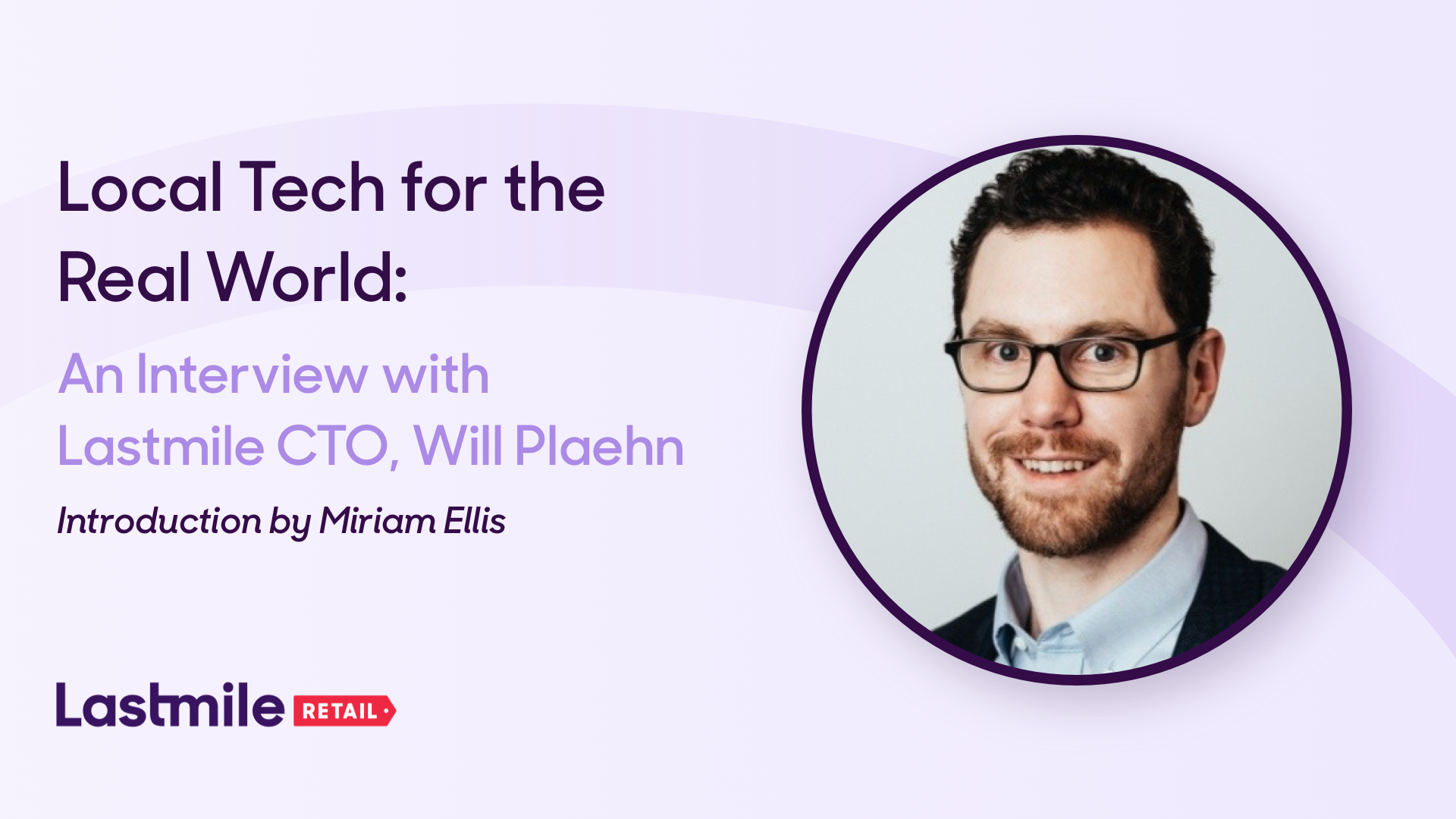
Earlier conversations with Lastmile leadership explored why CEO Michael Carini has resisted the AI hype cycle, and why CTO Will Plaehn has been outspoken about the limits of one-size-fits-all local SEM SaaS for large enterprises. Those discussions made one thing clear: this is a company unusually willing to interrogate its own assumptions about service, scale, and responsibility.
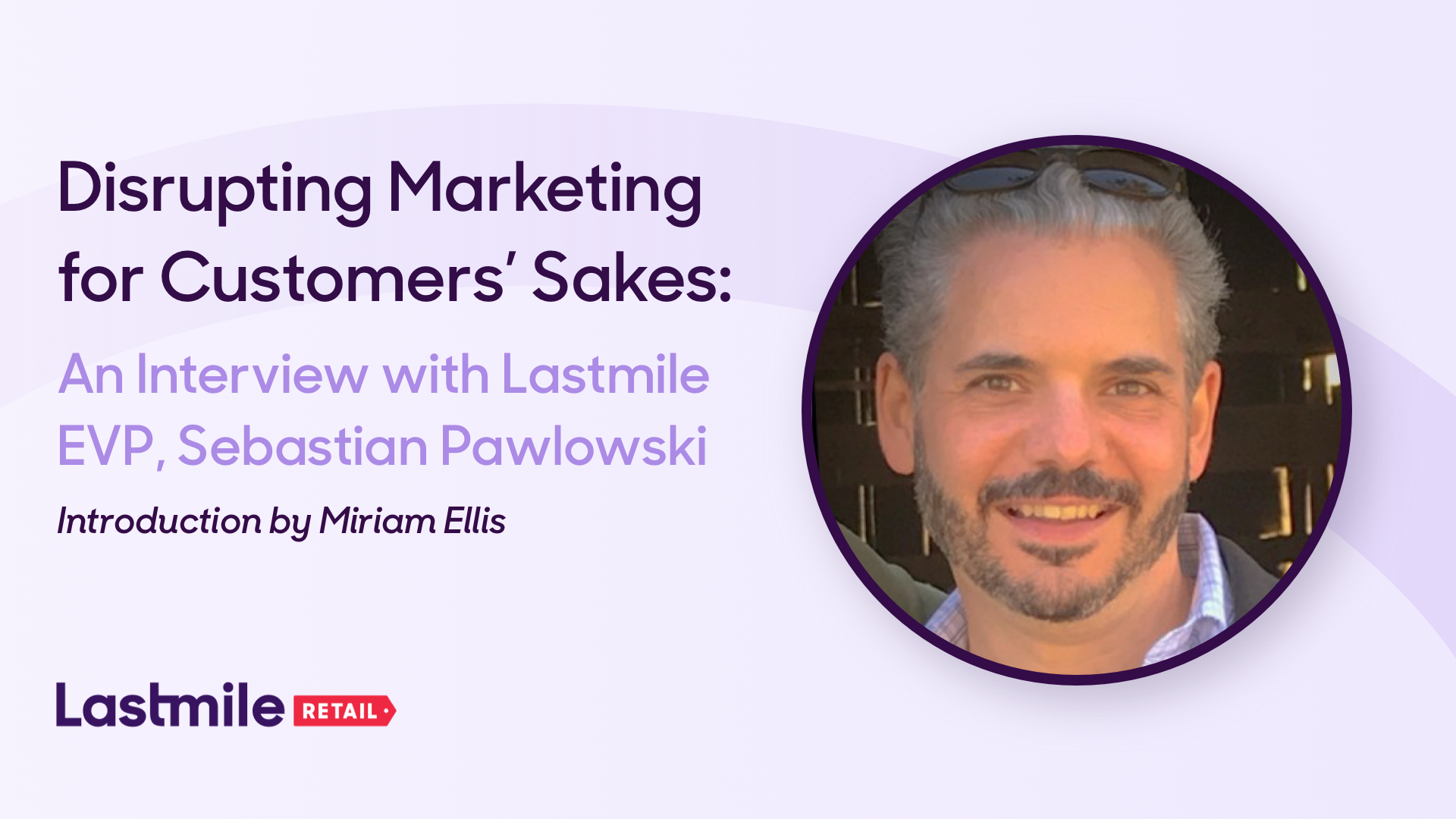
Which brings us to today’s conversation with Lastmile EVP, Sebastian Pawlowski.
After spending time around this team, I wanted to get deeper into Sebastian’s head—not for platitudes about growth or frameworks for efficiency, but to better understand how someone thinks about enterprise marketing when customers are still regarded as human beings, not abstractions. The longer I observed Lastmile, the more it became clear that this perspective wasn’t accidental or performative; it’s structural.
Why should you read this interview? Because too many enterprise marketing conversations no longer include customers in any meaningful sense. Not customers as communities. Not customers as people with constraints, emotions, and real needs. Just customers as numbers on slides, drifting further away from the work being done in their name.
If the enterprise you’re responsible for promoting feels increasingly disconnected from the people it serves, this conversation may help you recalibrate. Not with tactics, but with perspective. Because when leadership loses sight of the customer, no amount of tooling or automation fixes the slide—it just accelerates it.
So let’s pause, step out of the churn, and have a real marketing conversation with someone who has spent decades thinking seriously about what it means to serve the public well.
Miriam:
Sebastian, you’re closing in on 30 years in marketing, and over the time I’ve gotten to know you, I’ve heard pieces of that journey—Sprint, ICF International, Amtrak, political and advocacy work, academia, startups, and the Fortune 100. But I want to rewind further than the titles. I want to hear your paper route story, and how your father put you on the path—very early on—of thinking seriously about the customer.
Sebastian:
Yeah—so if you remember Apple’s 1984 Super Bowl commercial, that was it for me. I had to have a computer. My dad saw where things were going and said, “Okay, but you’ve got to meet me halfway.” So I got a paper route.
What mattered wasn’t just delivering papers—he pushed me to treat it like an actual business. I bought software—PFS Write first, then Lotus 1-2-3—and suddenly I was tracking customers, payments, complaints, all of it. He made me write everything down, especially the feedback I didn’t want to hear.
I didn’t realize it at the time, but that was my first customer database. I was looking at patterns and figuring out how to do a better job. That mindset just stuck with me. It helped me pay my way through college—along with a Boston Globe scholarship—and it’s pretty much followed me through every role since. That’s why Lastmile feels so familiar to me. At the end of the day, it’s about actually knowing your customers and treating them like people.
Sebastian:
It means we don’t start with a rate card or a sales pitch. No fancy dinners, no theater. We start by talking about the business.
What’s frustrating you day to day? Where are things breaking down? And just as importantly, where are customers getting stuck or quietly dropping off without anyone noticing?
From there, we build something that’s actually custom to the enterprise—not a pre-packaged solution we’re trying to force-fit. The goal is simple: make it easier for customers to get from interest to action, and give the brand clear visibility into what’s working and what isn’t so we can keep improving.
And this isn’t delegated. Our exec team—including me—gets on the calls. We move fast, we cut through the red tape that usually drags things out for months, and we integrate with what you already have instead of asking you to rip and replace. We test, we learn, we adjust. Whatever it takes to get real results on the ground and make a noticeable difference for both the customer and the brand.
Sebastian:
Sure—this one actually sticks with me because it was from before I ever worked here. I was still at Sprint and had just brought Lastmile on as a vendor. They’d done their part, but we were getting hung up internally trying to get a reverse proxy in place. And honestly, I was frustrated.
That said, Lastmile just stayed with it. No drama, no finger-pointing. We finally went live in about seven weeks—which, in a big enterprise environment, felt almost unbelievable. Especially compared to other SaaS projects we had going at the time that were dragging on, blowing budgets, and going nowhere.
I remember walking into a meeting with our Chief Digital Officer—great guy—and showing him the data we were seeing. He assumed it was from a staging environment. When I told him we were live and that customers were already interacting with these improved local pages—really full microsites—he was genuinely shocked. The data was real, the activity was real, and it was happening fast.
That moment stuck with me. They moved at our pace, spoke our language, and delivered when it mattered. Having been on the client side of that experience, it’s a big part of why I’m so excited to bring that same kind of surprise to clients today. Time to market isn’t just a nice-to-have for us—it’s one of our real advantages.
Sebastian:
The thing that really unites them is scale—real scale, not the kind you talk about on slides.
We all heard “content is king” for years, and that idea still matters. But at the enterprise level, context is what actually makes the difference. Customers don’t need more content; they need the right help, in the right place, at the right moment, and in a way that feels local and human.
That’s where things usually break down. Every market is different. Every local audience behaves a little differently. Most enterprises struggle to deliver that kind of nuance consistently at scale. What Lastmile does well is make that possible—so brands can show up in a way that actually fits each community without losing control or speed. Execution ends up being everything.
Sebastian:
It’s critical. We capture first-party data from every touchpoint—search, engagement, microsites, whatever’s relevant—without ever touching PII. Then we work with clients to turn that into actionable insights. This is the data that shows you what’s actually happening in your customers’ journeys. Are your products reaching the right people at the right time? Are prospects being converted into loyal customers? Is your growth real and sustainable? That’s what we help you figure out.
I should also say—we’re not just pushing numbers. Data only matters if you can act on it. We built this platform ourselves, from the ground up, specifically for enterprises, because the market didn’t solve these problems the way it needed to. For us, it’s about making a real difference, not chasing every shiny new trend—whether that’s AI today or voice search a few years back.
Sebastian:
Not at all. If a client walks in thinking that, part of our job is showing them there’s more to it. Success isn’t just a transaction—it’s about relationships. And that goes both ways. We can’t ask our clients to nurture theirs if we aren’t doing it ourselves.
We don’t just hand over a platform and walk away. We work alongside you, making sure you’re getting the most value, even after implementation. Really, the goal is for you to be as connected to your customers’ success as we are—helping them discover, choose, and stick with your brand.
Sebastian:
Sure—if I had to pick a few things that really stand out:
First, our customer-first mindset—it’s baked in. Second, our hands-on approach. We’re constantly under the hood, managing accounts in real time and spotting insights before our clients even realize they need them.
Third and fourth are speed to market and first-party data—you get fast, actionable results that actually matter. Fifth, marketers really appreciate the precision of our hyperlocal advertising, hitting the right people with the right message at the right time.
Sixth, the platform itself is dynamic—fast, flexible, and built for testing. You’re not waiting months to try something new. And finally, we’re an all-in-one partner: listings, reviews, advertising, analytics—all in one place. No juggling tools, no workarounds. Just one seamless platform that makes life easier for marketers.
Sebastian:
Fair question! Honestly, we’ve always been better at promoting our clients than ourselves. But there’s also a pattern in enterprise local SEM SaaS worth noticing.
A lot of legacy vendors have built their business on sticking to what they know—old tech, locked-in contracts, and predictable budgets. Safe choice, sure. But it also means many enterprises are overpaying for solutions that are underperforming or just running on autopilot.
When we do audits for new clients, we see broken systems, bad data, and massive missed opportunities. Risk aversion can protect you, but it can also hold you back.
Lastmile isn’t about disruption for its own sake. We’re here because enterprise local marketing often isn’t working—and there’s a better way. Helping real people, solving real business problems, moving fast, being human—that’s what makes it worth it.
Request a Demo
Drive more local sales by pairing shoppers with real-time inventory and promotions through seamless online-to-offline capabilities that help clients transact now.