Major local enterprise brands need data right now about how AI is impacting their customers’ online behavior.
This is why I’m positive you’ll get value out of Lastmile’s new consumer survey report, Local Search & Shopping: How AI is Disrupting the Customer Journey. Conducted in concert with one of my favorite longtime colleagues in the local SEO industry, Greg Sterling of NearMedia, this unique report, which was presented at the last brightonSEO conference, will give you access to tons of relevant and actionable original data. 1000+ adult US consumers were surveyed and figures are rounded up for ease of comprehension. These insights are especially valuable because very few presentations last year addressed what needs to be surfaced at the local level to feed AI. In fact, there were only a handful of sessions on local topics at major U.S. conferences. I don’t expect that to change much on the 2026 conference circuit—yet all brands are inherently local, and thin local content directly limits what Large Language Models (LLMs) can deliver.
Today, I’m going to share 3 things I personally learned from the report that could significantly shape your enterprise local search marketing strategy in 2026.
1. AI is not a search killer, but it’s outpacing social media in particular local contexts
Lastmile’s survey found that:
- 52% of consumers are using AI for local search vs. 43% using social media for the same purpose
- More local searchers are starting their buyer journeys with AI than with social media
Why this matters
It’s easy to get swept away in the flood of well-funded AI hype we’re all experiencing right now. Another favorite colleague of mine, Rand Fishkin, provided a helpful “settle down” moment for our industry in sharing recent data which suggests that “at the rate ChatGPT is growing, it would take them 3 years of current growth rate to reach 1% of (Google’s) website traffic referrals.”
In brief, Google is currently receiving about 210x as many searches as ChatGPT. Hopefully, that’s information you can bring up if people in your organization are latching onto inaccurate claims that “search is dead” or “SEO is dead”.

However, we begin to see some interesting emergent trends that are particular to local SEO, thanks to Lastmile’s new data. Social media has long been somewhat of an awkward fit as a sales channel. Social content that is too self-promotional or transactional struggles to earn favor with social media users who spend time on platforms like Reddit or Instagram for their own entertainment, rather than wanting to see brand marketing pitches.
The same cultural sensibilities do not apply to conversational AI like ChatGPT or Google AI Mode. It’s a more comfortable fit for users wanting deeper information about nearby businesses than many social environments.
2. Frustration may be more of an AI adoption hurdle than trust
Lastmile’s survey finds that:
- 79% of consumers trust AI but are frustrated by missing information
- 68% say AI often falls short for product inventory searches, store specifics
Why this matters
Woe unto me for mistakenly thinking the public would not trust this technology that produces absurd errors at an astonishing pace. Turns out, more than ¾ of Lastmile’s survey respondents readily place their trust in AI…but are finding it frustrating due to missing information. Local store specifics and missing inventory are particular pain points.
Is this AI’s fault? Not really. It can only generate what it scrapes and so many local brands have still yet to make the leap to providing abundant location information + reliable real-time local inventory online. Even major local enterprises are still struggling to deliver what should be a core digital offering.
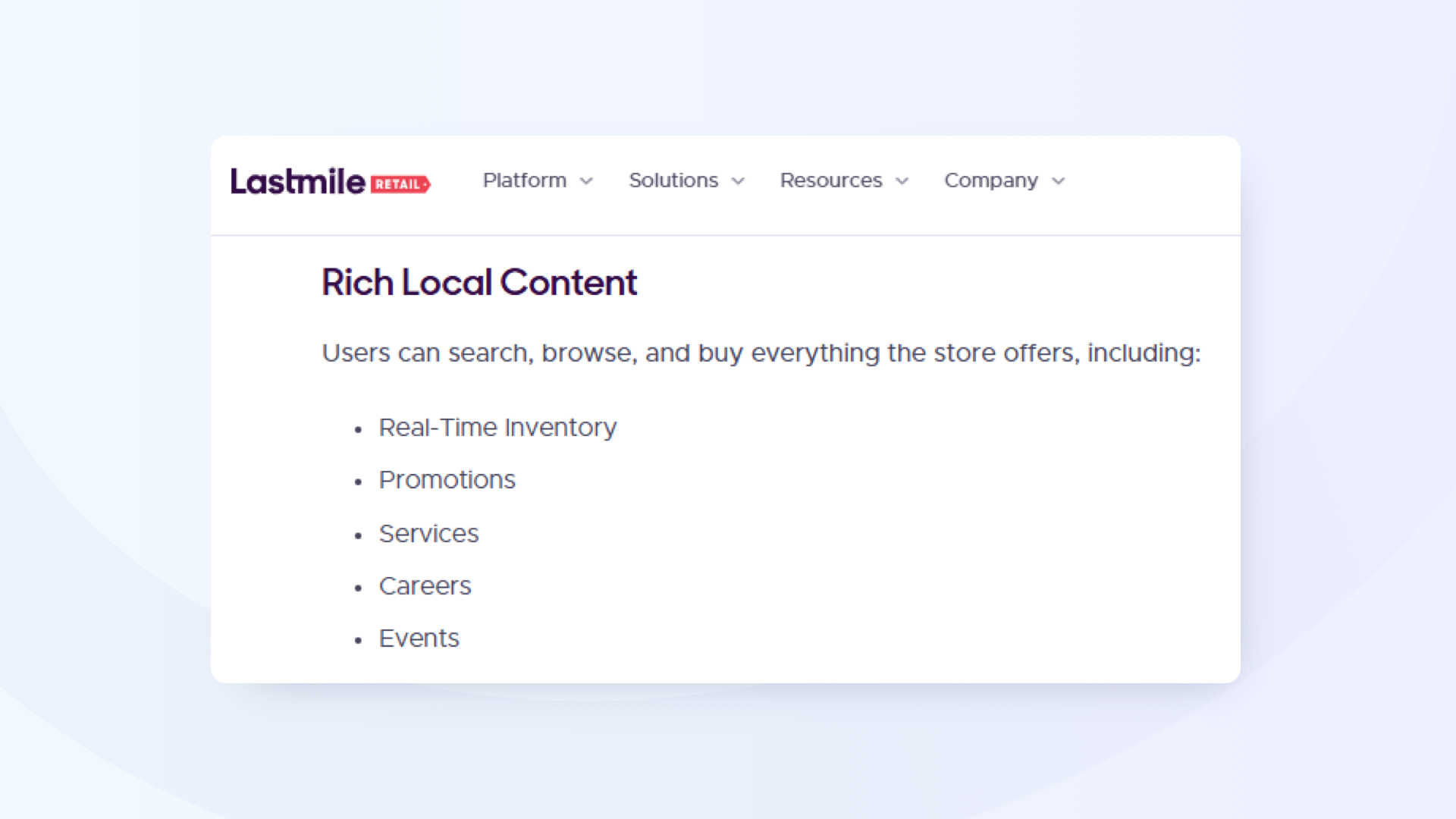
This is one of the reasons I’ve found it so interesting getting to know Lastmile, because their approach to enterprise marketing places a refreshing emphasis on ensuring customers can see which products are available nearest to them, and if items are out of stock, where they are available at the next-nearest branch. Solutions like these can make all the difference between fully assisting website visitors or losing them to competitors.
AI can’t really get better at providing accurate store location data and inventory info unless brands do.
3. Low expectations set by local brands could be AI’s gain
When Greg Sterling and Lastmile asked consumers what would make them more likely to shop locally instead of online, they got a wealth of insight into influences:

Why this matters
You can access the full data set for this question by downloading the report, but I wonder if something stood out to you in the above screenshot, as it did to me.
Why are just 18% of consumers influenced to shop locally instead of remotely by the expertise of in-store staff?
“Convenience” may be the obvious answer to why it’s easier to plonk things into an Amazon shopping cart instead of having to get out of the house, pilot the car amid increasingly anti-social drivers, find parking, walk into a store, find what we need, find help when we can’t find what we need, and dust off the old credit card that’s been gathering dust since our online accounts have so much of our information stored.
But I’d like to suggest that there’s a deeper reason for in-store expertise not having the sway it should in the local business world, and I think it’s that in-store expertise is now seriously lacking.
I recently documented my failed attempt to purchase a restaurant gift card in a good-sized city for a loved one’s birthday. The unifying factor, whether I phoned up mom-and-pop diners or the branches of restaurant chains, was that none of the staff was sure whether or not their employer offered gift cards.
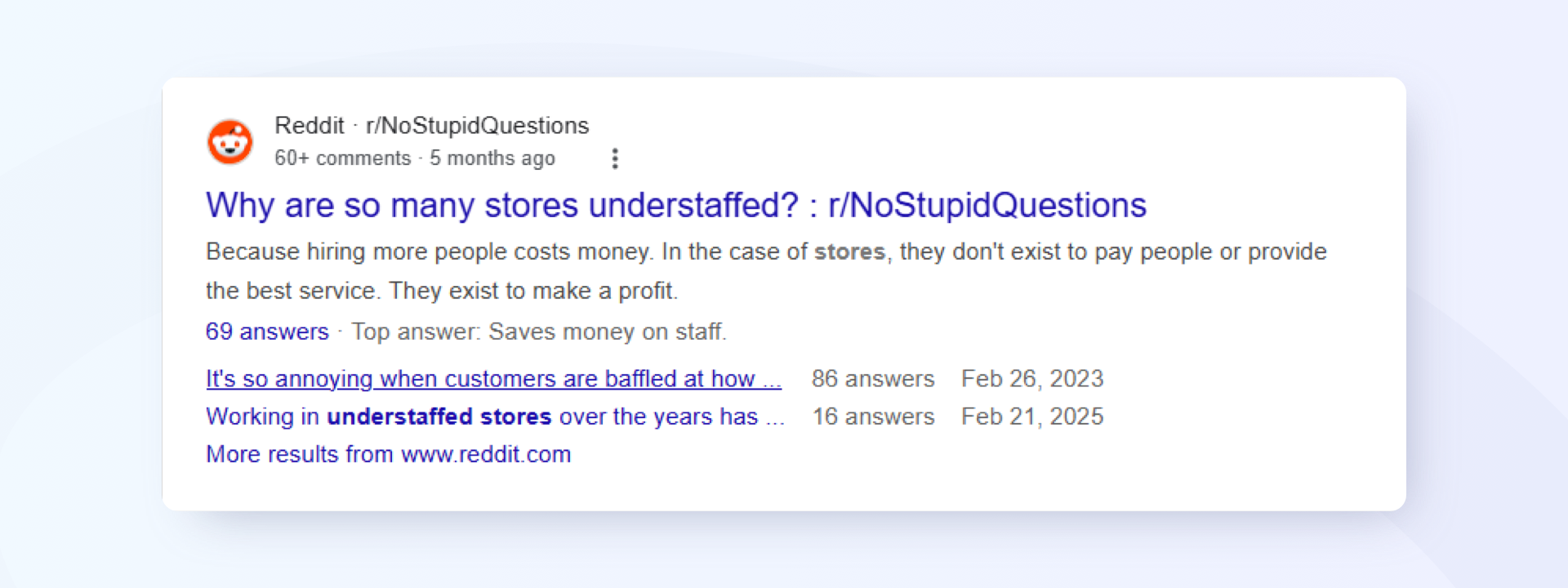
A lack of employee training coupled with chronic understaffing at “big box” stores is a recipe for lackluster consumer experiences. Economic choices have set a seriously low bar when it comes to how customers expect to be assisted when shopping locally.
And guess what this opens the door to? Consumers having meager expectations of technology like conversational AI that has even less of the appearance of expertise about store offerings, policies, and capabilities than most undertrained staff do.
Expertise ought to be a significant competitive-difference-maker in the online vs. offline shopping battle. Local brands could be creating and providing customer experiences that can’t be easily replicated by an AI chatbot. I’d love to see a flowering of new pride in what brands expect of themselves and expect for their customers in reaction to the marketing pitch that AI should now be invited in as an intermediary to nearly all aspects of human life.
Third-party dependence nearly always puts brands in a weaker position than first-party ownership. Something to think about?
Summing Up
“Give the customer what they want” is a marketing slogan as old as commerce. Right now, data is revealing that what customers want is more assistance. Locals want to shop with your brand, but roadblocks of missing information stand in the way.
Despite the hype, AI is not The Answer to this pain point, but your brand can offer better assistance if your first-party data is abundant, enabling it to be scraped by environments like ChatGPT and Google AI Mode. And, there’s a glaring, flashing, blinking opportunity to exceed low consumer expectations of in-store customer service awaiting any brand that seizes it.
Right now, leadership at your brand is having to make all kinds of decisions about how to respond to the emergence of AI. The best answers reside in how customers are using this technology in these nascent days. Data will help you make smarter choices.
Download Local Search and Shopping: How AI is Disrupting the Customer Journey.
Request a Demo
Drive more local sales by pairing shoppers with real-time inventory and promotions through seamless online-to-offline capabilities that help clients transact now.