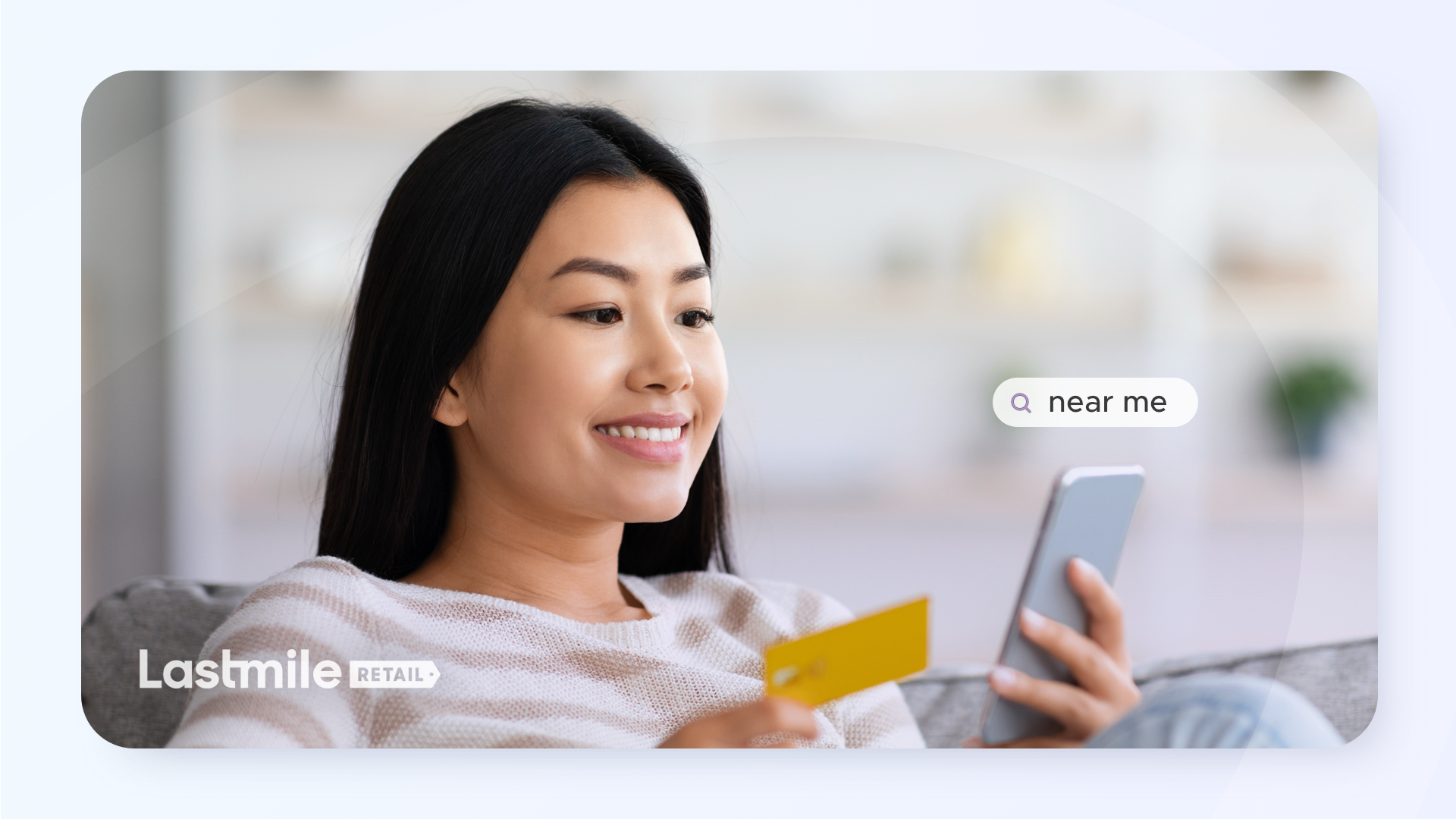
Bump, bump! Your local enterprise’s most valuable potential customers are being spiked back and forth between Google and AI like a volleyball when searching for the information they need to choose your brand for a transaction.
Fresh, original data from Lastmile’s consumer survey with Greg Sterling of 1000 US adults captures the frustration today’s searchers are feeling trying to access core inventory details before making local purchases totaling $300 or more. They bounce from traditional search like Google to conversational AI like ChatGPT and back again to Google, unable to confirm practical information about nearby product availability. It’s little wonder if they give up and hit the ground running in the direction of Amazon for remote fulfillment.
When it comes to high-end purchases, even a single missed sale represents a significant loss. Today, we’re going to look at data that reveals how to end the Google/AI volleyball game by giving local searchers the key information they need to become your enterprise’s customers.
The Current Online Local Consumer Journey
At this point in time, Google remains the dominant toolset consumers use when looking for local goods and services, with 73% listing Google Search and Maps as their top resource:

Google has spent the past two decades experimenting with delivering different versions of local pack and Maps results for local-intent queries like “kitchen store SF Bay Area”:
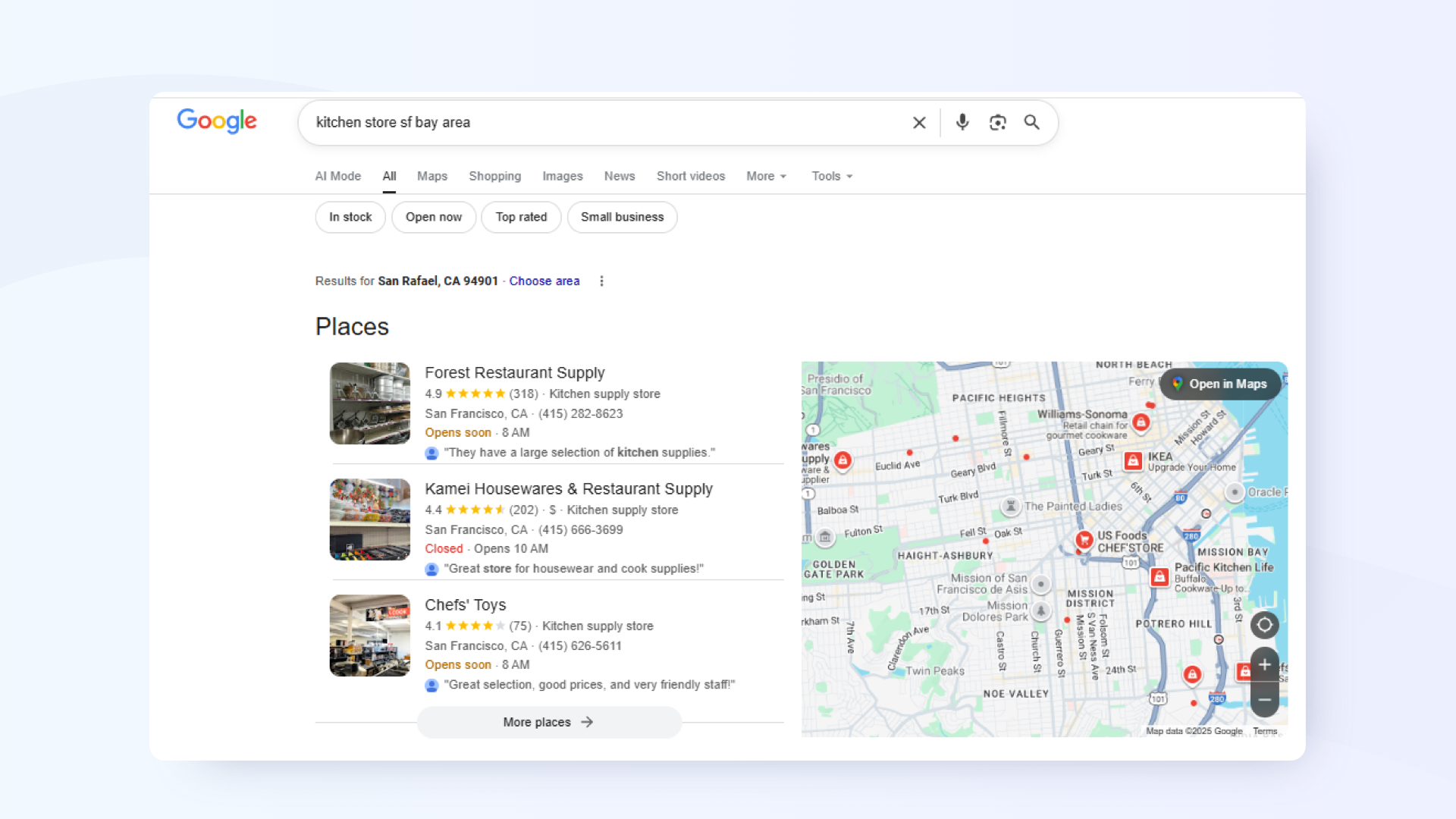
Though frequently plagued with inaccuracies and both listing and review spam, Google’s local interfaces have been successfully adopted into daily life when consumers need to know which local businesses exist within a specific geographic landscape. This methodology delivers enough user satisfaction that no other search engine or platform has been able to mount a successful challenge to disrupt Google’s dominance when it comes to basic local searches.
Insufficiencies emerge, however, when consumers begin seeking information about nearby product and service availability. When searching for a luxury item like a Vitamix blender with a retail price tag between $300 - $700 in a metropolitan region like the San Francisco Bay Area, Google is responding to my query with a single Google Business Profile for a branch of Williams-Sonoma, a high-end kitchen supply chain:
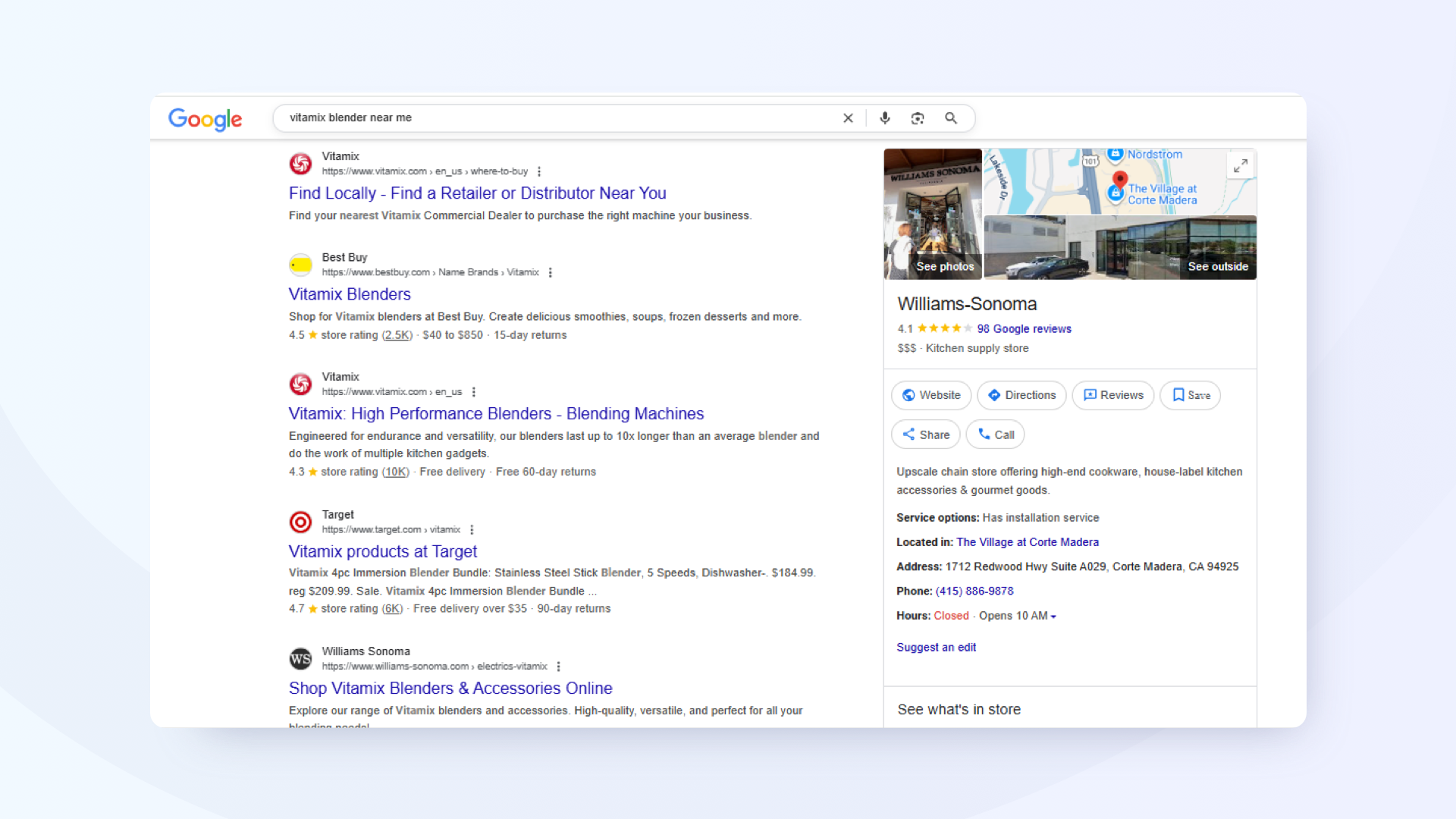
Looking at this, there is no mention of Vitamix blenders readily apparent in the Google Business Profile, but the “See what’s in store” feature further down in the listing does allow me to search for my desired product.
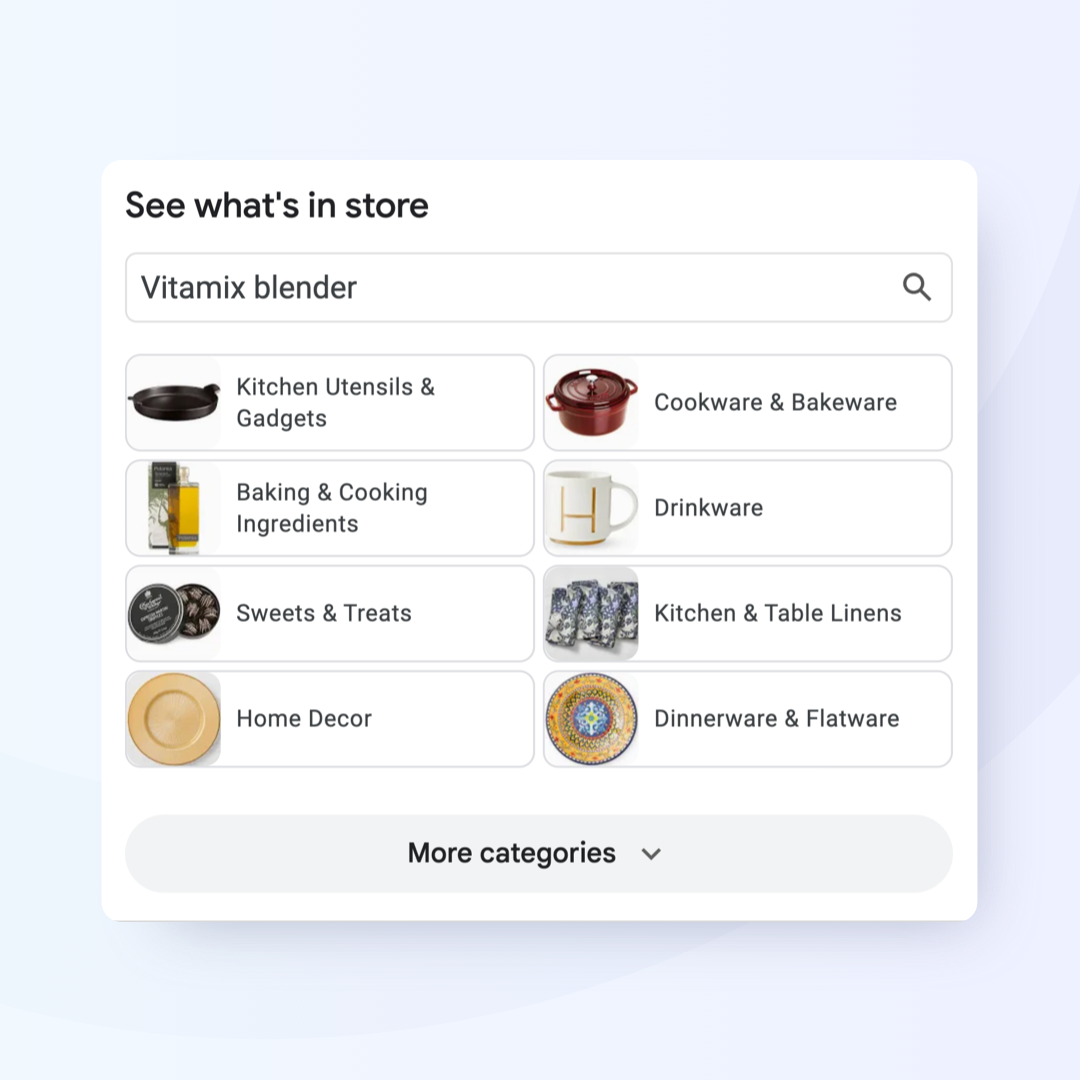
This, then, connects me to a Google Shopping result driven by this enterprise’s enrollment in the Google Merchant Center program:
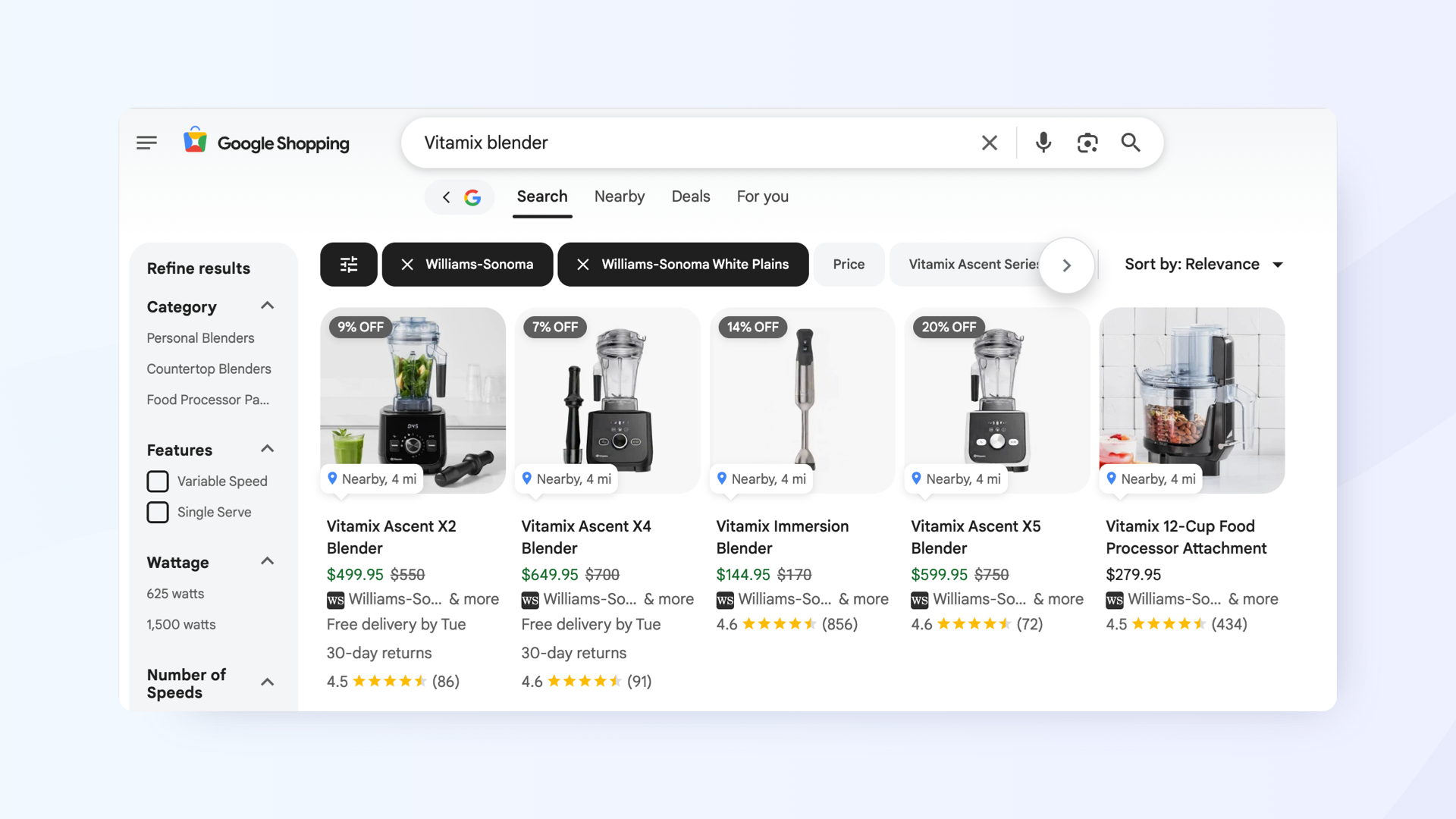
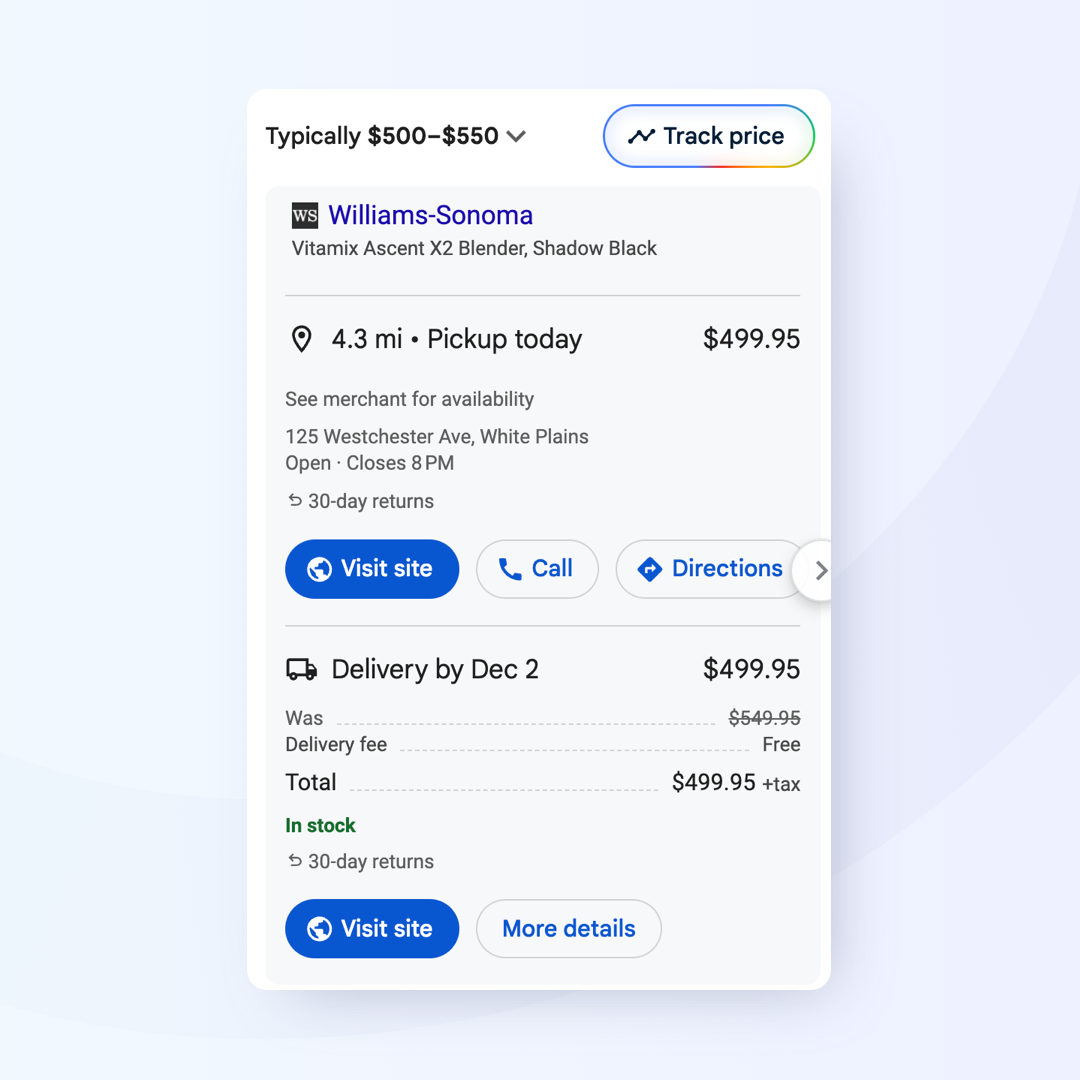
Digging deeper into the listing for the Vitamix Ascent X5 blender, Google Shopping claims that this product is available for pickup today at a location in Corte Madera:
But when we cross-check this information with Williams-Sonoma’s own website, it appears that this product is only available for remote delivery:
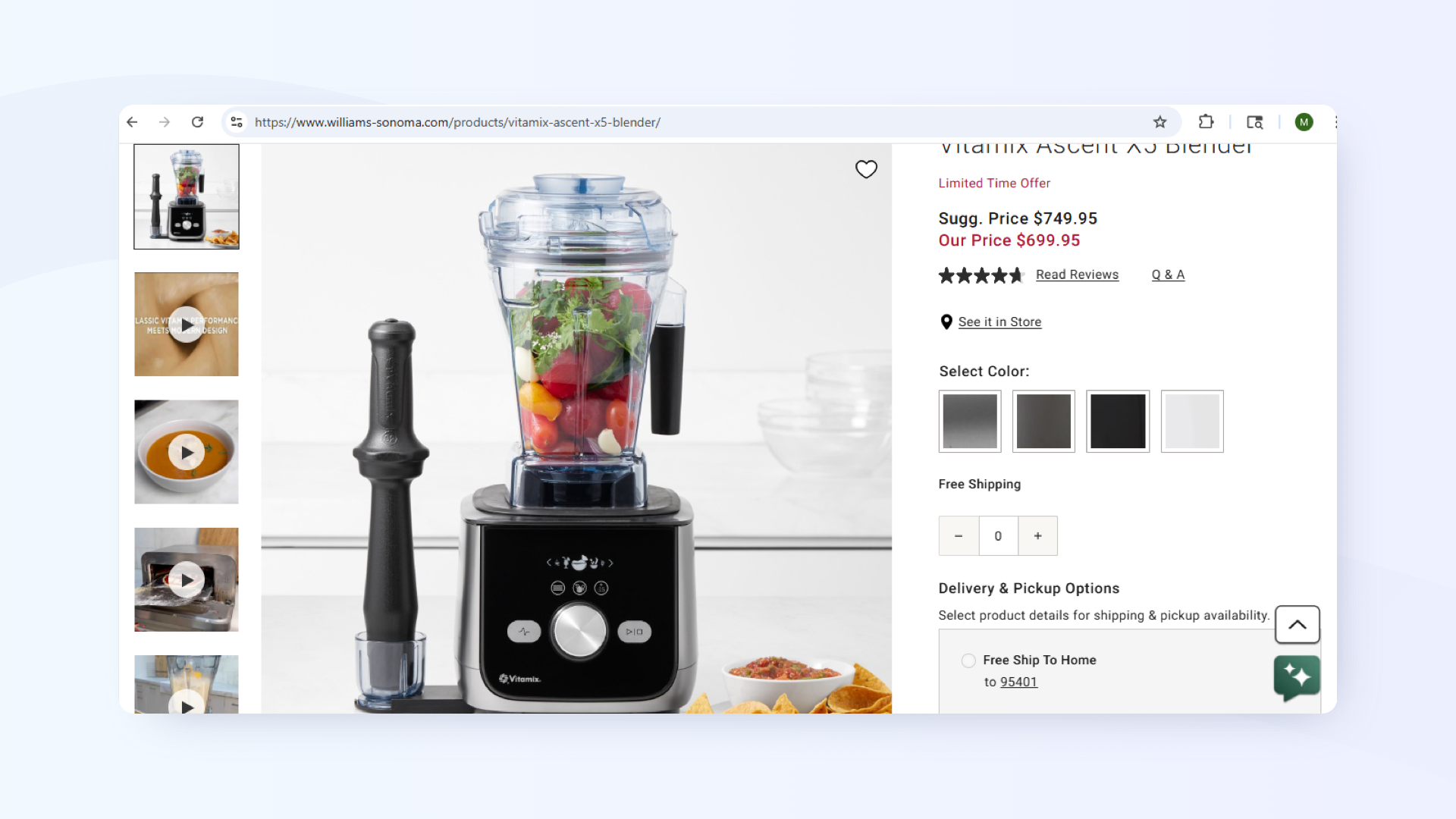
So, now we have reached a trust crisis in the consumer journey. Which platform has it right? Google Shopping, or the brand’s own website? It’s at this nexus that many consumers will turn to conversational AI like ChatGPT or Google AI Mode with a prompt like this:
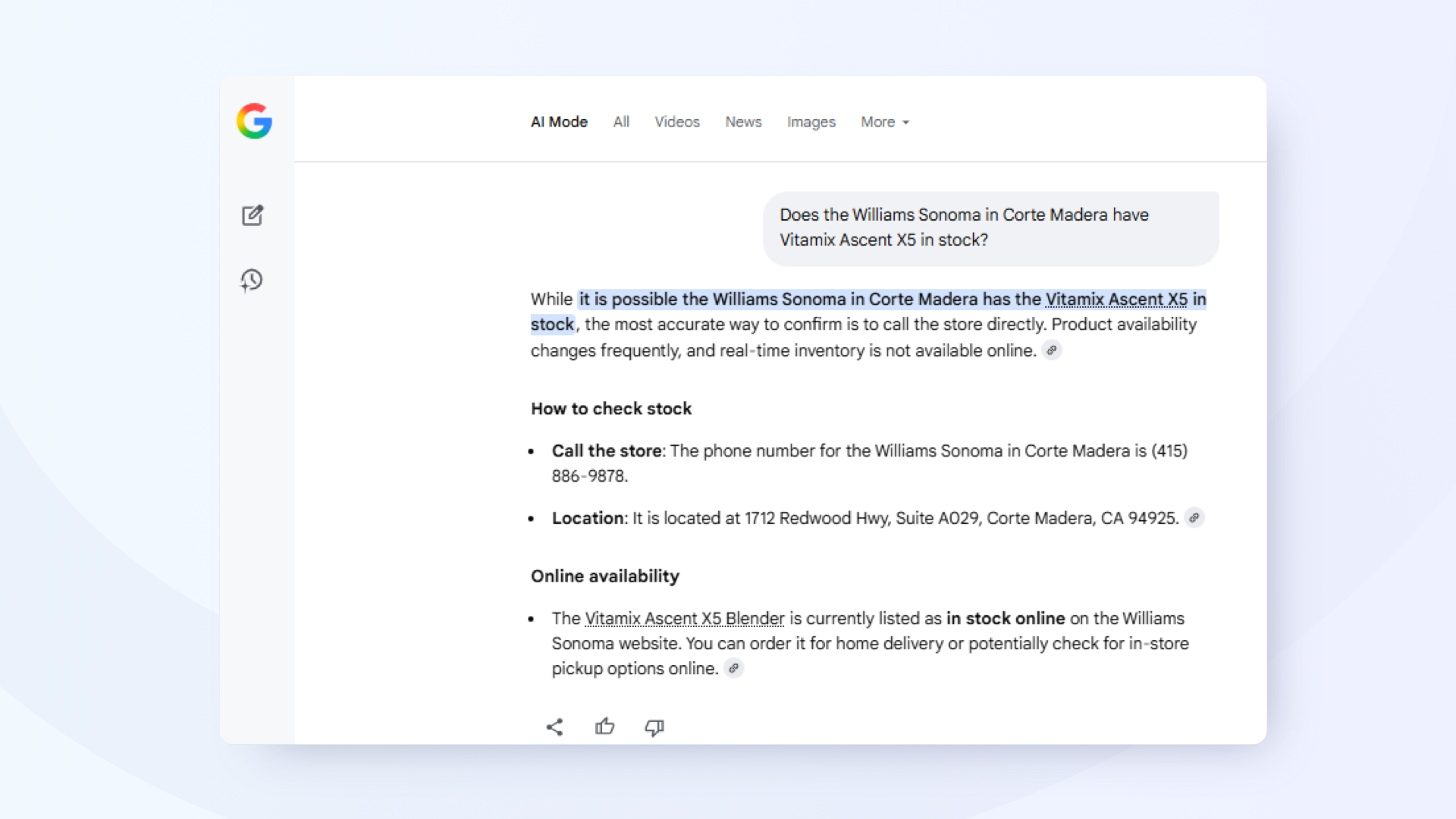
As we can see from the above screenshot, Google AI Mode has no idea whether or not a specific branch of this chain has the product we want, and is telling me to phone the store - an activity I could have saved time doing in the first place instead of wandering around through extra and unhelpful layers of search and AI technology. I could simply have picked up the phone at step one when Google showed me the Google Business Profile for Williams-Sonoma in Corte Madera.
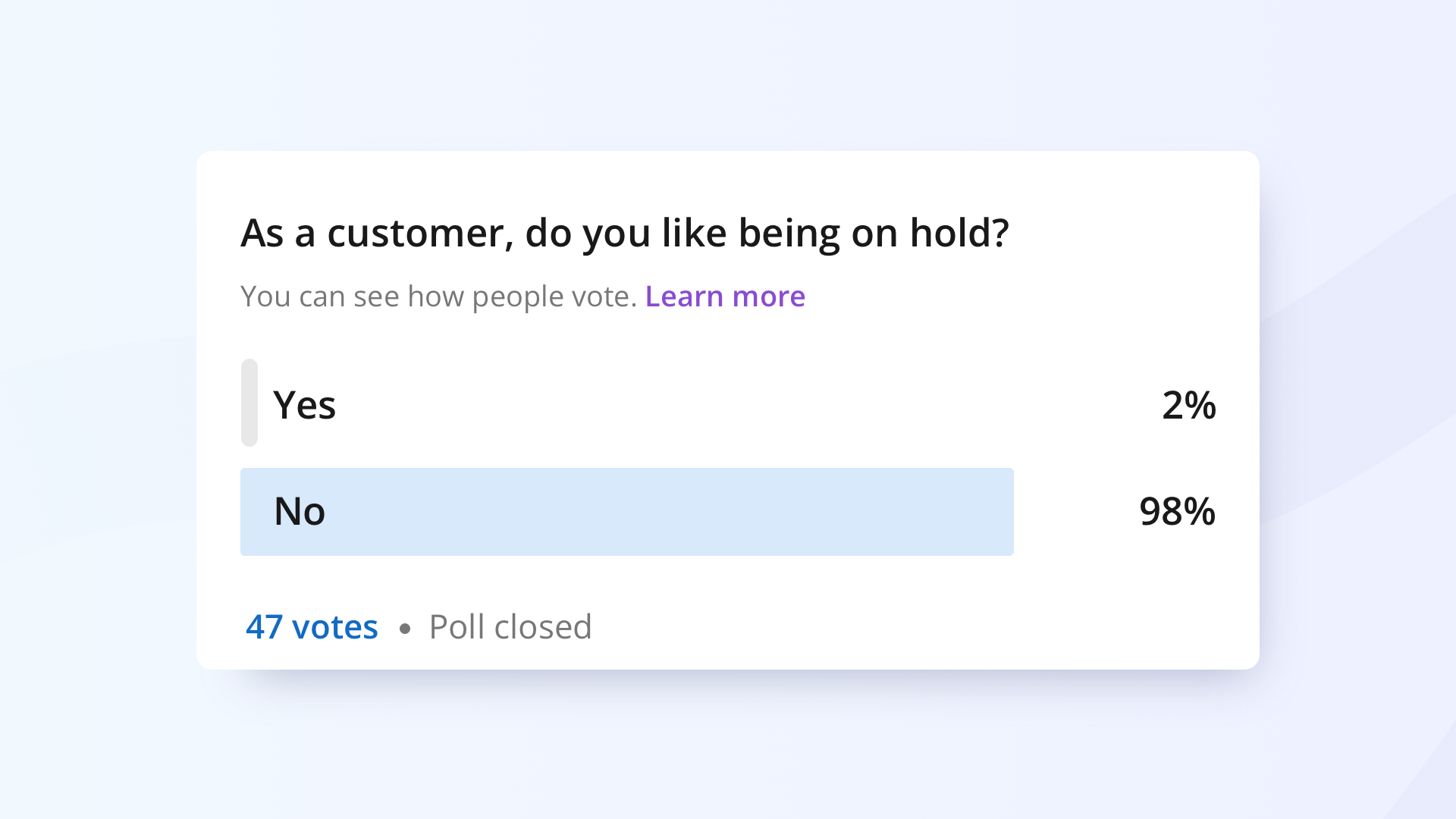
But what if I’m sitting in the lobby of a doctor’s office and don’t want to be rude by getting on the phone to have this conversation? What if I’m in a noisy room and fear I won’t be able to hear whoever answers the phone at the shop? What if I belong to the generation of younger consumers that is coping with telephobia - the fear of making and receiving telephone calls? 43% of US business are understaffed, so what if I do make the effort to phone the location and no one answers, or I’m put on hold, an experience my own informal poll shows is disliked by 98% of consumers:
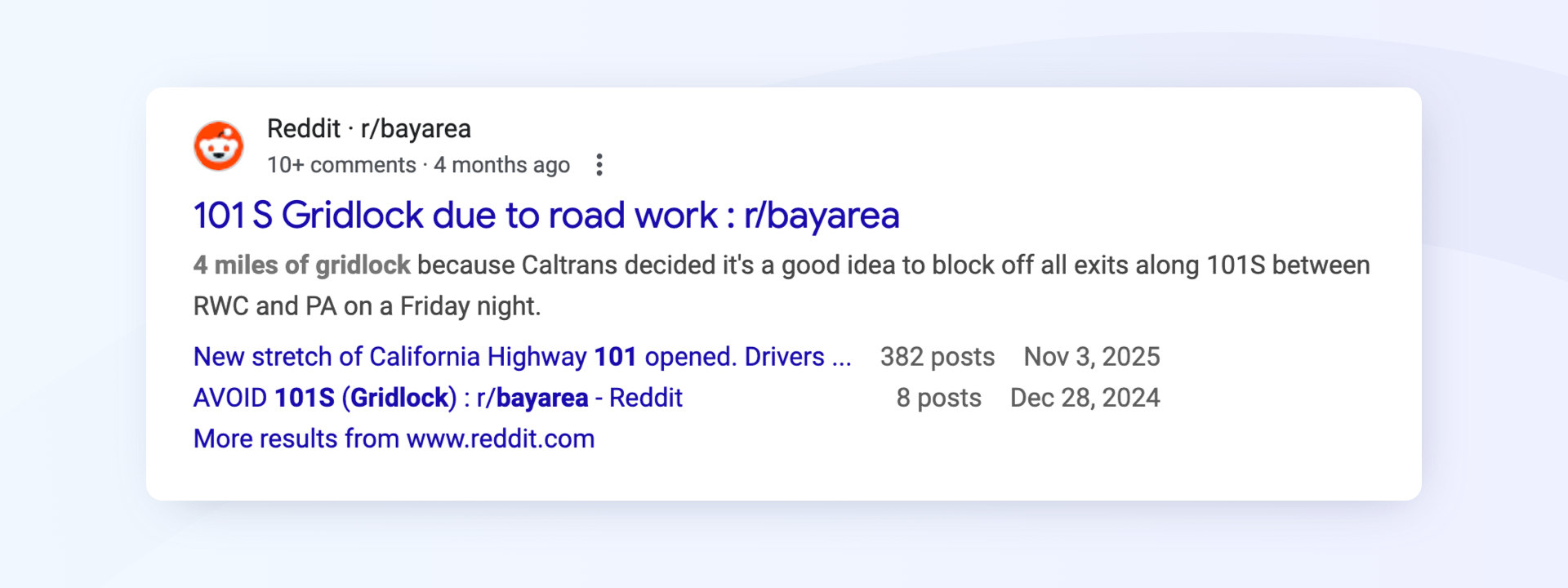
Why don’t I just drive to the shop and see if they have the blender? Because doing so means facing stressful freeways, gridlock, navigating giant parking lots and other major time-wasters for no reason at all if it turns out the product is unavailable:
Just when search and AI could have facilitated my high dollar purchase for this business, they’ve failed me.
How big of a frustration is lack of real-time inventory for local customers?
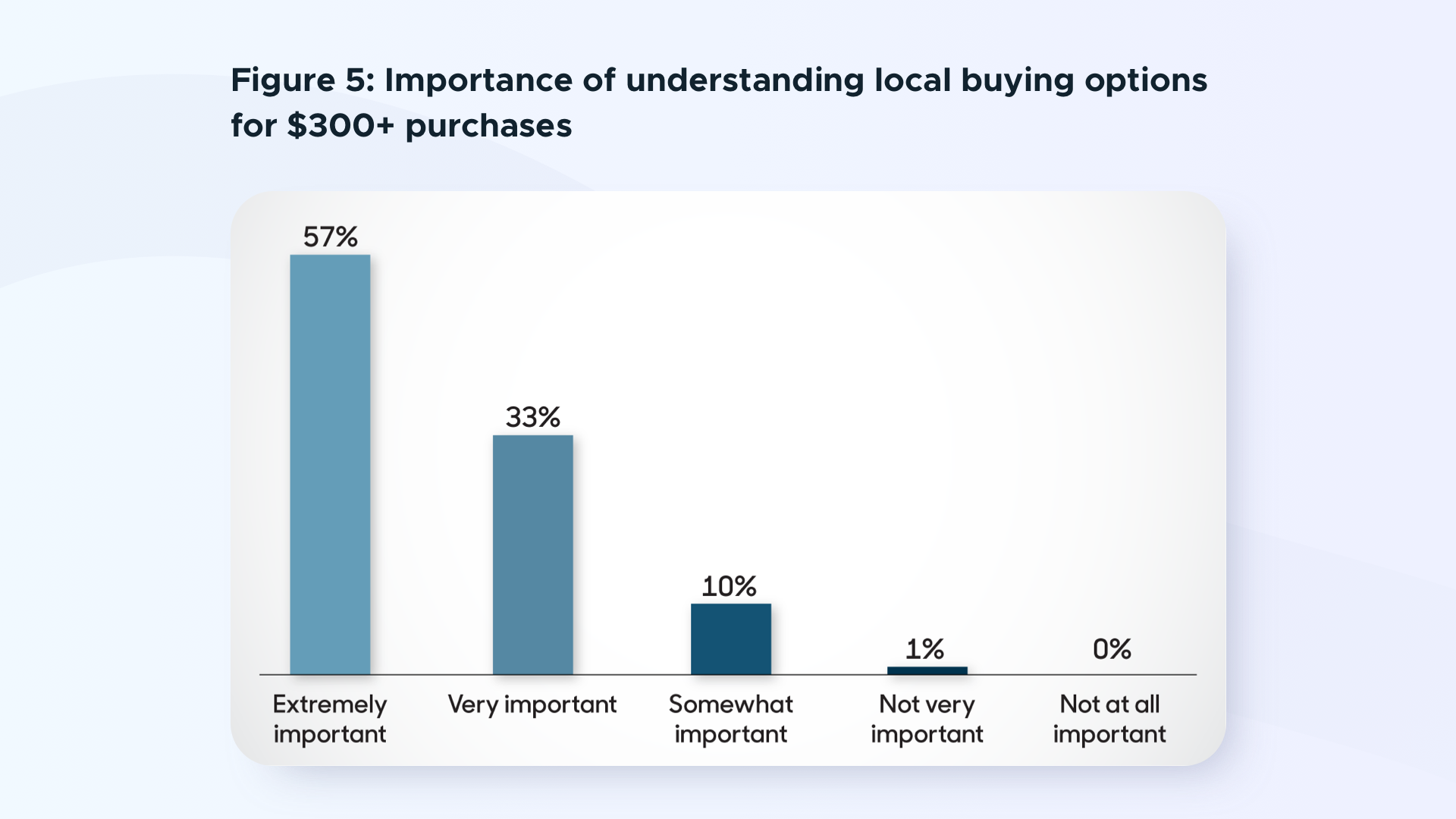
As shown above, 95% of consumers find it somewhat-to-extremely important to be able to confirm that an item priced at $300+ is actually available at a local business before they go there.
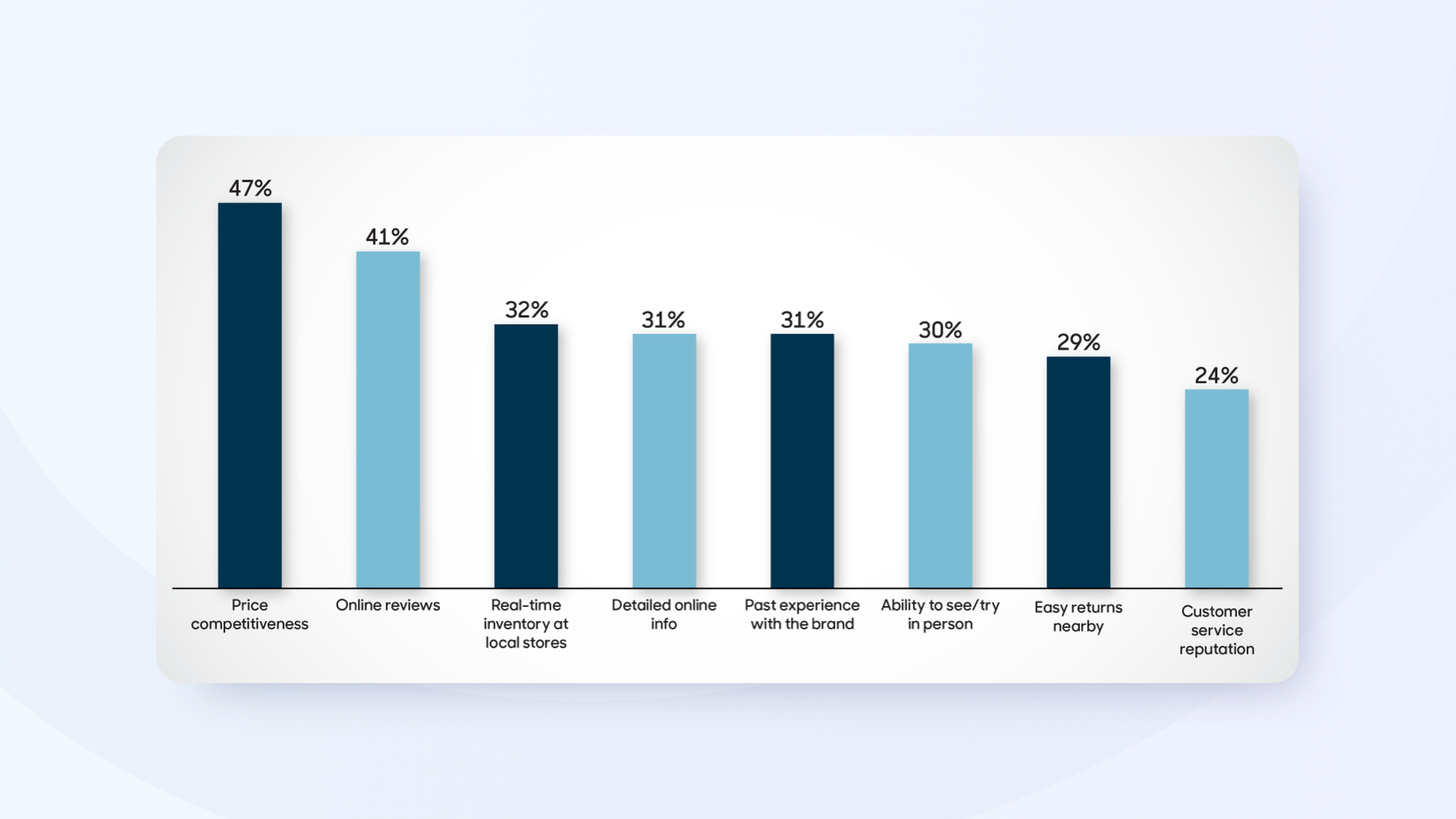
Enterprise locations have a vital but limited window of opportunity for being chosen. When Lastmile and Greg Sterling asked the survey group which factors most influence consumers’ high-end purchasing decisions, 47% cited competitive pricing, 41% cited online reviews, and 32% cited real-time inventory at local stores.
The serious problem couched in these figures is that consumers are almost always going to be able to find a less-expensive option from a megasite like Amazon, and there will typically be reviews attached to it. Local businesses, with all the expense of overheads at play, have to make the most of that 32% who are most influenced if they see a product is available nearby, even if its price isn’t the lowest.
In fact, when the survey drilled further down into this dynamic, asking what might influence a consumer to go with a local option instead of remote shipping, it turns out that real-time product availability online is the #1 factor:

So this is where our dilemma emerges. Consumers often want to shop locally, but the current state of brand websites, search, and AI aren’t offering enough assistance.
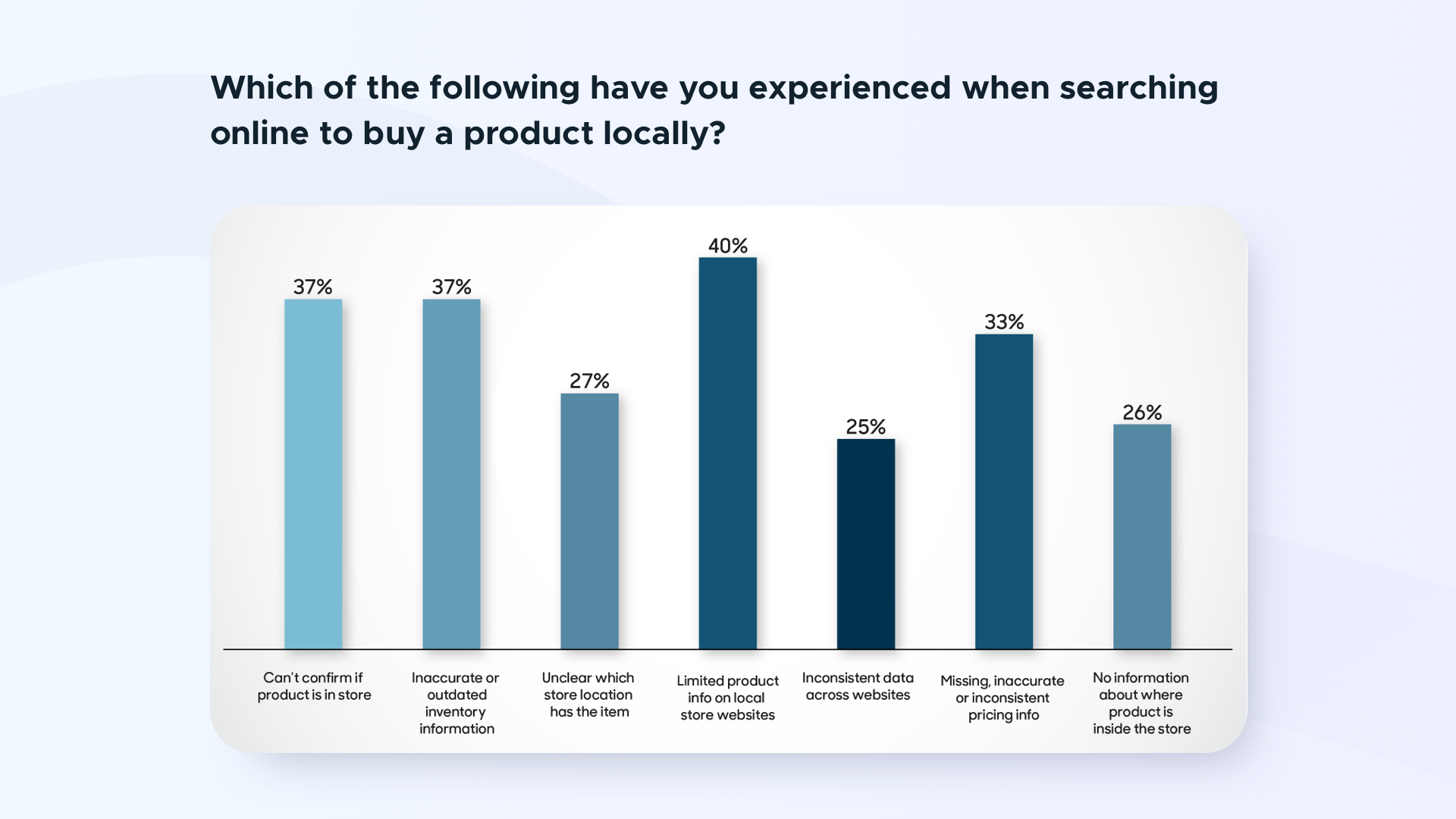
When trying to use current online resources prior to making a high-dollar local purchase, we see multiple reflections of our own frustrating search for a Vitamix blender. 37% of consumers are frustrated when they can’t confirm whether a product is available at a particular store location and an equal number are inconvenienced by inaccurate inventory information. 27% say it's simply unclear which branch of an enterprise has an item, and a whopping 40% blame company sites for not having enough product information. 25% have spotted inventory information inconsistencies across multiple platforms, just as we did in our blender hunt, and 33% say that pricing data is also inconsistent, inaccurate, or just plain absent.
And, doubtless trying to cope with the large physical footprints of many store locations, 26% are discouraged by a lack of information about where a product might be located within business premises; when coupled with the data on understaffing, an unappealing picture emerges of customers wandering aisles without adequate assistance and having to waste a great deal of time.
As customers bounce from Google to AI, 45% find it lacking inventory availability, 49% cite a lack of information on store-specific promotions and deals, and, as you’ll see if you download the full report, AI simply isn’t doing a good job delivering basic local search-type results like location information and hours of operation. In frustration, customers ricochet back to Google, but their patience can only last so long before they choose to shop remotely instead of locally.
Blocking Consumer Loss: What Potential Patrons Need From Your Local Enterprise
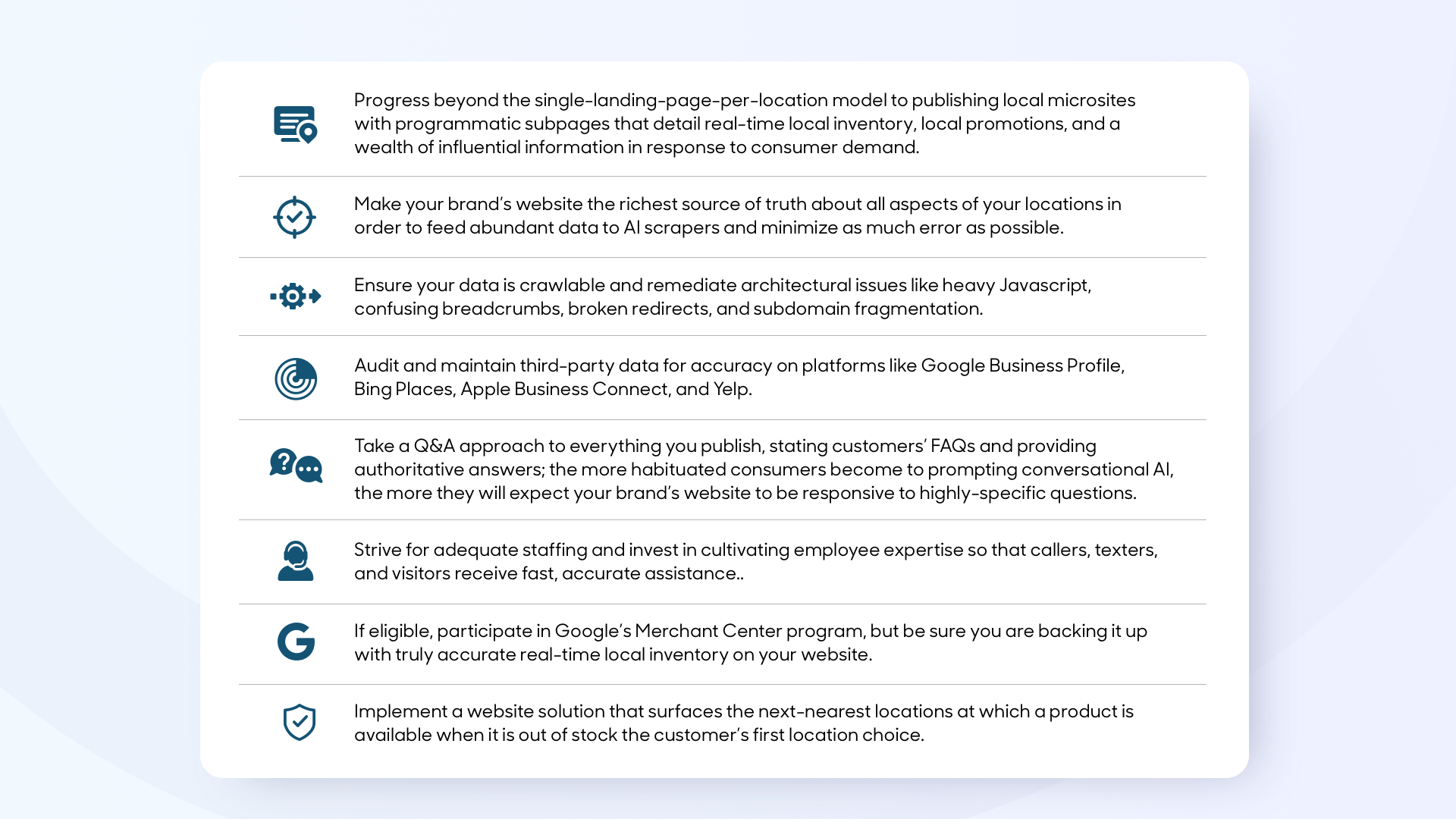
Use the following data-based checklist to spark your strategy for more fully assisting local consumers to choose your brand over remote competitors for high-end purchases:
Summing up
Consumers can’t be satisfied when they sense they’re being spiked back and forth between your website, traditional search, and AI like a ball in a game. Your enterprise’s reputation, rankings, and revenue depend on creating a seamless, multi-channel, online-to-offline experience. Doing so will widen your window of opportunity for being chosen over remote online competitors.
You can also widen your window of insight significantly by downloading Lastmile’s complete survey report, which contains a wealth of current user behavior insights and strategic marketing tactics. In times of change like these, good data can make all the difference.
Request a Demo
Drive more local sales by pairing shoppers with real-time inventory and promotions through seamless online-to-offline capabilities that help clients transact now.