“Most of commerce now is local in one form or another. You’re doing research online, you’re buying something offline. You’re trying to find the best plumber, you’re trying to find a restaurant. Even travel search I would put in ‘local’, even though there’s a heavy e-commerce component because it’s fulfilled locally, you know, in hotels, and so on and so forth.” - Greg Sterling, NearMedia
There’s an oft-quoted but untraceable statistic that’s been making the rounds of digital marketing publications for years: Americans spend 80% of their income within 20 miles of home. While the origins of this figure remain mysterious, here’s some citable data I’d love to see more SEO and marketing conference planners take into consideration when ideating speaker lineups:
- A study conducted in 2021 by Access Development suggests that the 80/20 rule is actually more like 90/20, based on their findings that 93% of consumers travel no more than 20 minutes to make everyday purchases, while 15 minutes is the limit for 83%. The Access study further concluded that the more frequent the purchase, the shorter distance consumers are willing to travel, giving examples such as 6 minutes for gas, but 19 minutes for clothing.
- A 2024 News Release by the US Bureau of Labor Statistics finds that about 84% of annual spending by average consumers occurs in categories where fulfillment is likely to be local: housing, food, transportation, personal insurance, and health care. Practically speaking, consumers buy their houses, pay rent, buy daily food, buy cars, fuel and auto services from local brands and visit doctors locally. Additional categories such as entertainment, apparel, and services could increase this statistic to the extent that people might attend local theaters, shop for clothing at nearby retailers, or pay for a variety of local services.
- A 2025 consumer behavioral study I conducted in concert with GatherUp surveyed 1,000+ US consumers and found that 55% have consulted Google and Bing’s AI-based summaries and 48% have interacted with conversational AI like ChatGPT as part of local consumer journeys.
- A 2025 study conducted by Lastmile and Greg Sterling found that 52% of consumers are using AI for local search, outpacing 43% using social media for the same purpose.
These stats beg the question: if most consumers are spending most of their money locally, and more than half of consumers are using market disruptor AI technology in their local buyer journeys, why does local search marketing continue to receive minor stage time at SEO and marketing conferences in 2026? Should it not be the dominant topic?
Adjusting conference itineraries to the AI/PI/agentic future
My goal is not to call out any particular conference or hurt anyone’s feelings today. In fact, I will intentionally take a “Deep Throat” approach to this topic to protect my sources. If you’ve been to SEO events over the past 20 years, my first point will simply jibe with your personal experience and my second point is one that should be of concern to our entire industry.
Point #1: Unless you’ve gone out of your way to attend a local-specific conference like LocalU, I’d be willing to bet that the majority of SEO and marketing events you’ve signed up for have treated local search like a specialty or an afterthought. Perhaps one or two speakers covered this topic, while the majority of presenters talked about other disciplines without connecting them to the statistics we’ve just reviewed about local spending.
Point #2: Speaking anecdotally, I have had a surprising number of random people remark to me in 2026 that they have been unimpressed with the digital marketing conferences they’ve most recently attended. Some long-standing conferences have gone away, others have decreased in prominence, and the feedback that I am hearing might be summarized thusly: presentations are frequently seeming a) too futuristic to yield actionable tactics, b) too repetitive and derivative of one another, or, c) too detached from the realization that most consumer spending is local.
I’ve seen firsthand the hard work that goes into organizing and running a digital marketing conference. My suggestion is offered in good faith that the organizations and speakers involved sincerely want to pull off a successful and popular event that attendees would sign up for again. Here are 3 reasons I would highly suggest that your organizers increase the number of local search subject matter experts in the lineup of your next event:
1. The most practical use case for AI is local
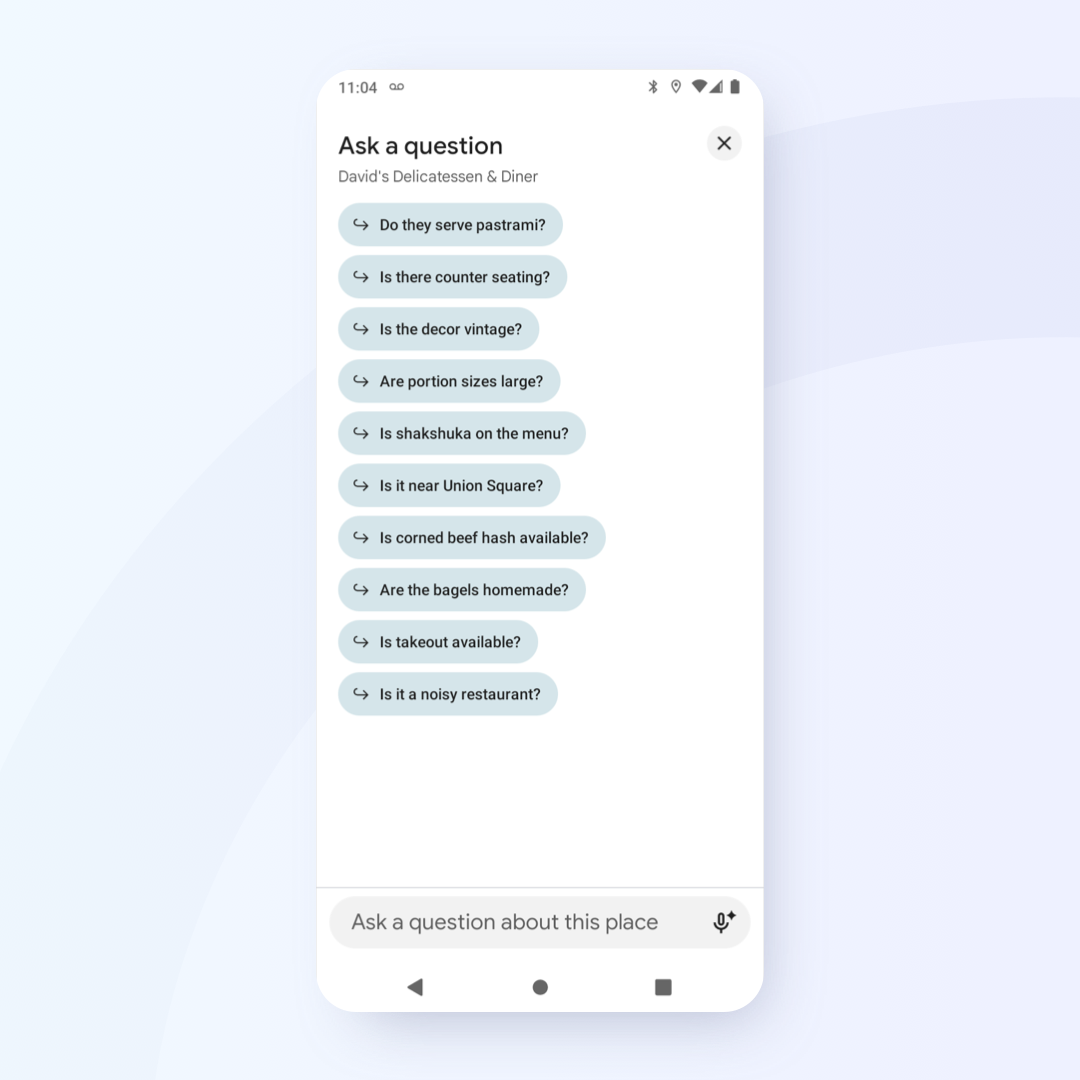
The battle between Google departments seems evident in the fact that so much of the brand’s AI-focused advertising seems to hinge on novelty entertainments (like adding relatives to photographs or writing letters to Olympians) while the most practical investments they are making have an actual commercial use case. How many people are actually going to make it a daily practice to put Uncle Bob into a family reunion photo because he couldn’t make the picnic vs. the number of people who will regularly use features like Ask Maps/Ask A Question to navigate transactional options near them?
While it’s true that we do seem stuck in a societal mindset at the moment that people want endless entertainment, I find the majority of AI marketing pitches to be gimmicky, impractical, and lacking in a strong use case. There is a reason journalists are crafting headlines like “Why Does Every Commercial for AI Think You’re a Moron?”
By contrast, the combination of imperfect local business websites + the messy state of Google’s SERPs have created a genuine use case for the applicability of AI assistance in local commercial contexts. In the GatherUp study cited earlier, I found that 6/10 consumers want to talk to someone or something when searching for local business information. People clearly need more help than they’ve been getting online. Understaffed local businesses with poorly-trained employees, coupled with extremely inconvenient phone trees and phone hold times, have created a golden opportunity for AI-driven tools to jump into consumer journeys with instant answers.
Modern digital marketing conference lineups need to include more speakers who can speak to this narrative.
2. Google’s Personal Intelligence is coming for our postal mailboxes
Who can say with any real security how many consumers will actually opt into Google surveilling nearly all aspects of their lives via Gemini Personal Intelligence in order to receive more personalized assistance? I’d like to think humans still have enough sense of privacy that they don’t really want Google spying on the fact that they have a sensitive medical appointment on Tuesday marked on their Google calendar, but that’s just me.
In Your Customer is in Charge of your Local Enterprise Marketing Now, I summarized top takeaways from NearMedia’s interview with Garrett Sussman on the topic of PI. This Google program isn’t just looking through your emails (including your unopened emails), but is allegedly able to access scans of your postal mail. And what is more local than your mailbox?
Mine is full of direct mail from local grocery stores, auto repair shops, landscaping companies, nearby non-profits, and local politicians. Now this media, long derided as “junk mail”, could be the very thing that builds the personalized, localized bubble around each individual consumer, informing the recommendations they receive for all future purchases from their AI/PI life coach.
Can you think of a hotter topic to headline the next SEO conference you’re planning?
3. Google is going hard on an agentic local future
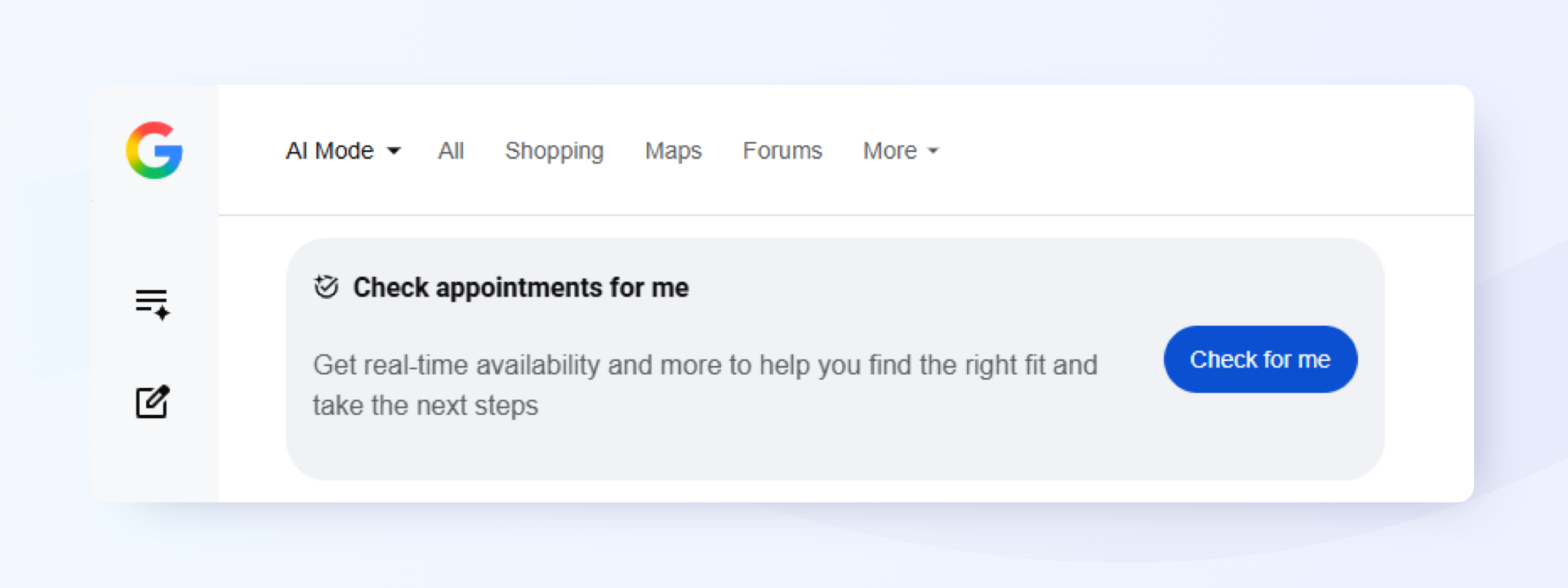
There’s no gainsaying my own local bias that’s been building up since Google launched Maps in 2005. Maybe I’m in a bubble, but I can’t help noticing that, again, Google’s disruptive experimental agentic technology seems to have the most practical use case in a local context.
Whether that’s calling 10 local businesses for price checks and product availability, or booking a table at a neighborhood restaurant, Google’s agents seem best poised to make lighter work of a big percentage of that 90/20 spending activity.
I could be wrong about this. Perhaps the end result of this latest development will be consumers having agents shop remotely from the major e-commerce brands that seem to be prominent topics at SEO conferences. I’ll stand corrected if so, but I’m not sure it won’t just be simpler for most spending to remain local, meaning that agents will complete most tasks nearby.
Case studies about this with actionable takeaways could be extremely popular at your next planned conference.
A quick who’s-who in local search
I don’t personally enjoy conference speaking. I’m a writer by trade, but I’m lucky enough to have known most of the world’s smartest local SEOs for years. Here is a short list of people I recommend your conference organizers start following on Linkedin. I don’t know if all of them are interested in speaking engagements, but I do know that your conference will be keeping better tabs on the AI/PI/agentic future if you are regularly reading what is being published by these respected professionals:
- Greg Sterling
- Darren Shaw
- Mike Blumenthal
- Claire Carlile
- David Mihm
- Claudia Tomina
- Joy Hawkins
- Colan Neilsen
- Amy Toman
- Andrew Shotland
- Greg Gifford
- Krystal Taing
- Matt McGee
- Michael Yules
- And you might want to follow me, too
Start with this list of 15 SMEs and then follow who they follow. Local search has always been a very welcoming space inside the industry, and there is so much fresh and practical wisdom that practitioners like the above could bring to your stage.
I’m seeing an awful lot of time being spent by some SEOs debating right now whether they need to change their titles to GEOs or AIOs. I understand that this matters. I was there when SEOmoz became Moz. But I’d suggest that if you want to follow the money, a deep dive into local SEO could be your best next move if you want to plan an event with the most valuable takeaways in the evolution of online and offline consumer behavior.
Final recommendation: Get in touch with Lastmile. Follow Michael Carini and Sebastian Pawlowski on Linkedin. They are increasingly bringing deep insights about enterprise-level local search marketing for brands like Hyatt and T-Mobile to some of our industry’s major conferences, and they welcome hearing about your upcoming event.
Request a Demo
Drive more local sales by pairing shoppers with real-time inventory and promotions through seamless online-to-offline capabilities that help clients transact now.