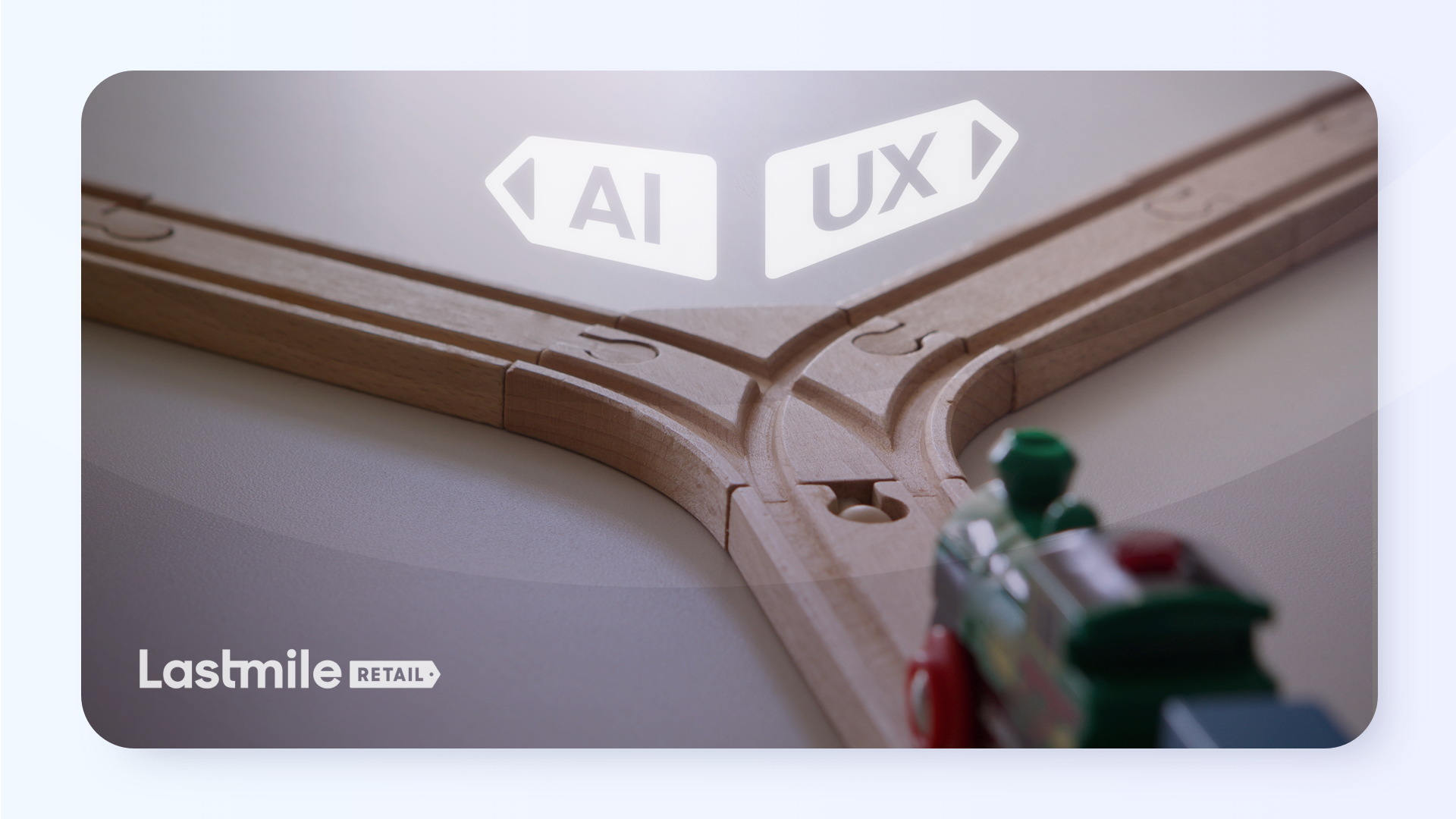
You need Flash. You need GIFs. You need color theory. You need pop-ups. You need dropdowns. You need stock photos. You need original photos. You need long-form content. You need short-form content. You need chatbots. You need jump links. You need siloing. You need keyword density.
No wonder business owners and marketers sometimes feel like shouting, “Stop the train – I want to get off!”
The digital publishing industry has gone through some strange evolutions over the past two-plus decades—from old-school visitor counters to hokey VR pitches—and at times we’ve gone right off the rails in SEO and marketing. The focus on who we’re actually serving has too often been buried under theory, rumor, and trendiness. So today, I’d like to slow things down and share a short story that Lastmile’s EVP of Sales and Marketing, Executive Vice President Sebastian Pawlowski, recently told me.
Why do I want to pass this anecdote along? Because AI has brought us to a railroad crossing and it’s better for everyone if we look at the flashing red lights.
The day Amtrak went ugly
Once upon a time, my friend and client, Seb, ran eCRM for Amtrak’s eCommerce team. His group was responsible for how Amtrak.com dynamically localized content and advertising within specific areas of the site, ensuring the right message reached the right customer at the right time. Much of the homepage itself was centered around the Fare Finder—the primary tool for users searching routes and fares—but there were still dedicated content areas where visitors browsed deals and locally relevant offers.
This was many years ago, right in the midst of some of the great SEO and web design trend battles of yore. UX professionals were already raising concerns back then, but they tended to be thoughtful, data-driven people whose quieter voices often went unheard in the louder marketing structures of large enterprises.
Seb had a theory: those content modules often reflected competing inputs from management, creative agencies, eCommerce stakeholders, other departments, regional marketing leads, and his own team—each with different priorities and interpretations of what the customer experience “should” be. So his team ran A/B tests within those sections, comparing highly polished, agency-designed creative against a more stripped-down, eCRM-driven approach, where targeting and messaging logic had greater influence over what users actually saw.
“But we need our visual branding!” his superiors protested.
“No,” he countered. “We need minimal style.”
“But we need lots of photos of trains, people on trains, people enjoying trains!” they said.
“No,” he suggested. “No photos.”
“But we need keywords, and the right copy, and all of that—and more text!”
“No,” he insisted.
His stripped-down messaging iteration featured just this:
- The price of train journeys
- The ability to buy a ticket for these train journeys
The customer offer area was stripped of decoration—purely functional, almost austere in its presentation.
The results of the test showed higher engagement, a stronger offer take rate, and increased interest in locally relevant deals, which ultimately drove more meaningful interaction with the content.
Sebastian tells me, “Despite the results, management wanted something more done up and visually attractive, but customers responded to something more direct and utilitarian. I’ve never forgotten what that test showed us—and what it taught me about local marketing at scale.”
Now let me show you something even uglier
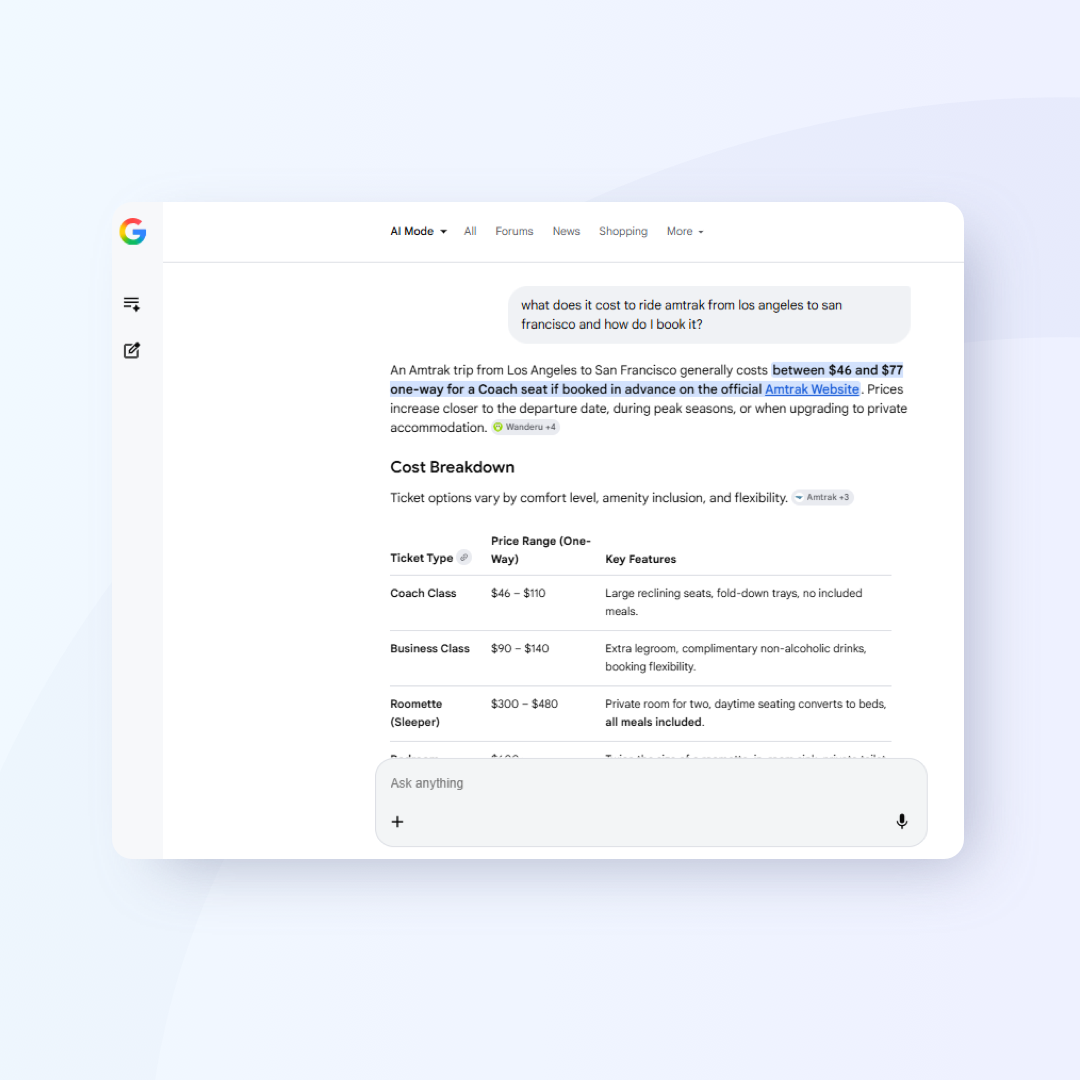
Apart from the rainbow “G” logo, Google’s AI Mode results for millions of practical commercial prompts have all the visual appeal of cracked concrete. You know what they remind me of?
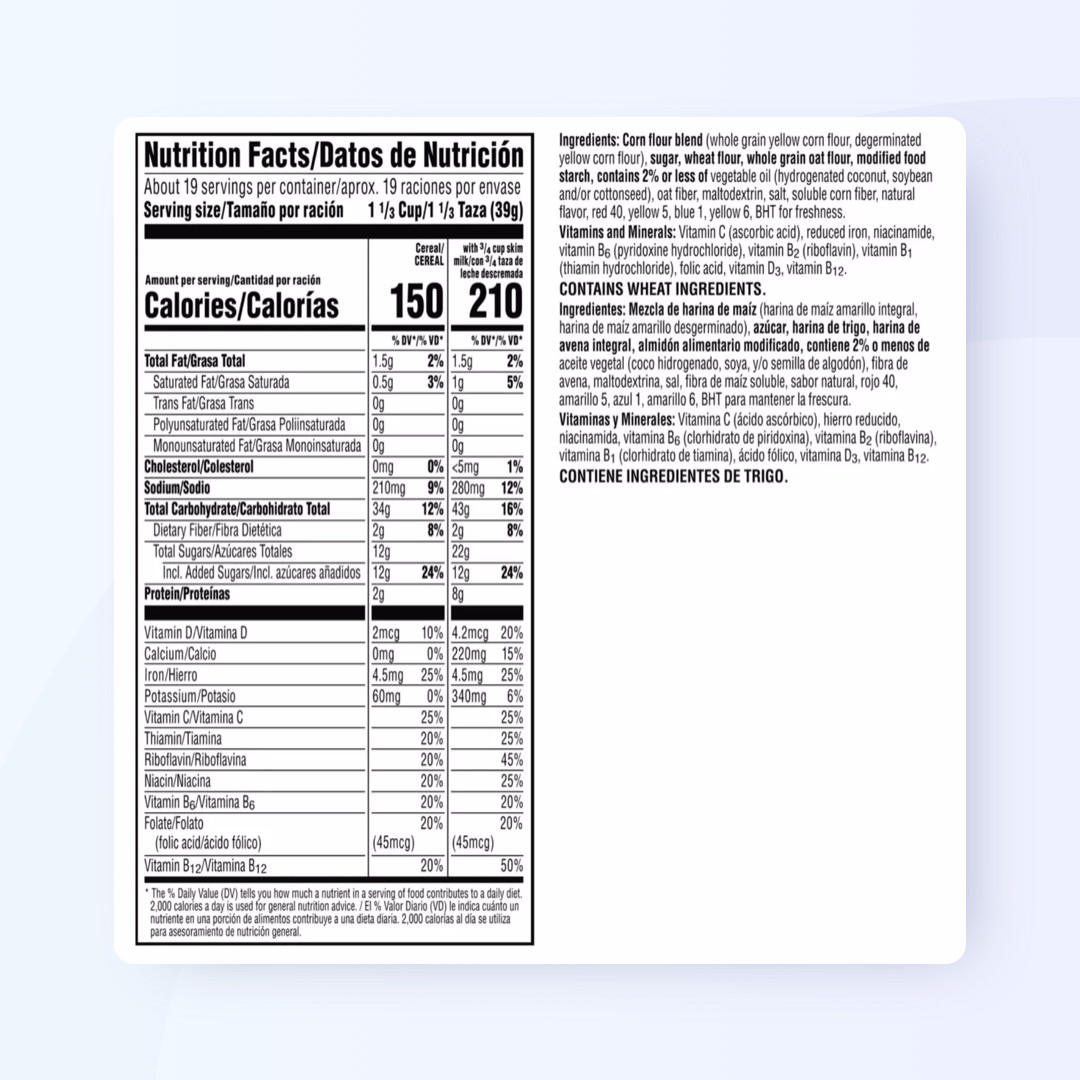
Food labels and ingredient lists aren’t the “pretty” part of a package. They’re put at the back of the cereal box, because generations of food marketers have wanted their products to stand out on grocery store shelves with this:
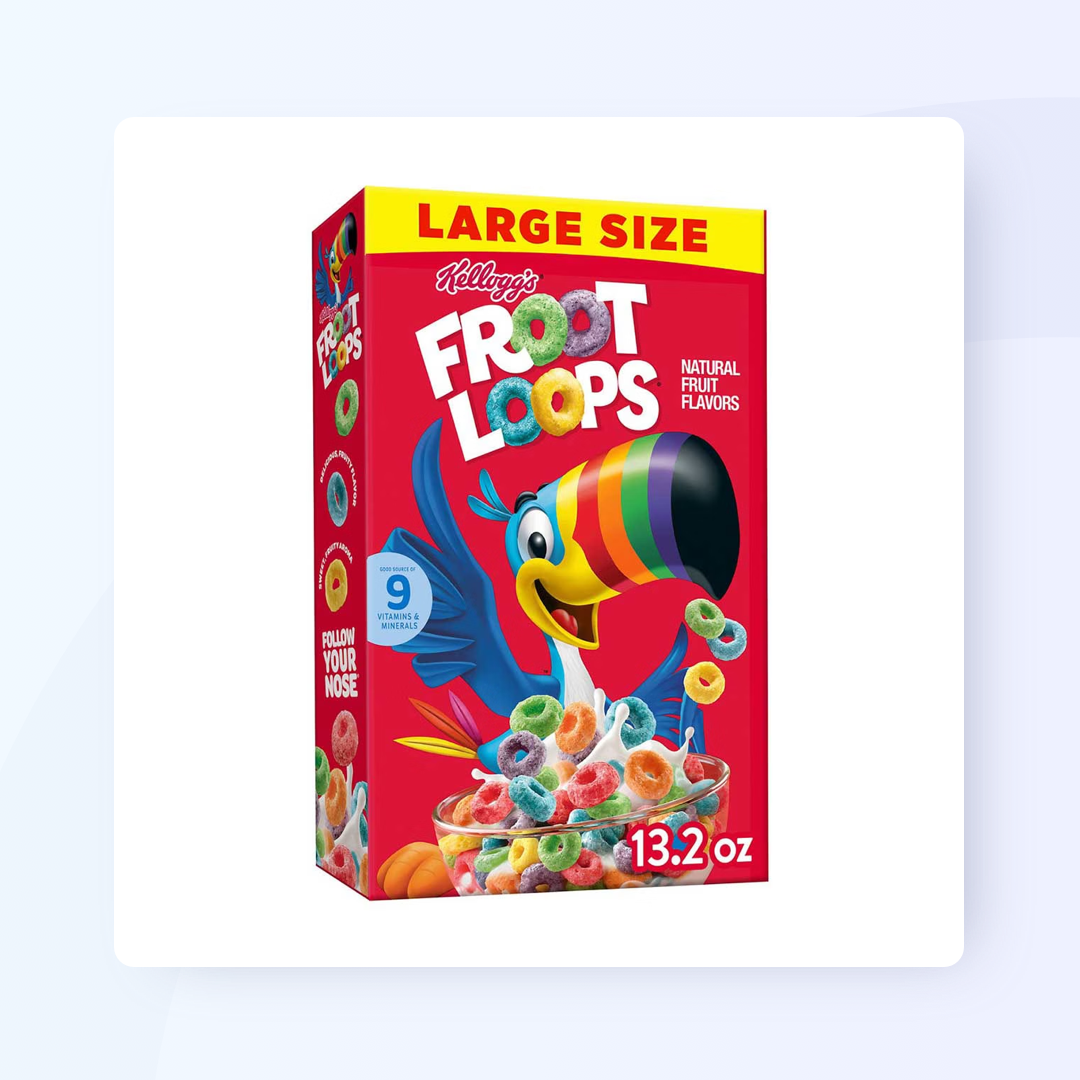
But it’s the back of the package that’s actionable for anyone on a diet, with food allergies, or nutritional concerns. It’s those ugly black-and-white details that tell these information-seeking customers with specific requirements whether to take this product to the checkout or not.
And now for a couple of confessions from me.
Confession #1: As an award-winning fine artist, it goes against my grain to show you ugly pictures. I want everything to be pretty.
Confession #2: I’m about as far as you can get from being an AI “fangirl”. I’m highly skeptical and concerned about this technology. In fact, one of the reasons I like writing for Lastmile is because company leadership here tends to keep their heads and ask tough questions about subjects like risks surrounding the rush to AI.
But here’s the truth as I see it: If your enterprise’s potential customers are turning to tools like Google AI Mode for black-and-white facts, it may be because your website and the current state of search engine results have gone down the wrong track.
Look at the barren wasteland of Google AI Mode. Prompt it with the queries you know have the highest transactional intent for your enterprise. Then, behold the lack of styling and decorative elements and weirder SEO trends. It’s a pure informational experience (note: I won’t get into a sidebar rant here about how many of the “facts” in Google AI Mode are just plain wrong, because we’re focusing on the intent of the customer here rather than the quality of Google’s solution.)
If you want to make money, your customers only need the information they require to make a decision. This may be drab and ugly, but in a way, it’s kind of beautiful to help people get things done.
The end of the line
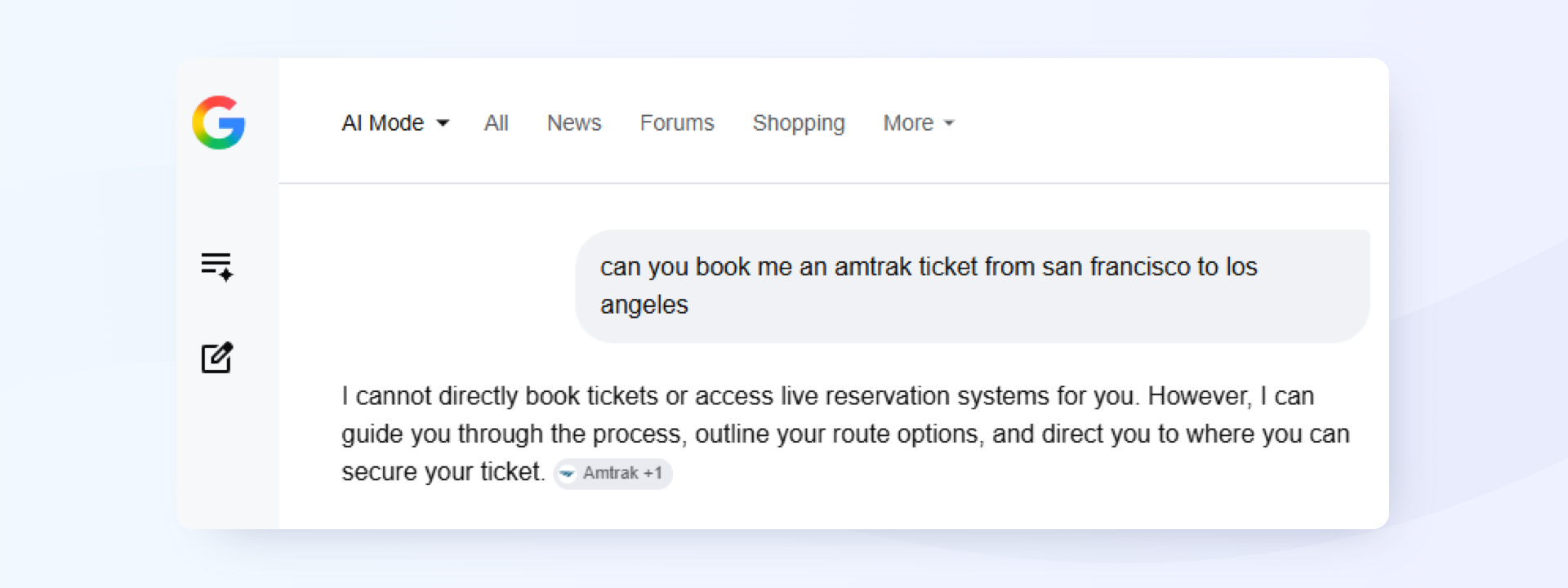
Right now, it doesn’t appear that Google AI Mode is hooked up with the ticketing systems of Amtrak, or Greyhound, or Viking Cruise Ships or other major transportation brands.
But they will be. At least, they will be if agentic AI ends up being what consumers want.
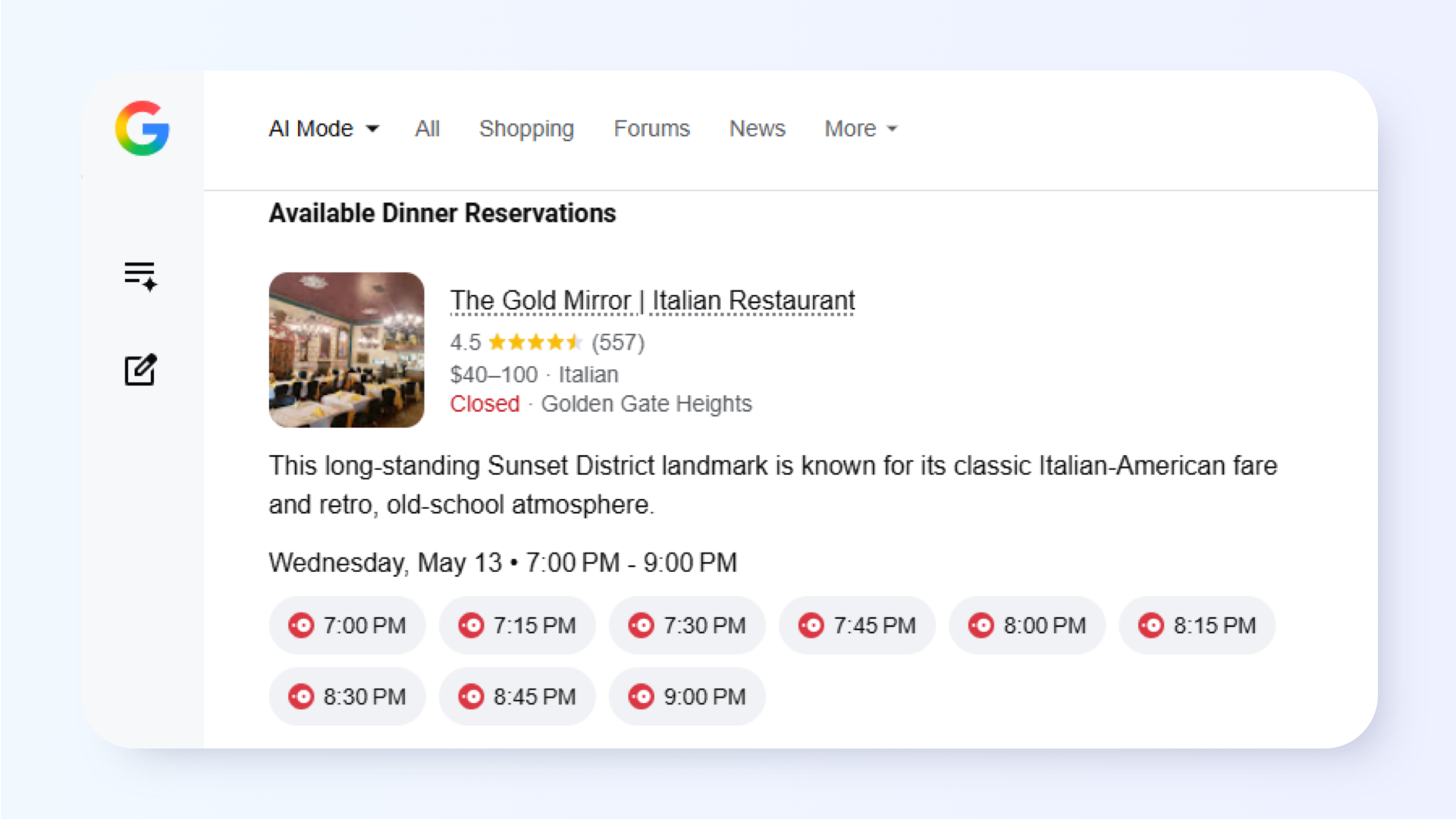
Use of conversational AI tools confirms that customers are eager for actionable information. Use of agentic features like restaurant bookings within Google AI Mode (shown above) suggest that all of this information-seeking activity can culminate in an action – specifically, a transaction.
And will agents care about the pretty stuff, the frills? No, they will not. Robots need the back of the cereal box; not the picture of Toucan Sam when a transaction is on the line.
Is this definitely how this will play out, with humans increasingly off-screen, using voice tech to instruct their robots to buy tickets, book dinners, and order grocery delivery? I can’t say for sure, because the answer exists in the future and will be based on mass trends in consumer behavior rather than a clever prediction on my part. But here are three things I would encourage your enterprise brand to be talking about right now at your marketing strategy meetings:
1. Do you know what your customers want?
What is the least information your customers need to make a decision, and what is the shortest route to them taking an action on your current website? What would your website look like if it was generated by Google AI Mode?
2. Do you understand your massive enterprise advantage?
If you have the fortune to be marketing a longeval major brand that put in the work decades ago to become a household word, you entered the internet age with the board tilted in your favor. People and digital publishers were already talking about your business, citing your business, linking to your business, reviewing your business, and choosing your business without you having to put in the SEO, local SEO, and digital marketing efforts your small business competitors have felt forced to chase by Google’s algorithms.
Time and again, organic SERPs and local packs favored your brand over smaller ones due to your prominence, and you’ve had the paid advertising budget advantage, too, enabling you to solve visibility gaps with ad spend. All of these factors have served you very well over the past few decades.
3. Do you see the risks of your past advantage?
There are two things that no one at your large multi-location brand is going to want to talk about.
The first is that your built-in prominence has left you too much time to think about image because you haven’t had to scramble for visibility like SMBs. Along the chain of command and along the way, your website may have become fluffy instead of functional for customers, and your tech stack may have become wastefully overtooled instead of lean and actionable. Like TV commercials that infamously feature boardroom scenes because the brands behind them are trapped looking inward at corporate life instead of outward at consumer needs, your website may have lost track of its customers.
The second tough topic relates to the first. I’ve never been to an all-hands meeting at which someone didn’t profess that the brand cared about its customers. If that’s true, why is it that when I phone the customer service numbers of major brands, I am put through 20 minutes of automated purgatory before reaching an actual human being who can answer my question or take the action I need? Why do I see horrible average star ratings on the Google Business Profiles of some of the biggest brands in the US, built up across years of negative consumer reviews complaining about egregious customer service standards? Do these companies really care about their customers, or do their executives and staff simply feel that’s something they need to say, like “Have a nice day”?
If the AI+agentic mashup earns widespread consumer adoption, the biggest risk to enterprises like yours is that you will not see that your customers can no longer come second because their needs are going to drive everything. Check back soon for my follow-up column on this very topic.
For now, my best advice is to have serious conversations with all of your stakeholders about the beauty of plain action and fast fulfillment of consumer needs. I’d like to put a caboose on this tale with a remark Seb made that has stuck with me:
“Despite the results of our A/B split test all those years ago clearly showing that the more utilitarian approach increased activity in the local marketing funnel at scale and drove sales, decision-makers were more comfortable with a prettier, more polished narrative. Why is that?”
Want to have a practical conversation with Lastmile about customer-centric, local-enterprise marketing? Get in touch with us today!
Request a Demo
Drive more local sales by pairing shoppers with real-time inventory and promotions through seamless online-to-offline capabilities that help clients transact now.