Is your enterprise tracking a significant drop in clicks-to-call from your Google Business Profiles to multiple locations of your brand? If so, you’re not an outlier, and what you are noticing isn’t a reporting glitch.
Google is championing development of their local AI products in 2026, and brands across multiple verticals are reporting:
- Reduced visibility in local search environments
- Fewer phone calls than formerly
Today, we’ll look at third-party and proprietary research that sheds light on how AI is impacting both visibility and phone calls, and why what sounds like bad news actually contains a valuable silver lining for your multi-location enterprise that could position you to come out a winner amid change.
The data: Understanding new challenges posed by AI
1) To set the stage, we want to highlight the following screenshot from an episode of the SparkToro Office-Hours video channel surfacing data from a pivotal study by ZipTie, Inc, which revealed that earning top 10 organic visibility in Google only leads to a 25% chance of being shown in response to AI prompts:
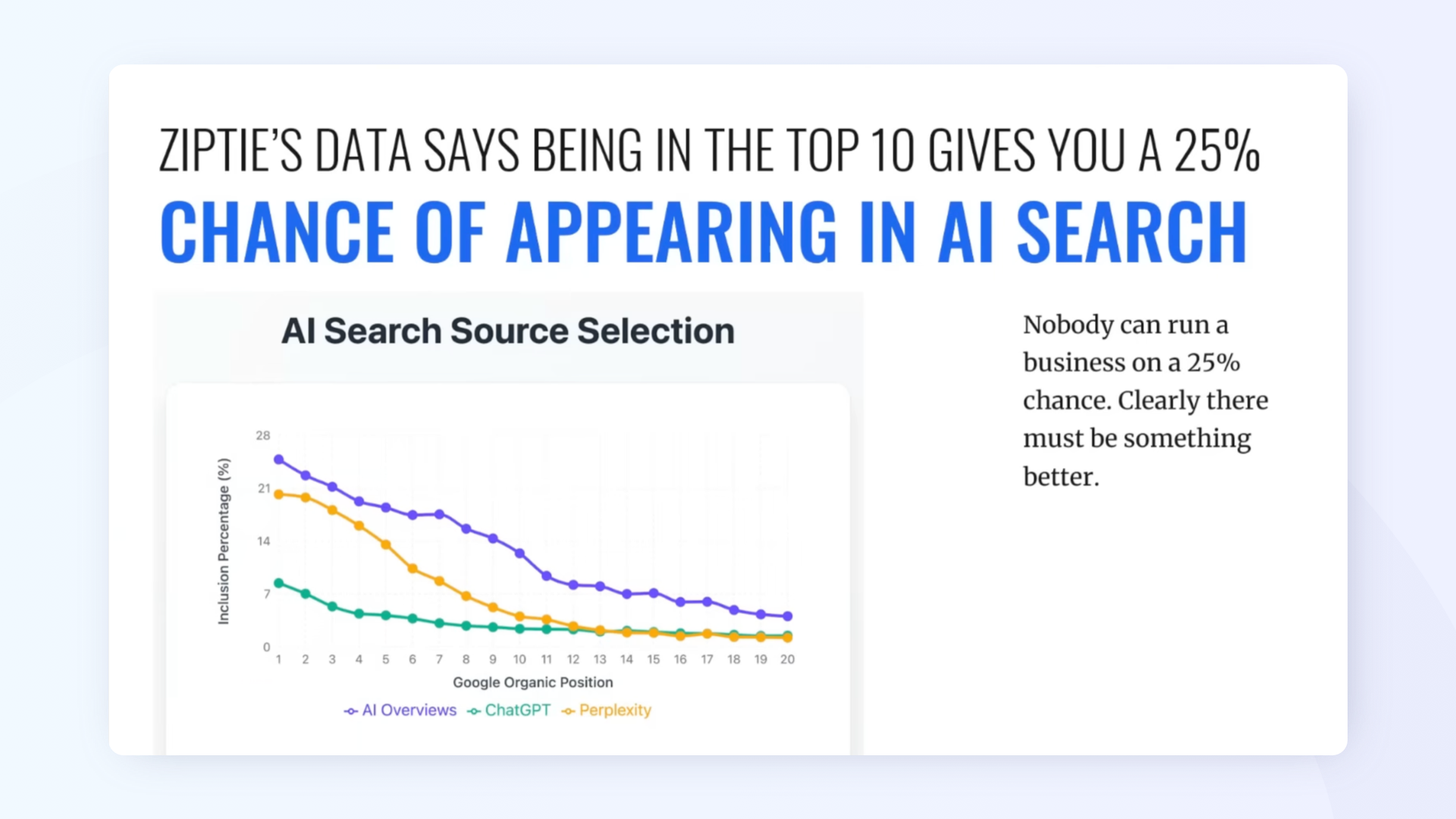
This research points up how the organic visibility local brands have spent the past several decades earning is not a strong predictor of prominence in the outputs generated by a product like Google AI Mode:
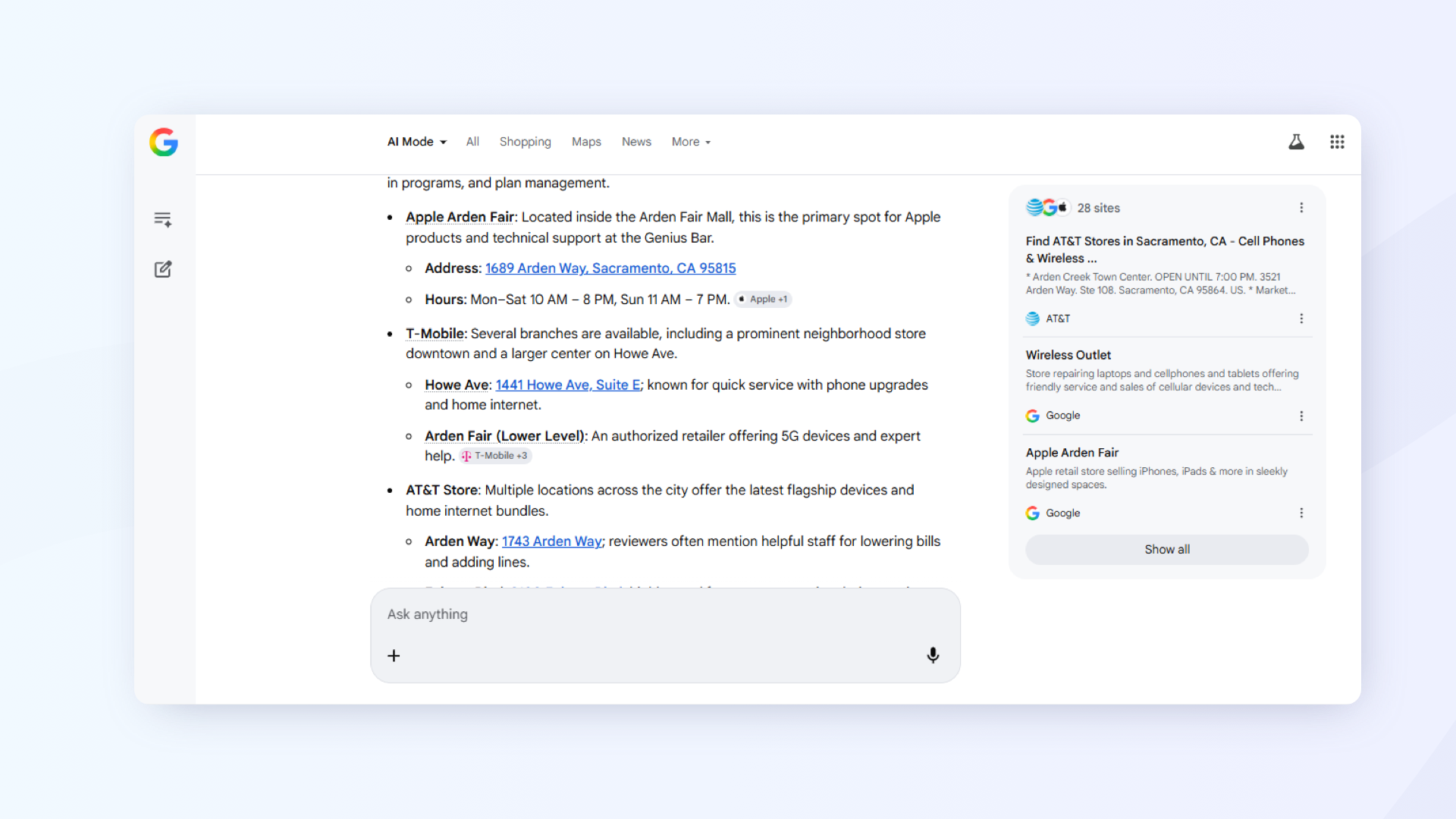
In brief, organic ranking wins carry less weight in diversified AI outputs.
2) Now, to narrow this picture to a specifically local context, we want to draw attention to a joint study conducted by Sterling Sky and Jepto which they developed as a means of investigating why local businesses with strong local pack rankings have been experiencing a significant drop in clicks-to-call from their Google Business Profiles. The following screenshot from their report holds a significant clue:
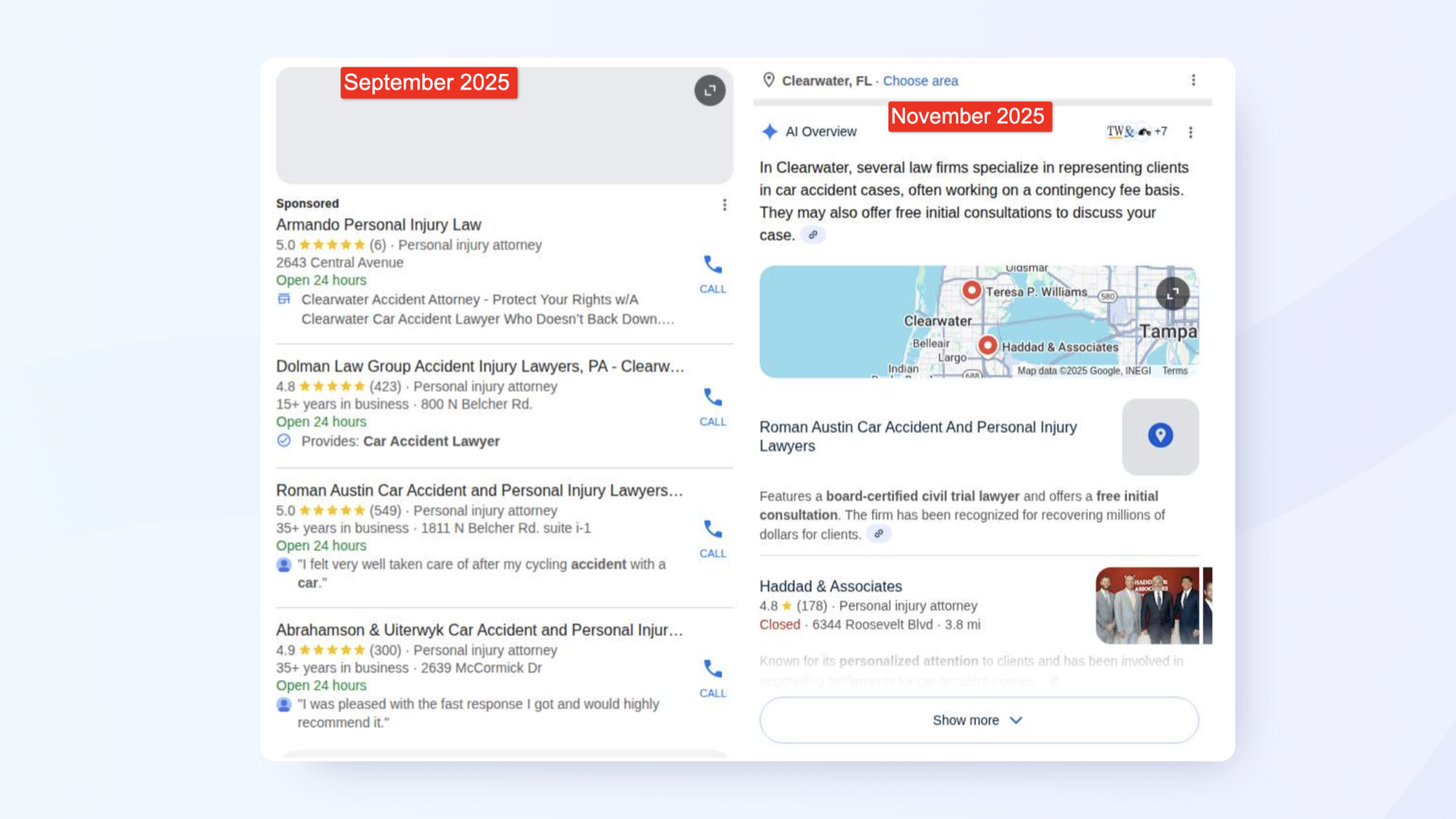
The side-by-side comparison of a traditional local pack result with a new AI-driven local pack reveals that these new mobile results feature zero click-to-call buttons. Moreover, this study found that:
- Whereas traditional local packs commonly contain 3 business entries, AI local packs frequently feature only 1-2 entries
- Google’s AI-driven local packs are surfacing 32% fewer unique businesses than the traditional packs you have been used to for many years
In sum, not only does Google’s decision to remove call buttons offer a clear causality for reduced phone calls across the branches of your enterprise, but the reduction in unique business impressions in AI-driven results suggests that opportunities for visibility are shrinking.
A helpful way to think about this is that, on the organic side of things, you may be losing ground due to the diversification of the results of a tool like AI Mode’s, while on the local side of things, lost ground is the result of reduced diversity in Google’s mobile AI local packs. Clearly, this contrast creates a challenge for all local brands.
3) Finally, to understand a key outcome of Google’s choices on local consumers, Lastmile’s recent study with Greg Sterling of NearMedia reveals relevant findings on customer trust and frustration:
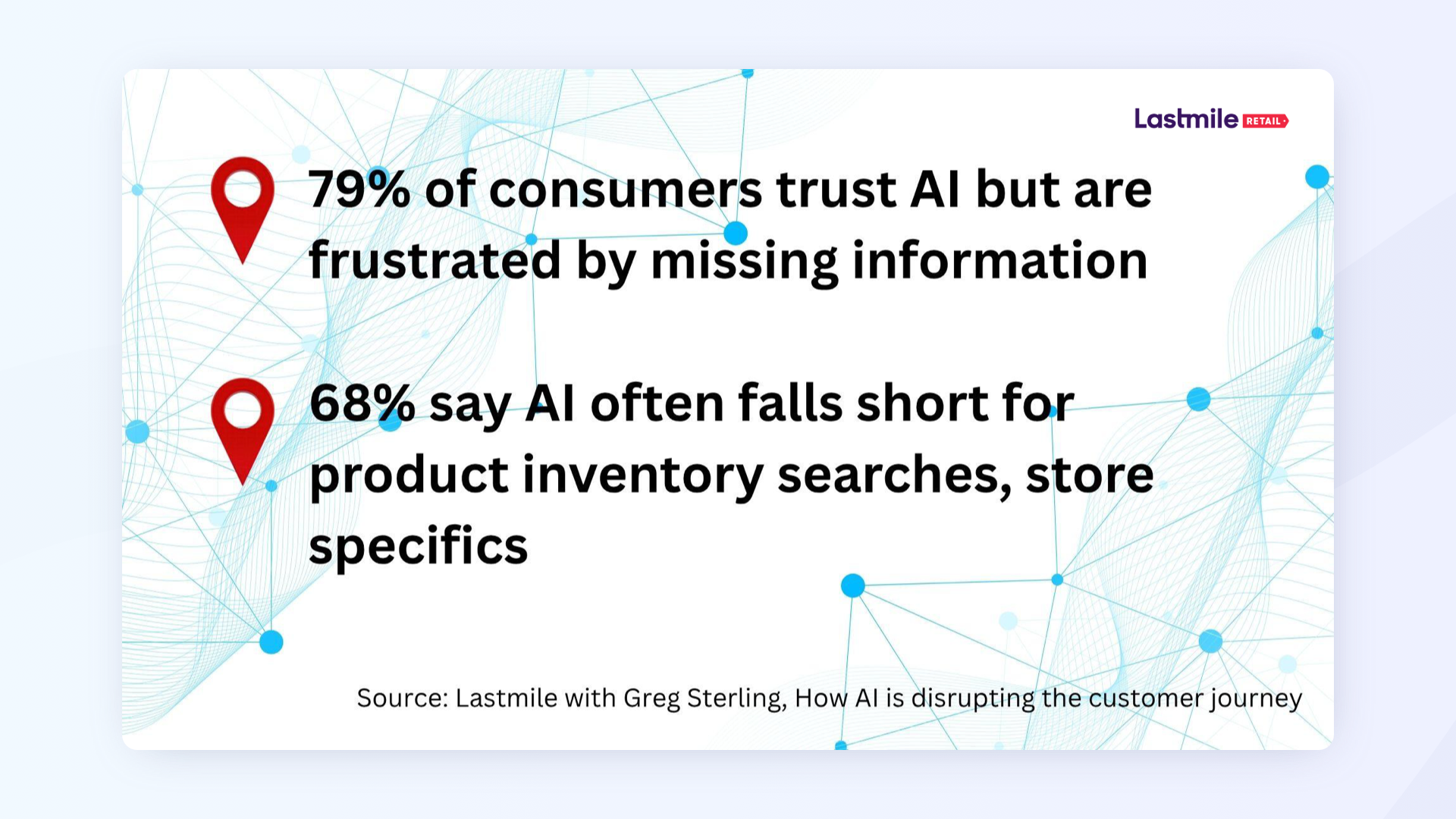
We recommend downloading Lastmile’s free report for the full findings of this study, Local Search and Shopping: How AI is disrupting the customer journey. In essence, however, we found that the greatest barrier to widespread adoption of AI-driven products in local consumer journeys is a lack of deep content rather than a simple matter of trust. AI scrapers are hungry for detailed information about all matters pertaining to local businesses, but frequently can’t find it. Unfortunately, AI products are prone to inventing misinformation in the absence of discoverable facts.
When coupled with the increased or decreased diversity of AI outputs vs. traditional organic/local search results, insufficient core information will further reduce your enterprise’s prominence in emergent AI environments.
The silver lining: Making the most of your multi-location advantage
As the local search marketing industry spends more time analyzing the impacts of AI on brands and consumer behavior, solutions are beginning to emerge. The excellent news for multi-location enterprises is that they are positioned to win the AI race by meeting the challenges we’ve identified with the right strategies. Use the following checklist to modernize your marketing playbook:
- Double down on your organic foothold to secure basic visibility in AI outputs. For each location of your enterprise, develop deep local content via a micro-site approach that answers all consumer questions and facilitates all consumer actions, including store location, real-time inventory search, next-nearest store information when products are unavailable, representative inventory, bookings, promotions, offers, events, and more.
- Increase investment in unstructured citation development, earning linked mentions from relevant local and industry publications to improve both organic rank and AI prominence.
- Increase hyperlocal relevance by opening new branches in your markets to seize greater visibility in AI tools. New office locations must have visible signage, unique phone numbers, unique URLs, and be staffed by human employees during open business hours. Avoid overlapping service areas to prevent Google Business Profile suspensions, but maximize the number of locations for which you can build listings, deep local content on your website, and unstructured citations.
- Invest in Google Ads; Sterling Sky reports that these pay-to-play formats still retain their click-to-call buttons, generating increased ROI.
- Invest in all forms of paid advertising that are resulting in visibility in AI outputs.
Compared to small business competitors, local enterprises like yours are better-equipped to meet the new challenges of AI development because of your ability to hyperlocalize physical locations, scale conversion-centric content creation, and budget for paid visibility.
None of these investments are inexpensive. Your brand may need to run audits to discover new ways to free up budget, such as by reducing dependence on middleware that your staff is using minimally, or by improving access permissions so that branch managers and franchisees are empowered to contribute more to decentralized marketing strategies.
Sterling Sky’s research suggests that many brands are simply unaware at this point that they are losing ground. Analytics have not yet caught up to fully tracking AI tools and AI-driven consumer behaviors, creating a black box that less-savvy competitors may not even know exists. By reacting with agility now to the new challenges and opportunities, your multi-location advantage can help you win both now and in the long game.
Lastmile can help. We work solely with major enterprises like T-Mobile and Hyatt, and create custom playbooks that work for the world’s largest local brands, backed by dedicated partnership support. Come talk to us about reducing inefficiencies and maximizing your silver lining advantage.
Book a live, one-on-one conversation with us today.
Request a Demo
Drive more local sales by pairing shoppers with real-time inventory and promotions through seamless online-to-offline capabilities that help clients transact now.