Don’t do it! This is not a Nike ad. This is not a test. If you’re marketing a multi-location brand, these five powerful forces are going to tempt you to artificially inflate your brand reputation:
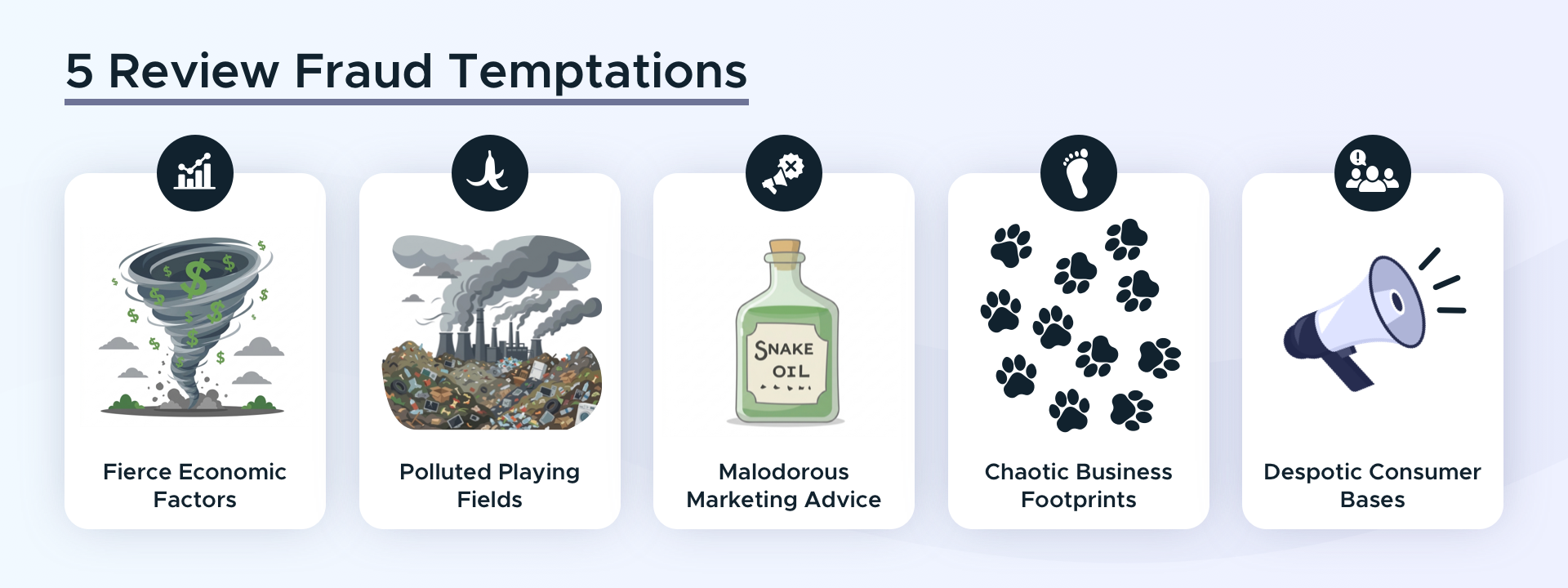
- Fierce Economic Factors – You’ve got to earn a profit, but operating costs are high, supply chains are undependable, trade policies are frenetic, consumer behavior is unreliable, and AI is disrupting markets. If online reviews could make your brand look like it’s already popular and successful, no wonder you’d feel tempted to fake them.
- Polluted Playing Fields – Brands are making billions off of review fraud. Google likes to publish news about blocking and removing millions of fake reviews, but review spam is rampant in their system and some of your top competitors appear to be getting away with it. Coupled with the search engine routinely removing legitimate reviews, reputation management can feel like rambling through a city dump. Small wonder if you’re tempted to level the playing field when that field is so polluted.
- Malodorous Marketing Advice – Your internal and external marketers have all noticed that review platforms are overrun with spam. Cracks in your brand’s armor can allow the “fake it till you make it” mindset to infiltrate your org. You may be told that “everyone else is doing it” or that “it’s only temporary until we get our rep management program up and running.” You’ll even cross paths with marketing firms that convince you there’s no real risk in review fraud compared to its benefits. How tempting to listen to such sweet-sounding, though bad-smelling, advice!
- Chaotic Business Footprints – If you’re dealing with hundreds or thousands of branch/franchise locations, codifying safe reputation management practices across the board can be like herding cats. It’s tempting to look the other way if some of your managers or franchisees might just be engaging in dubious review acquisition practices, especially if those locations have become your top performers.
- Despotic Consumer Bases – Just a few entitled customers with unreasonable expectations of perfection can demolish your star ratings and associated profits with exaggerated complaints in the form of scathing negative reviews. Review platforms have put unprecedented power into consumers’ hands and when tyrants and outright liars have that much control over your brand’s earnings, the temptation to paper over unfair-seeming reviews with a little fake praise can feel reasonable, given what you’re up against.
It’s a dark picture, but one your brand needs to confront head-on. Why? Because failure to say “no” to the temptation to engage in reputation fraud could paint a far darker one for your company.
The bleak outcomes for reputation fakers
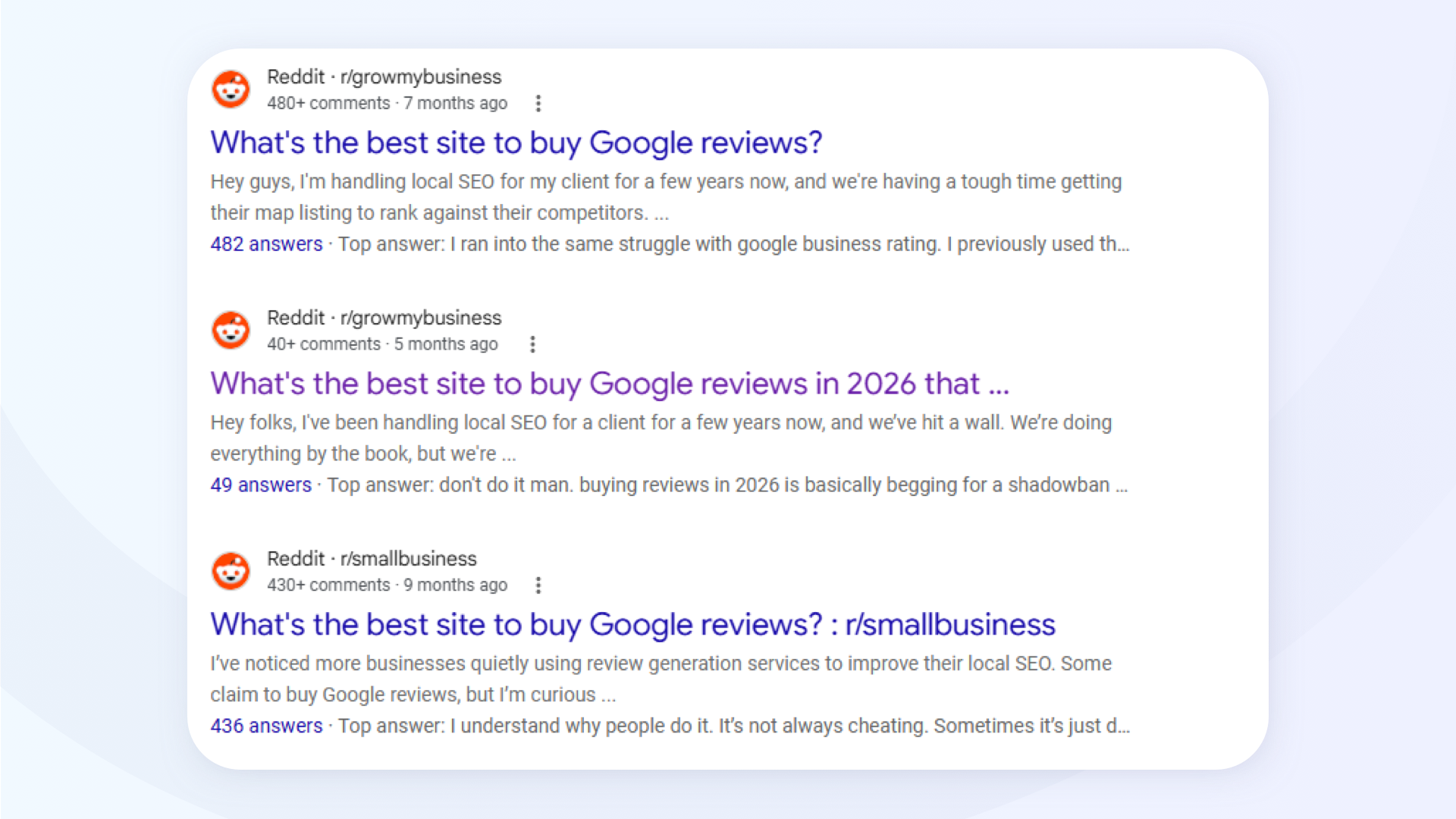
There are business owners and marketers who are so clueless or careless about the consequences they could face from buying reviews that they are publicizing their plans on Reddit.
But, in many cases, mistakes happen without such social fanfare.
Here’s how your brand could go out of business in 4 all-too-easy steps if you engage in review fraud:
Step 1: Reliance on ghost KPIs
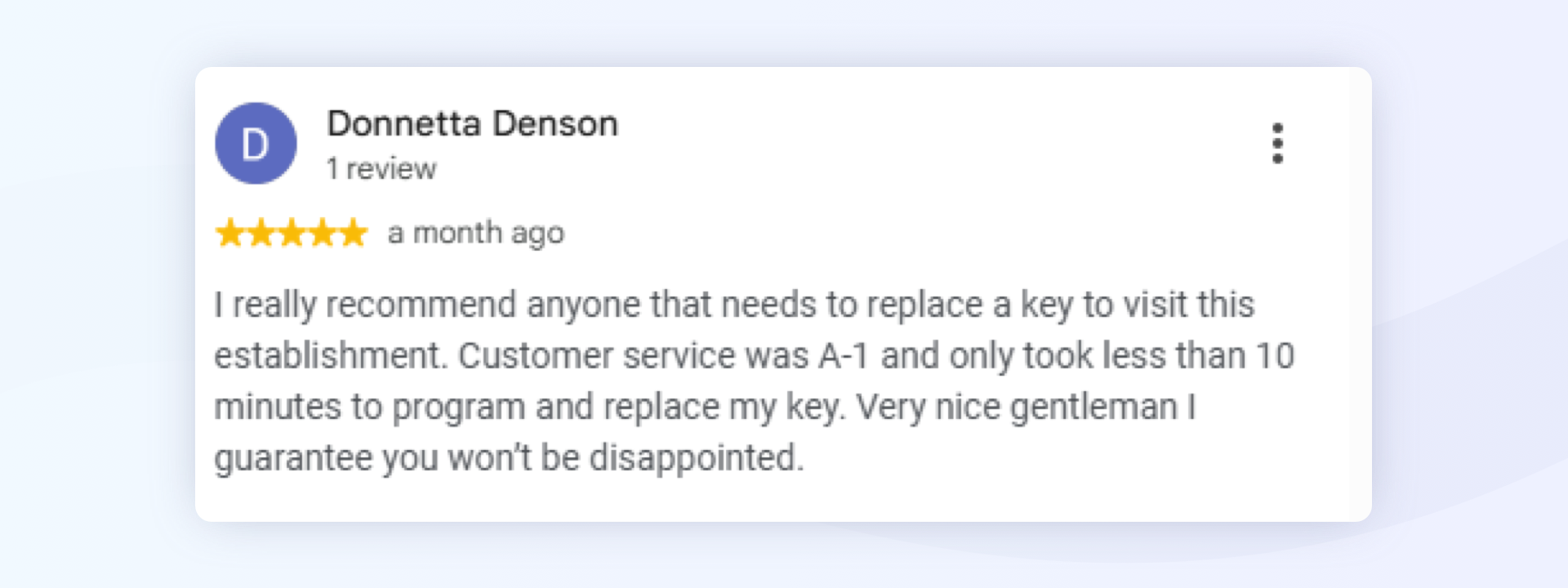
You can quickly rack up hundreds or thousands of fake 5-star reviews and even bring in some business with them, but your brand is only fooling itself if you’re mistaking a false reputation for success. Imaginary customers don’t pay your bills and you are polluting your own ability to track the successes, failures, and growth trajectory of your enterprise if you artificially inflate review counts and ratings. Genuine consumer satisfaction metrics are your most valuable source of business intelligence, and if you obscure your own sightlines with fraud, you’ll be making business decisions in the dark because you’ve created ghost key performance indicators (KPIs).
Step 2: Getting caught…and publicly humiliated
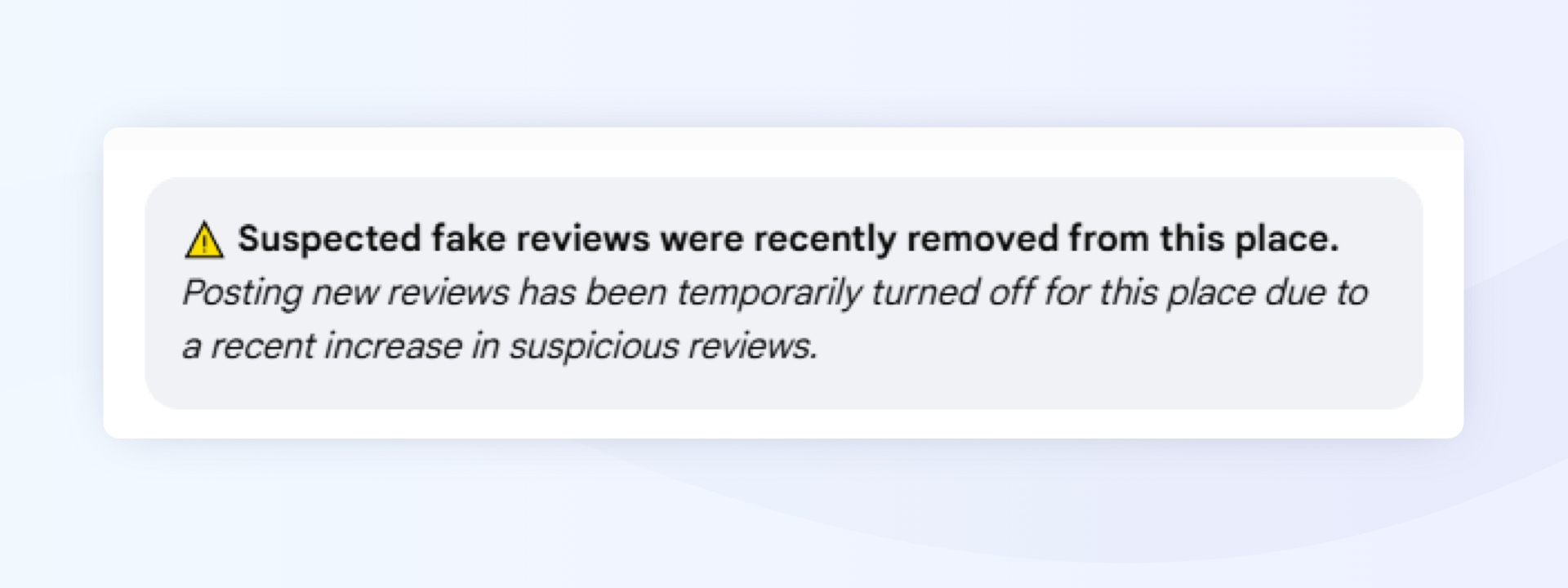
A consumer or competitor flags your review content as suspicious, or Google’s AI-driven review spam algorithm detects an unnatural pattern. How many legitimate customers are going to want to patronize your locations when your Google Business Profiles are stamped with a warning like the one shown above? You could lose the reviews you paid for and even lose your local business listings, rendering your brand virtually invisible on the most powerful platforms.
Step 3: 10x humiliation in your permanent record, thanks to AI
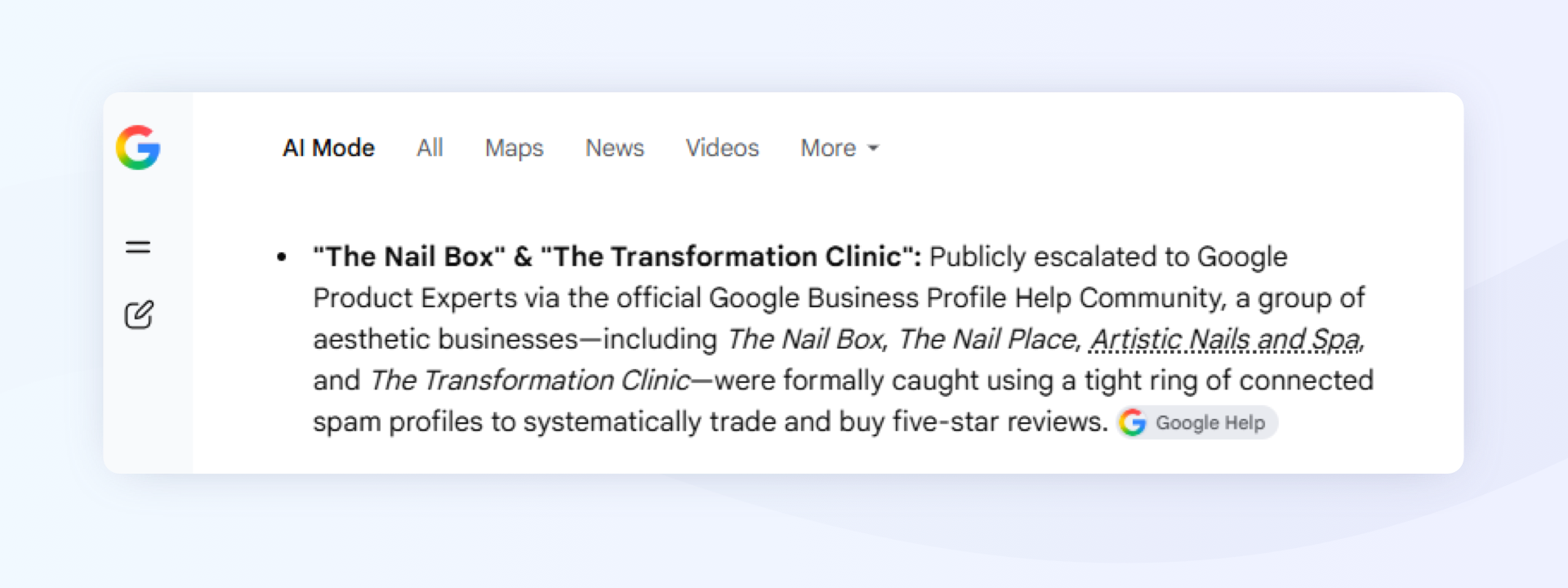
A single prompt in Google AI Mode instantly brings up the permanent record of reputation fraud associated with any brand. A variety of studies estimate that about half of consumers are now using conversational AI tools to make nearby purchasing decisions. Even if you’re only caught once for buying reviews or engaging in other forms of review spam, your brand name will permanently be mud to prospective customers in these emergent and growing consumer interfaces. Presumably, agentic AI programs will also be trained to steer clear of recommending your brand to consumers if it bears the earmarks of spam.
Step 4: Getting sued and going bankrupt
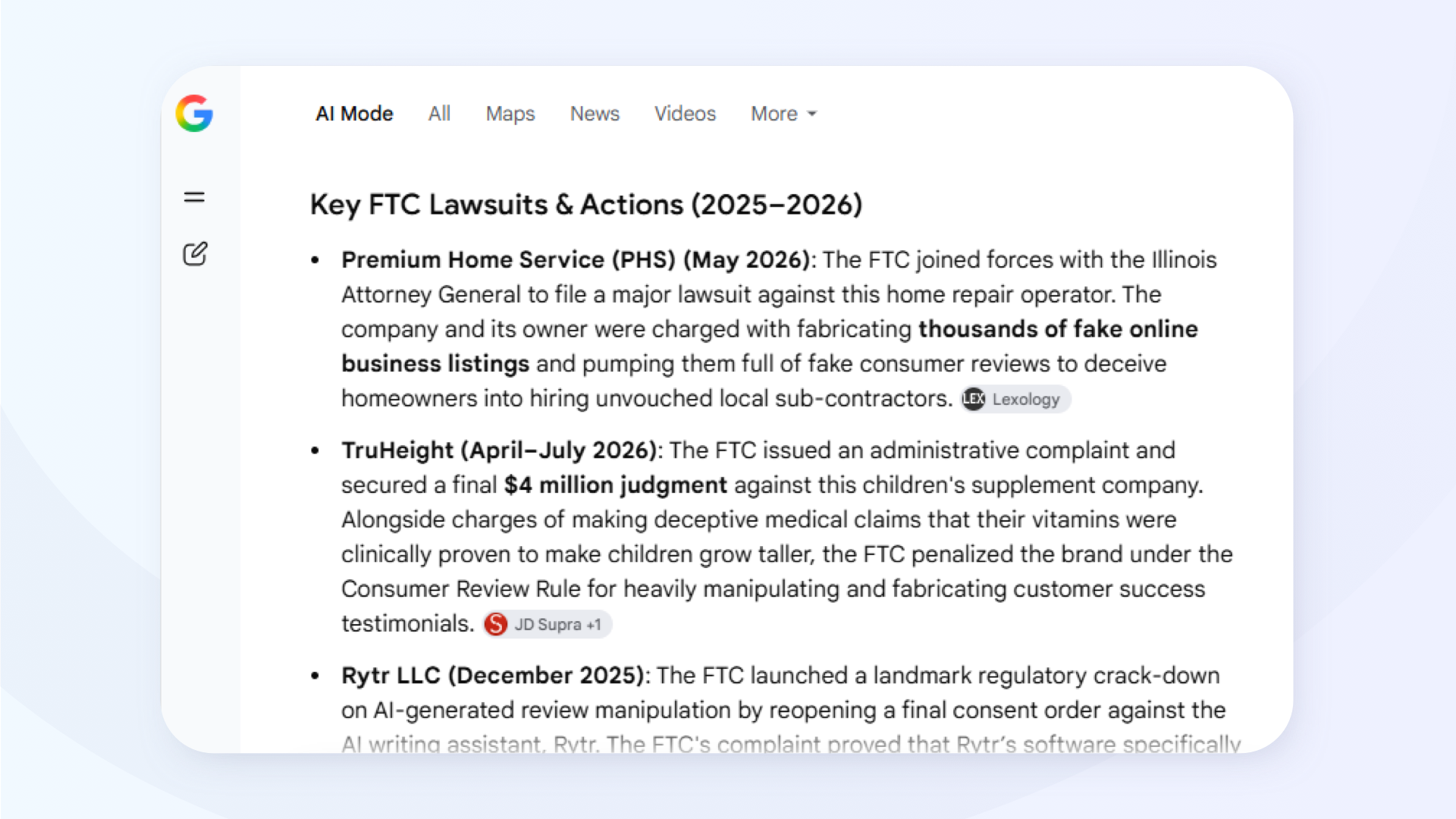
This is the end of the line for your brand if you engage in enough review spam to draw the notice of regulatory agencies. The FTC’s final ruling on the use of consumer reviews and testimonials authorizes them to sue you in excess of $50,000 per violation and AI is keeping a public record of these legal actions. Your brand is unlikely to survive being sued for millions of dollars and winding up with a destroyed reputation instead of the good one you needed to earn.
There is no reasonable risks/benefits analysis that will calculate these losses as acceptable for your brand.
Unintended consequences
Quite apart from the outcomes of bankruptcy and public disgrace, brands engaging in review fraud are fouling their own nests. If you can’t trust consumer reviews, your enterprise has no idea:
- How well your competitors are actually performing, depriving your company of the ability to base business decisions on competitor metrics
- Who to trust in the business world for B2B partnerships
- Whom the individuals working at your enterprise can trust for daily transactions when they are sitting in the consumer seat
Reputation fraud decreases the value of reviews for everybody.
Playbook: Protecting your multi-location brand from review fraud disaster
This is the starting point for defending your enterprise against fraud-based failure.
Develop educational assets and brand policy
Codify into company policy that your brand will never engage in any of the following forms of fraud forbidden by review platform guidelines and the legal codes of many nations:
- Purchasing or incentivizing reviews – No money, gifts, discounts, or offers may be made in exchange for reviews or testimonials.
- Undue pressure – No customer must feel pressured to leave a review or to write only positive reviews.
- Review suppression – No customer must be threatened or intimidated in an effort to get them to remove or edit a negative review or rating.
- Competitive attacks and extortion – No competitor must be attacked with fake negative reviews and no money or other benefits must be demanded in exchange for removal of this content.
- Misrepresentation – No current or former employee of the brand or family member of a current or former employee of the brand should review the company.
- Impersonation – No one at the brand should post reviews on behalf of customers or have customers leave reviews via kiosks at brand locations; all reviews must be left directly by the customer on their own devices.
- Undisclosed relationships – No spokesperson, influencer, or other public figure should make reputational statements about the brand without disclosing that money or other benefits have changed hands in the arrangement.
- Fake social media indicators – The brand will not purchase or incentivize false indicators of social media influence such as followers or likes.
- Internal incentivization - The brand will not engage in internal contests to reward employees who receive the greatest number of reviews mentioning them by name.
- Review gating – No consumer will be put through a feedback process that routes happy customers towards leaving a review while routing unhappy customers to a different destination.
- Company-controlled review websites – The brand will not misrepresent that a website or entity we control is providing independent reviews or opinions about any category of products or services that includes our own products or services.
- Partnering with fraudsters – The brand will not partner with third-party marketers known to engage in any of the above practices.
Your educational documentation should also make it clear that review spam typically falls into two categories:
- Actions taken by brands to positively manipulate their own reputations
- Actions taken by brands to negatively manipulate their competitors’ reputations
Both avenues must be strictly avoided to defend the brand from unwanted outcomes.
Further, company documentation should offer education on the prevalence of online review fraud and outline a workflow for recognizing, escalating, and reporting suspected spam. Your policy can take cues from this framework:
- Recognize the signs of review spam attacks on the brand – These can include:
- A sudden increase in review velocity
- An unexplained increase of negative sentiment
- An increase of reviews from profiles that have left few or no previous reviews
- An increase of reviews from profiles that have reviewed multiple businesses in the same category
- An increase of reviews from profiles that are reviewing businesses across a wide geographic region
- An increase of reviews with a slightly lower-than-average star rating with the potential goal of slowly eroding the overall rating
- An increase of reviews with similar, robotic-sounding, or overly-formal language, indicating that automation and AI may be at play in the spam attack.
- Escalate and report – Whether the brand is using software to detect suspicious review patterns or relying on manual management, responsible parties should be taught to escalate large-scale spam attacks to the appropriate department so that next steps can be determined, including:
- Engaging legal counsel for advice
- Reporting review content to review platforms, via processes like this one
- Publicizing the attack in the event that review platforms refuse to act on reports
- Fight spam in local markets – Every consumer dollar that goes to a fraudster is one your honest brand didn’t earn. Invest in software and codify processes for investigating and reporting competitors’ suspicious review content. This protects both the brand and consumers in the geographic markets you serve.
Distribute educational assets
Once you have drafted your reputation policy, call an all-hands meeting to emphasize the critical nature of adhering to the guidelines it contains. Distribute your asset to all branch managers, franchisees, and all internal staff tasked with any aspect of reputation management. If your brand is considering partnering with third-party marketers, hand them your policy and require a written guarantee that they adhere to all aspects of it.
If the brand experiences significant changes such as major staffing changes, mergers, or acquisitions, it is vital that the policy be re-surfaced to all parties to avoid reputation damage. All incoming staff should be trained in the policy.
Monitor adherence
There is an unavoidable degree of chaos in large business models, and you cannot see what all branch managers and franchisees are doing at all times with their marketing initiatives. Adherence to reputation management policies should form part of the security training all relevant staff undergo on a periodic basis to reduce the incidence of policy violations.
Building reputation the right way
Your reputation management playbook must emphasize the disastrous consequences of engaging in review fraud, but it should also include positive reinforcement of the steps locations can take to earn an authentic good name in the communities they serve. These actions include:
- Training incoming staff in consumer-centric satisfaction guarantees and other positive policies
- Workshopping role play of real-world consumer complaint resolution and escalation
- Templatizing online complaint resolution via skilled owner responses that restore consumer trust
- Automating processes for earning consumer contact information and following up with guideline-compliant review requests
- Identifying all possible review acquisition assets such as print materials and store signage
- Re-marketing review content across website assets, social media platforms, and advertising
- Analyzing incoming sentiment over time to identify consumer needs and pain points for solutions
- Analyzing competitor sentiment over time to discover market gaps for fulfillment
In the simplest possible terms, good reputations are the outcome of consumer-centric policies and practices. Authentic trustworthiness is earned one interaction at a time.
Coping with the angst of a tilted playing field

It’s a genuine shame that the presence of underregulated review spam throws the temptation to cheat into the way of all brands. The unlevel playing field creates a source of stress, which is bad for your health, as well as for your business.
Leadership can alleviate some degree of angst inside the brand by:
- Communicating openly about the problem with relevant staff, branch managers, and franchisees
- Studying brands that have built reputations on exceptional customer service, like Ace Hardware going viral because its loyal customers rushed to its defense in the face of criticism
- Remembering that your location-based staff have amazing power to please the public if your policies are consumer-centric
- Recalling that review platforms have the biggest incentives to clean up their properties – they cannot stay solvent if the public stops trusting their content
- Recollecting that even if your competitors seem to be getting away with reputation fraud today, they are heading towards getting caught, meaning that any short-term gains they’ve engineered will be lost as your brand works towards long-term success based on reality instead of fantasy
There have always been fraudsters. The Latin phrase caveat emptor exists for a reason and pirates have been roaming the commercial seas for centuries. De-escalate the stress of this by bringing your view back down to a single customer, a single transaction, and every new day full of new opportunities to win the trust of the communities your locations serve. This is manageable.
Request a Demo
Drive more local sales by pairing shoppers with real-time inventory and promotions through seamless online-to-offline capabilities that help clients transact now.