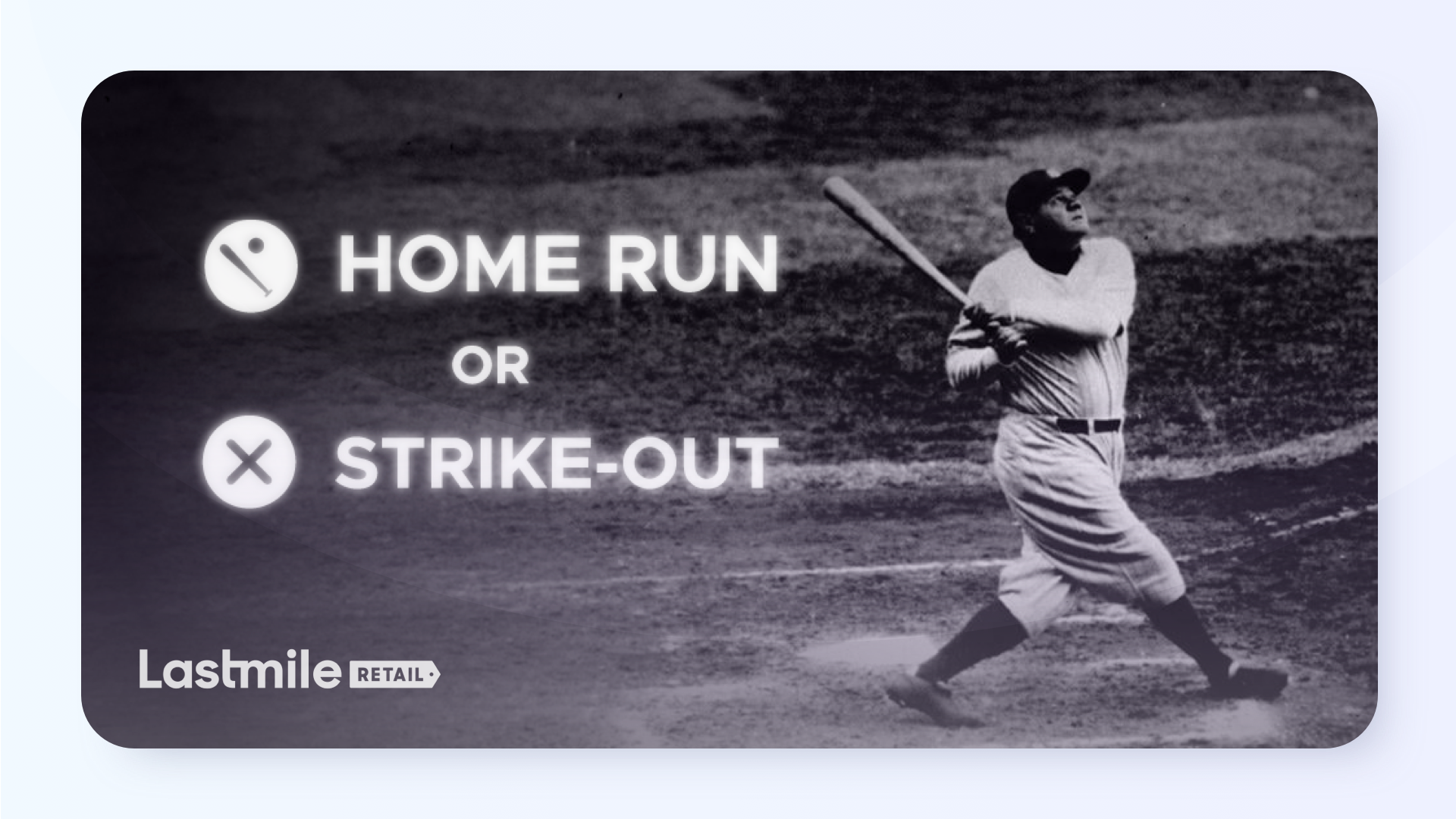
Marketing is about failing. It always has been, whether you were an “ad man” in the Jazz Age or are a GEO in the AI era. You’re always trying to build that brand so that it can weather any storm. Babe Ruth is remembered for his all-time home run record, which stood for nearly 40 years. What shocks some people to learn is that from 1928 onward, he was also the league’s strike-out king until Mickey Mantle surpassed him in 1964. Ruth failed, and he failed, and he failed, while also building up his lasting brand and legacy as a winner.
I was speaking to seasoned marketer, Sebastian Pawlowski, just the other day about one of the first jobs he applied to in our industry. He was a strong candidate, but when he got to his interview with the HR department of a large company, he was asked the question,
“Please tell me about a marketing campaign you were involved in that failed, and why.”
He couldn’t help laughing out loud at the time because, as he told me,
“Every marketing campaign starts with a failure. Everyone wants that home run with prescriptive winning solutions, but brands that aren’t willing to fail aren’t playing to win.”
What does failing look like in the AI era? Put on your rally cap.
Fail until your website no longer makes sense to you
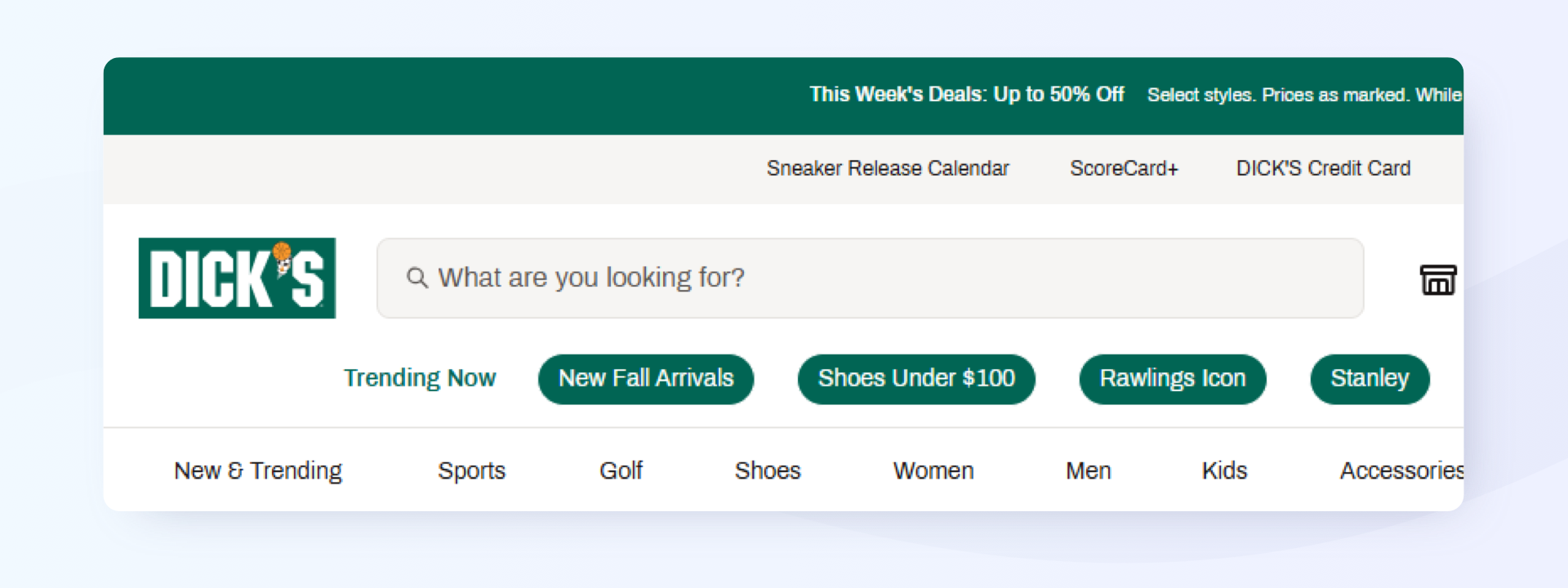
We’ve spent 20+ years talking about this: You’ve got to have a clear system of website navigation, and the right hierarchy of links in your menus with the right keywords. You need breadcrumb navigation. And banners people will click on. And dwell time. And internal links. Your content needs an optimized title tag, and captivating <H> tags and an elevator-pitch meta description, even if Google is going to rewrite it in their SERPs. What about color theory? What about javascript? What about pop-ups? You need to silo stuff, and generate a sitemap. You need website architecture that guides the user to your CTA and seals the deal.
You know this playbook like the back of your hand.
But what does any of it matter in AI Stadium?
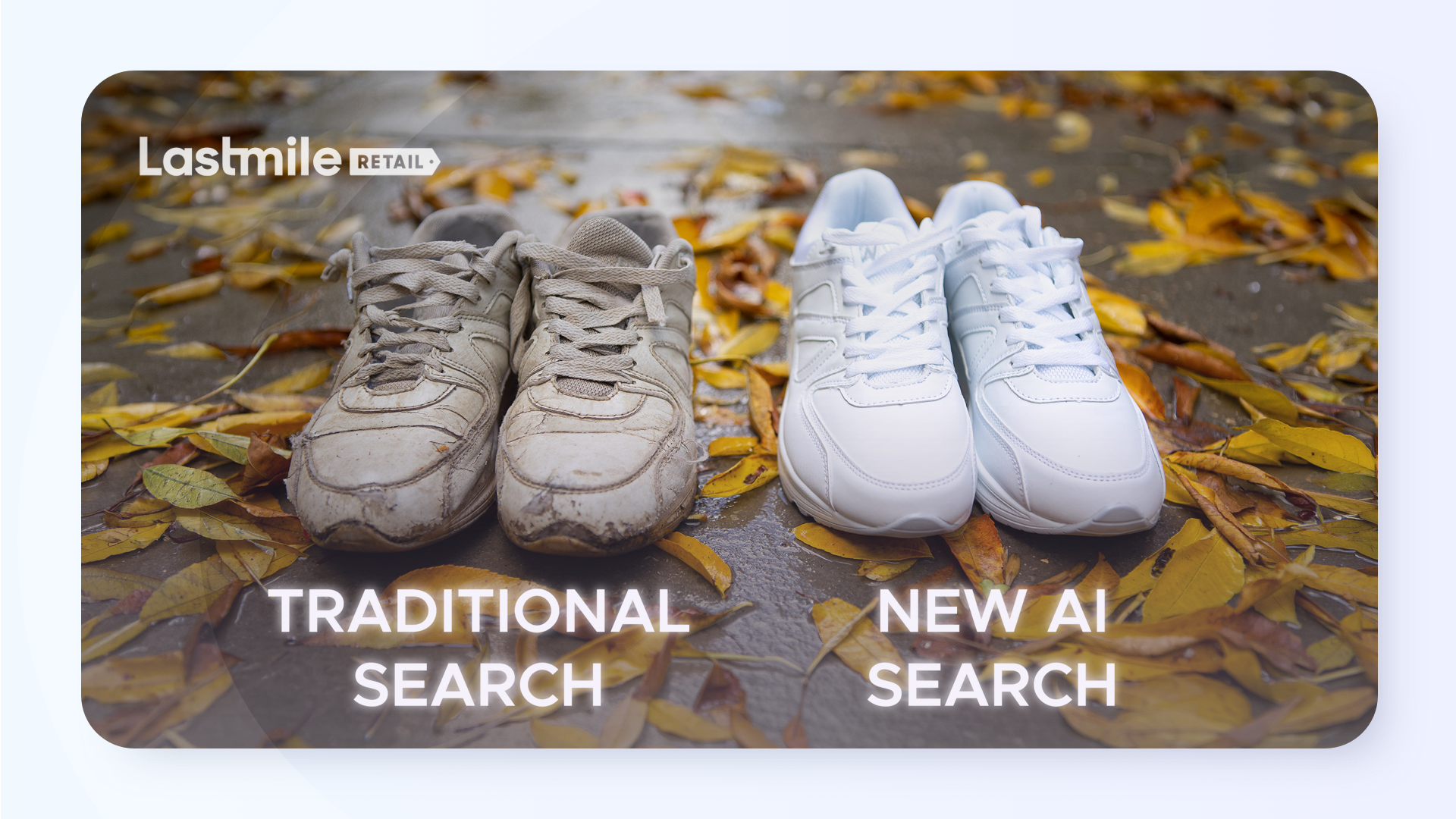
Because this user isn’t even seeing your navigation, or your banner, or your tags:
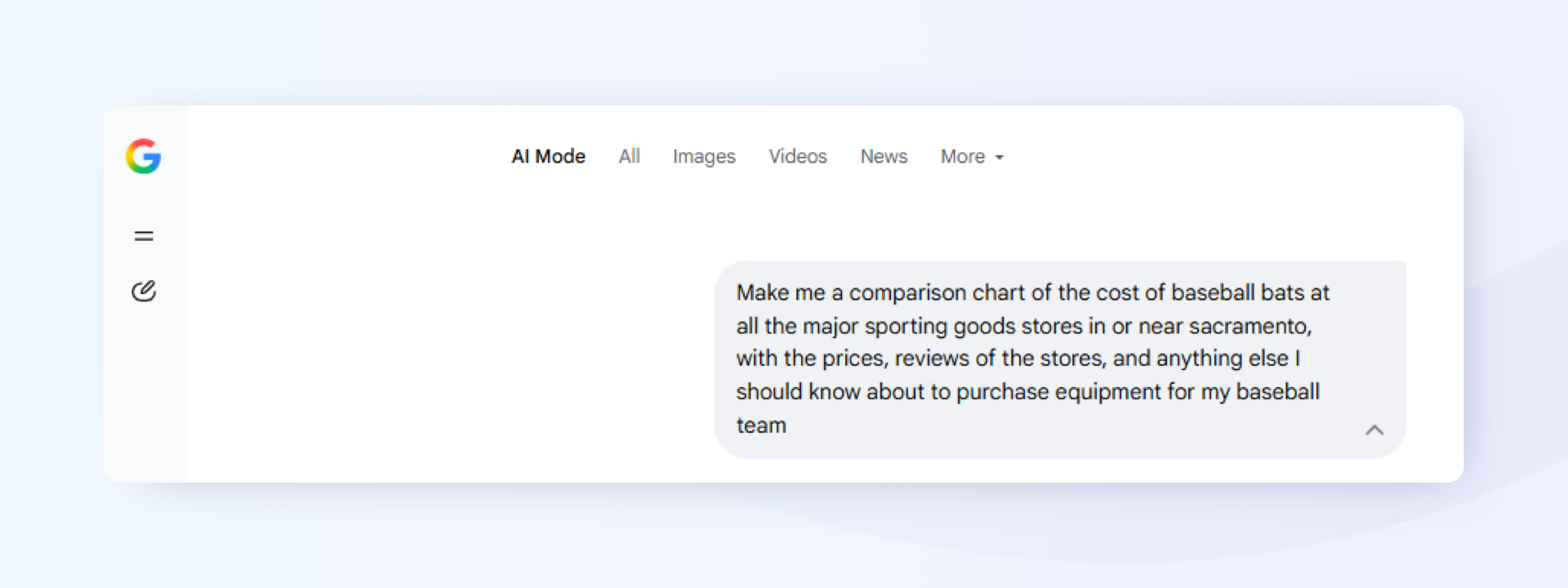
This prospective customer isn’t experiencing your brand via your website at all:
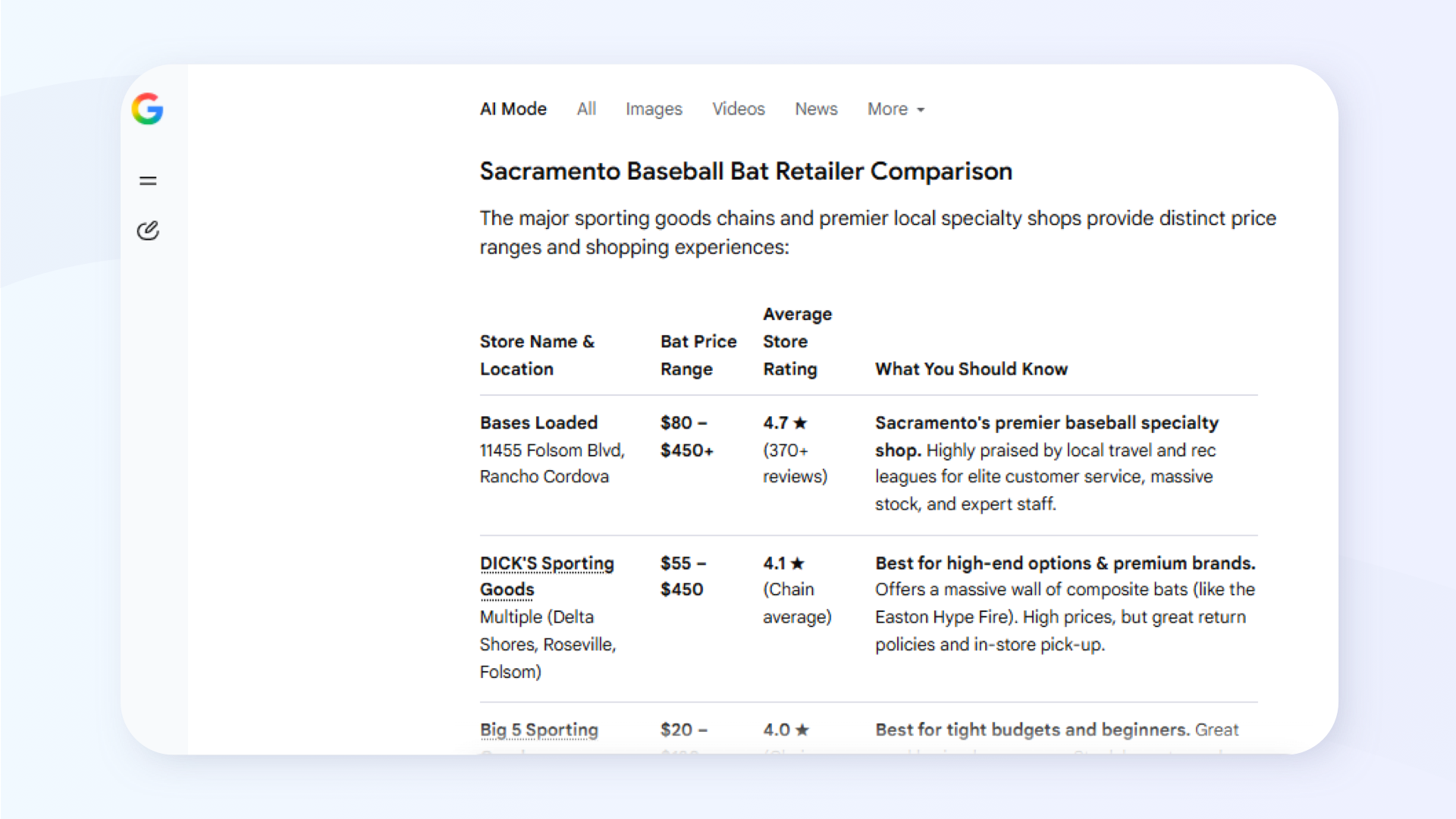
At least not at first, when so many consumers are now chatting with a bot as their first step to brand discovery. Maybe they’ll make it into a verification loop later, bouncing around between AI, websites, social media, video media, asking their actual friends, and so on.
But failing well starts with looking at your website and realizing it makes almost no sense in an AI context. You are no longer designing the arena for consumers so that they can run around your bases. AI users are simply running all over the field as if there were no bases at all.
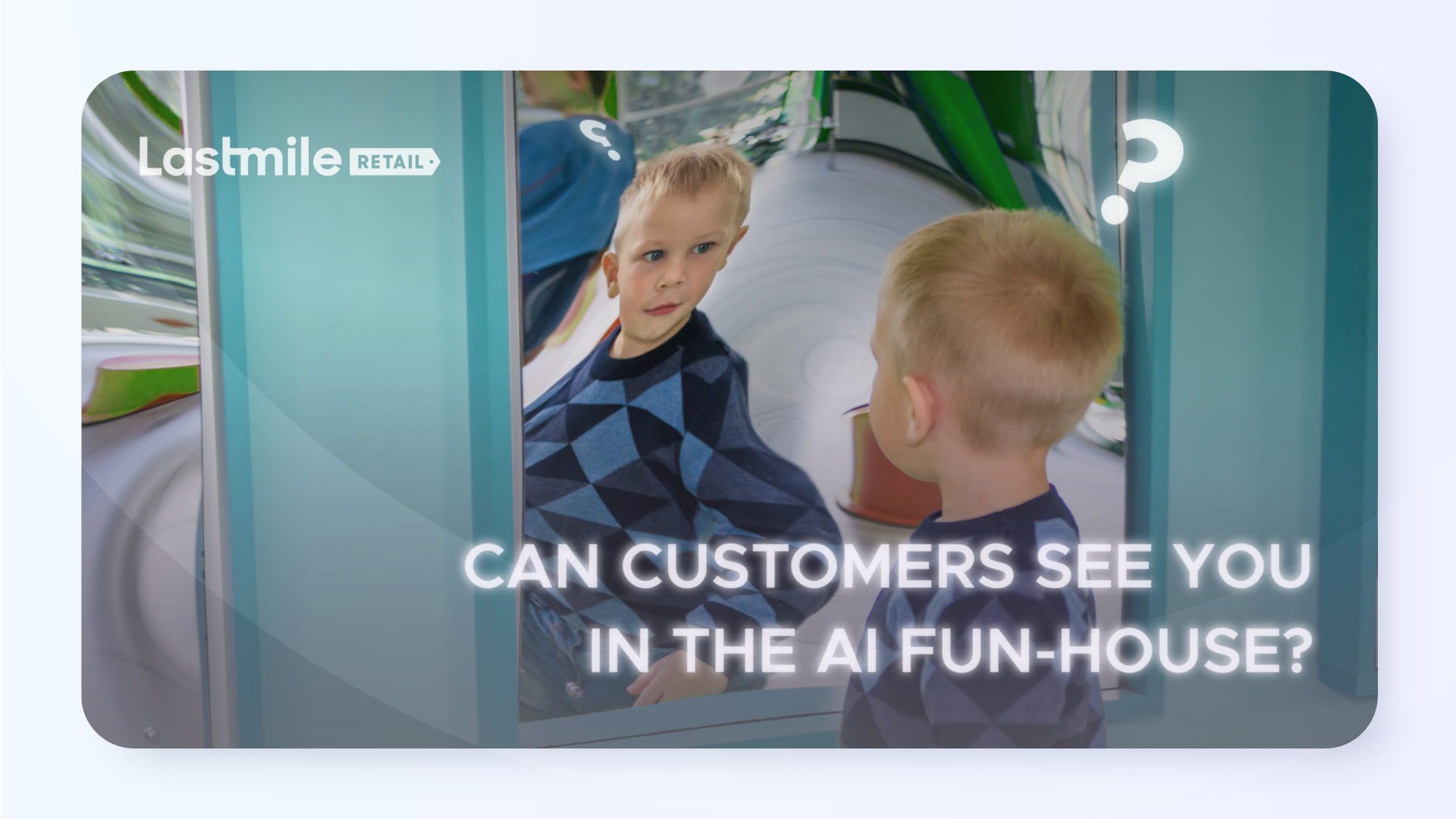
Fail until you see Frankenstein in the mirror
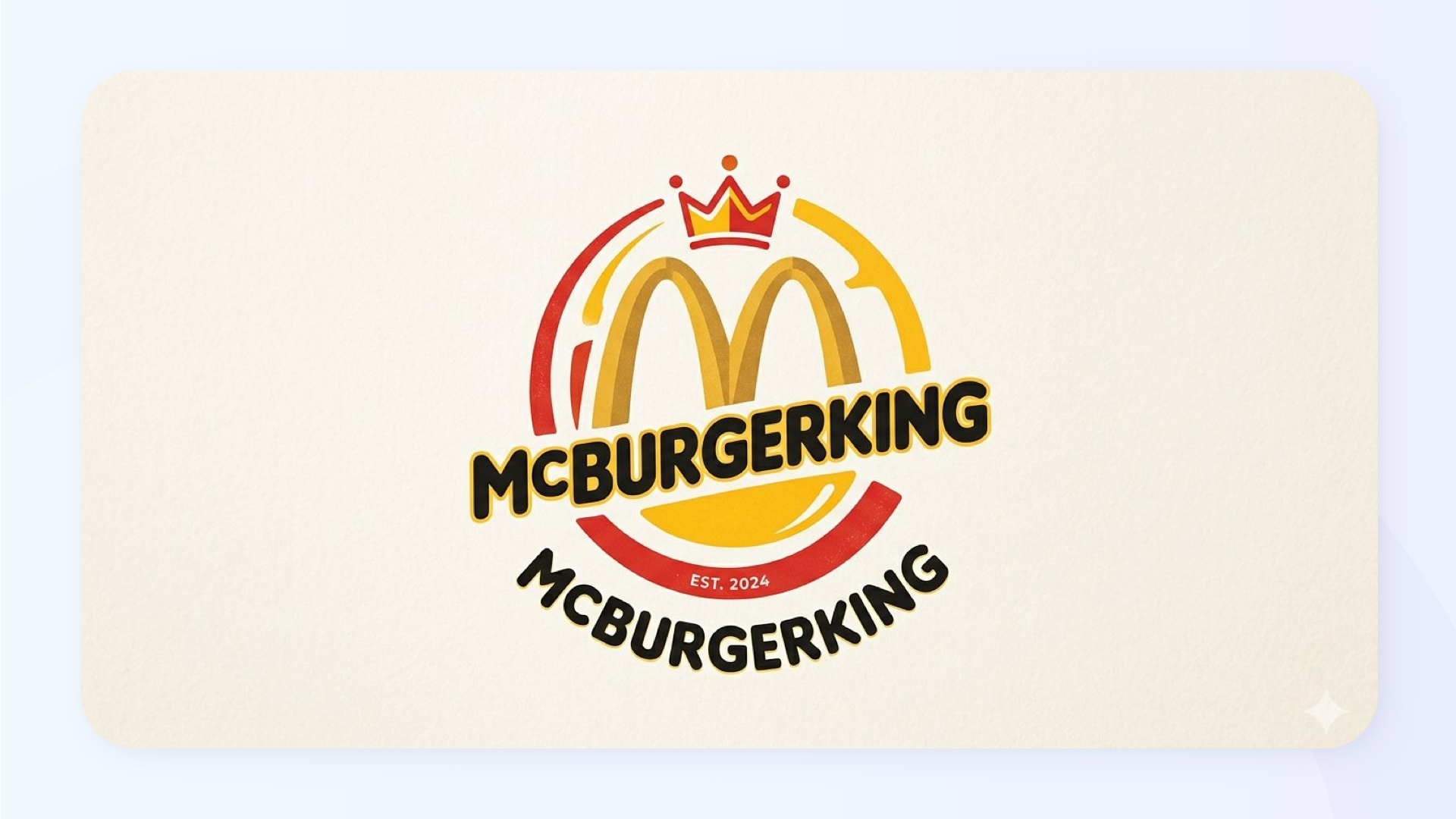
You know: You’ve got to break through the clutter, stand out from the crowd, get found, get chosen, rank #1, find that competitive-difference-maker, shout from the rooftops, build the better mousetrap. And most importantly, earn brand recognition.
But what does brand even look like anymore when AI is making a monster mash out of what you and all of your competitors have been working so hard to build since the dawn of the internet?
How do you stand out when everything looks pretty much the same in AI contexts?
Here’s a comparison chart of various aspects of flagship products of major convenience foods brands:
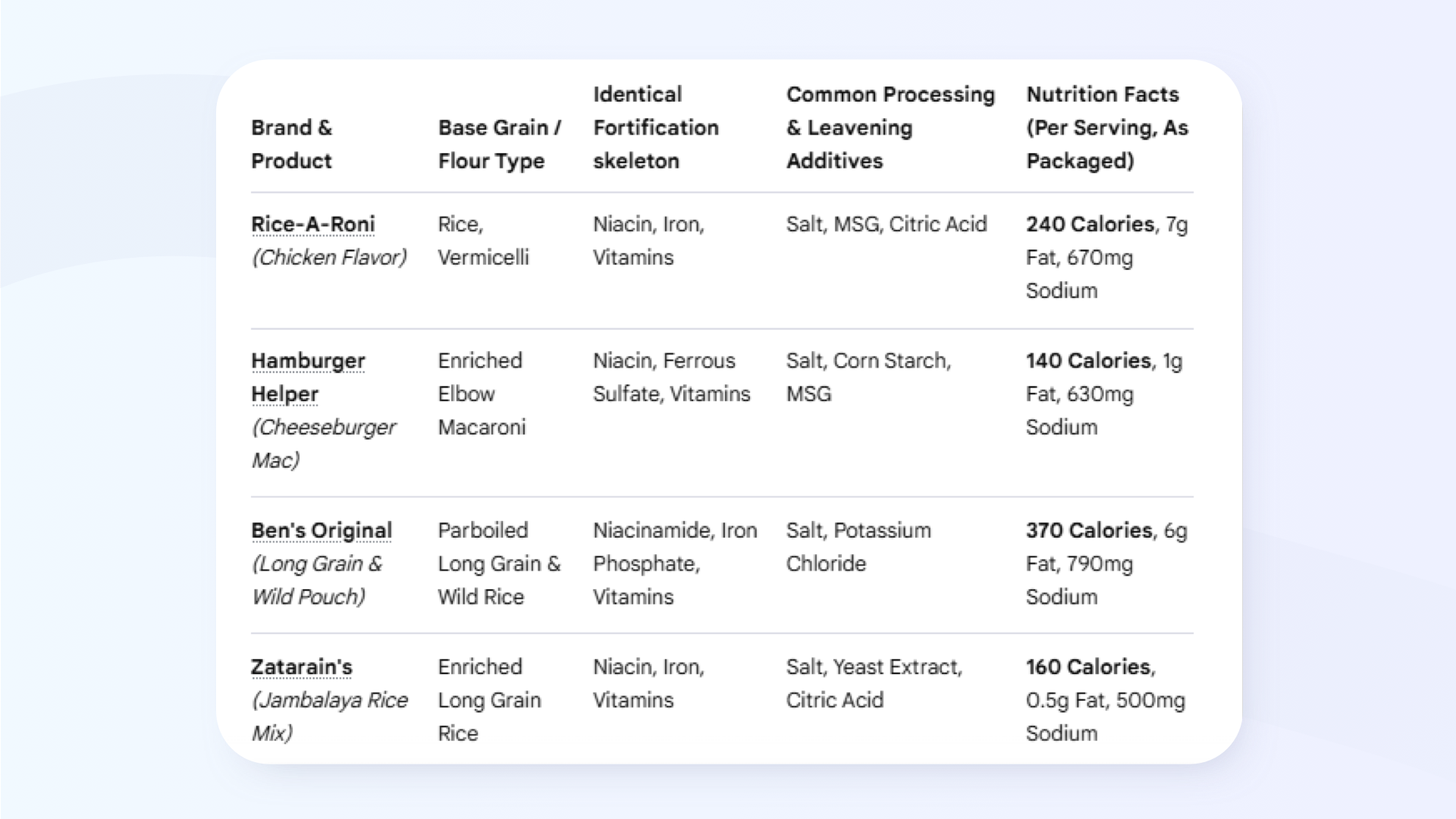
Without the fancy boxes to pitch the products, all of these entrees end up looking more-or-less the same, with the same additives, the same saltiness, the same fortifications.
The truth is that most brands within an industry are strikingly homogenous once you peel back the labels. All have absorbed the same messaging about the ingredients that go into modern marketing, but in an AI mashup, we move into a colorless market aisle in which distinctiveness is hard to come by. You’re sitting side-by-side with your competitors in a way you never have before.
You need to fail until you learn to ask:
“Have we become a kind of Frankenstein’s monster of marketing fads, or is there actually something of unique value we are doing for our customers that makes a difference to them?”
Fail until your marketing + tech depts. become the same thing
Everybody in marketing becomes a veteran of the department wars. It’s an inside joke (with real-world consequences) that X department won’t talk to X department because it’s “not their job”, “not in their wheelhouse”, “not in their swim lane”. It’s not a pretty picture how much everybody in our industry lives in constant fear of losing their jobs, and the in-fighting that results is a brand morale detonator.
If founders, C-suites, and shareholders allow this scenario to continue indefinitely, they’ll be engineering a losing streak in the AI era.
Why? For these two reasons:
- Your data layer now underpins everything in AI contexts – If your tech and marketing departments hate talking to each other, you have a huge problem. Tech is where data lives, and marketing is where data gets packaged for consumers. You need to fail until you find a way to put all these players into the same starting lineup to successfully feed the AI beast.
- Bad internal communication filters down to consumer experience – The average customer may have no idea that your tech and marketing departments are freezing one another out in the workplace, but consumer experience is absolutely damaged when data and marketing are inconsistent. Negative brand experiences become negative reviews that create the unattractive reputation summary AI tools will show to all future prospective customers. You need to fail until every department in your enterprise is putting your customer first. And improved internal morale to pull this off may require changing leadership concepts of brand health, efficiency, loyalty, and longevity. Where we’re at right now with all this is unsustainable.
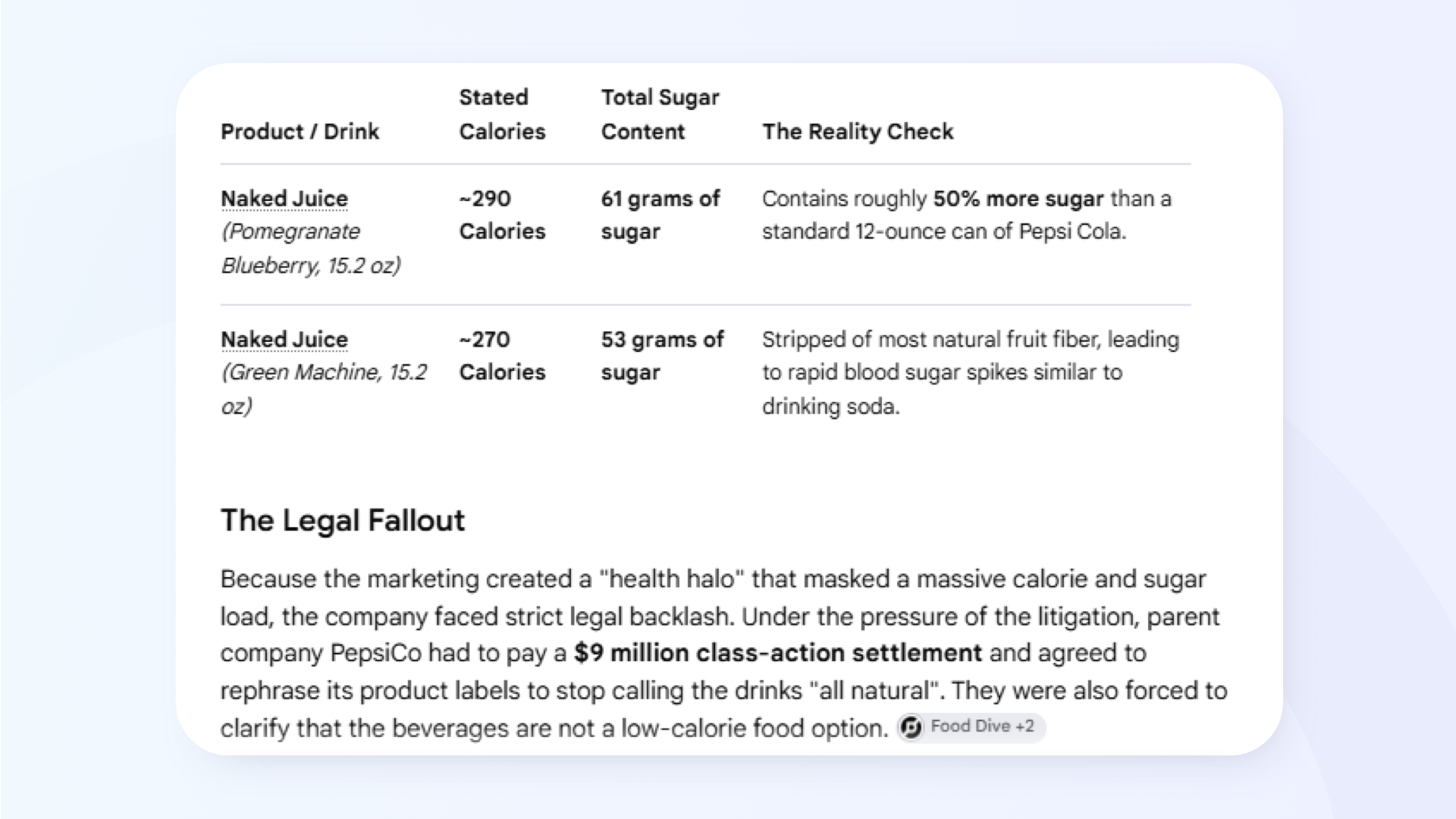
The Naked Juice story is a good 6-sided object lesson.
On the marketing side: A pitch about offering a natural, healthy, low-cal beverage.
On the data side: A product with 50% more sugar in it than a can of Pepsi.
On the consumer side: A feeling of being deceived by a marketing pitch that didn’t reflect actual data.
On the legal side: The brand having to pay a $9 million class-action settlement.
Inside: Goodness knows what went on internally at the company between tech and marketing to come up with such a misleading pitch.
AI-side: LLMs remember it all, and if consumers want to know whether the brand in question is trustworthy, here’s what AI will show them:
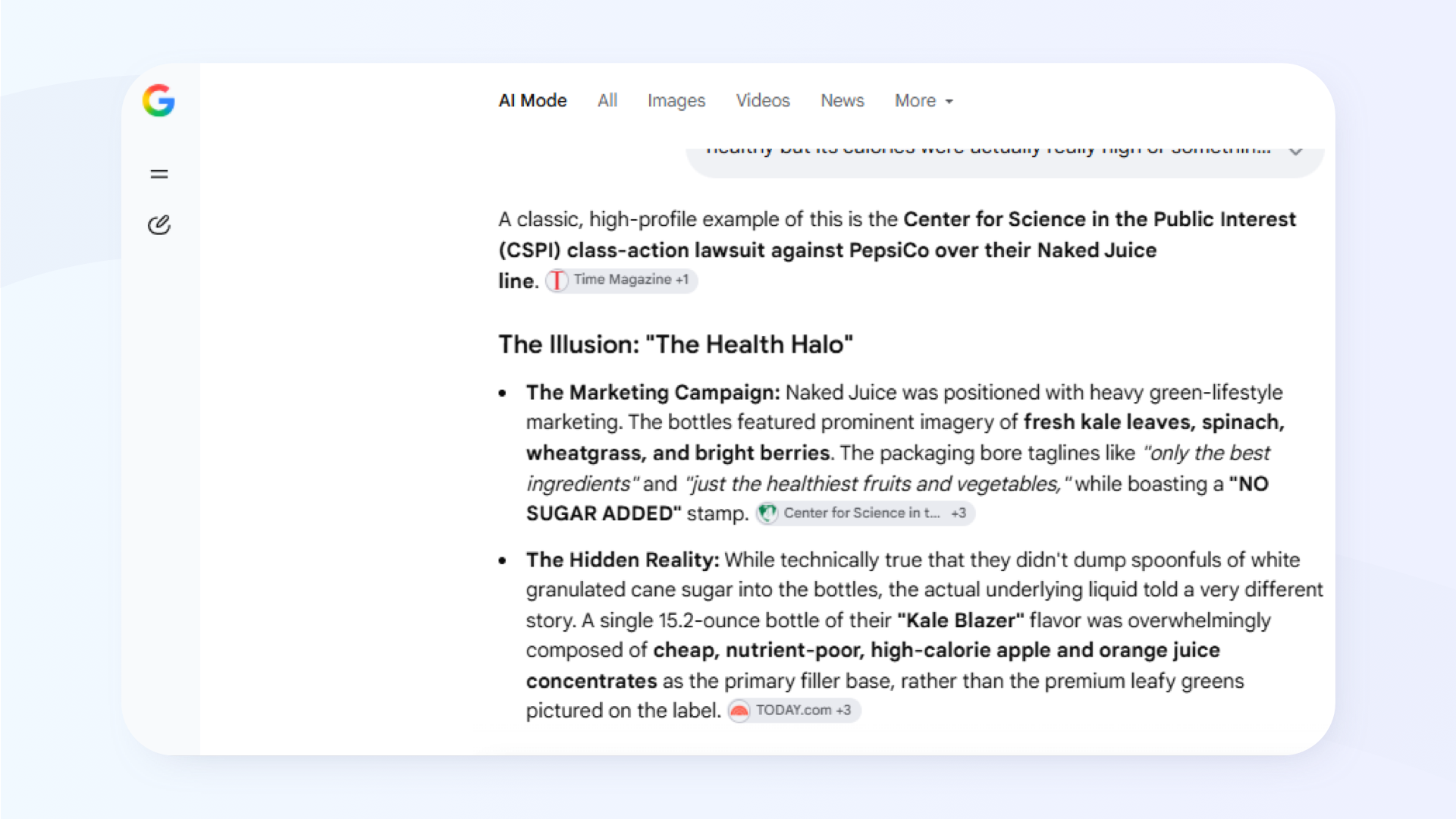
I grant you, PepsiCo, Inc. is still ticking away, but agentic search could put them in their final inning unless they prioritize honest, data-backed, consistent branding.
They are not the right match for a consumer tasking its agent with,
“Order me a couple of cases of sugar-free, healthy, low-cal beverages and have them delivered this afternoon.”
But they might be the right match for this agentic command:
“Buy a couple of cases of sugary party drinks and have them delivered before my birthday bash.”
Failing like a pro
I’m never going to advocate lying to your consumers. That’s a terrible thing to do, and unless you’ve got the budget of a PepsiCo, Inc., you could fail the wrong way right into bankruptcy.
But the truth is that everyone is experimenting right now with how to actually reach customers via the novel medium of AI tools that:
- Make nearly everything about your website’s architecture obsolete and leave you with a shattering loss of control over consumer experience of your brand
- Mash you up with competitors so that your commonalities are glaringly obvious, putting actual differentiators at a premium in the eyes of consumers
- Make your departmental in-fighting a threat to your brand’s reputation if your data and marketing are at odds, leaving consumers with an inconsistent story and negative experiences
Did you notice that the word “consumer” featured in all 3 of my bullet points? I think you already know why. I want to encourage you to rack up as many failures as possible over the next few years for the sake of learning how to serve your customer better.
It can’t be about controlling their journey anymore. AI has erased the neat baseball diamond of your website and your customers are running loose all over the grass.
It can’t be about claiming to be great anymore when your batting average is well below .200 in your customers’ eyes. Unless you are providing substantially better and different customer experiences than your nearby competitors, AI is going to make you look generic and uninspiring.
It can’t be about a single department anymore. You’ve got to approach AI visibility as a team sport because it is simply too easy for customers to see your actual stats now. AI has become like the back of your company’s baseball card. You need all hands contributing to a record of customer service excellence or even agents won’t buy your pitch.
Marketing is still about failing. You’re going to need to practice everything in your playbook to hit on what actually works for the customers you want to earn via AI tools. Victories will be all the sweeter for the failures.
Request a Demo
Drive more local sales by pairing shoppers with real-time inventory and promotions through seamless online-to-offline capabilities that help clients transact now.