Q: What’s Lastmile and why should you read this?
A: Lastmile is the precision brand advertising partner of some of the world’s best-known local companies, serving clients like Hyatt and T-Mobile. Founded in 2015 by Michael Carini and Will Plaehn, Lastmile’s access to enterprise-level consumer behavioral trends positions them to share proprietary insights that could help you address the shifts we’re all experiencing in the brand marketing landscape right now as a result of the rise of AI. Read my column today for takeaways you can apply to any chain, franchise, or other multi-location org you’re promoting.
Addressing altered consumer behavior in an AI-drenched digital landscape

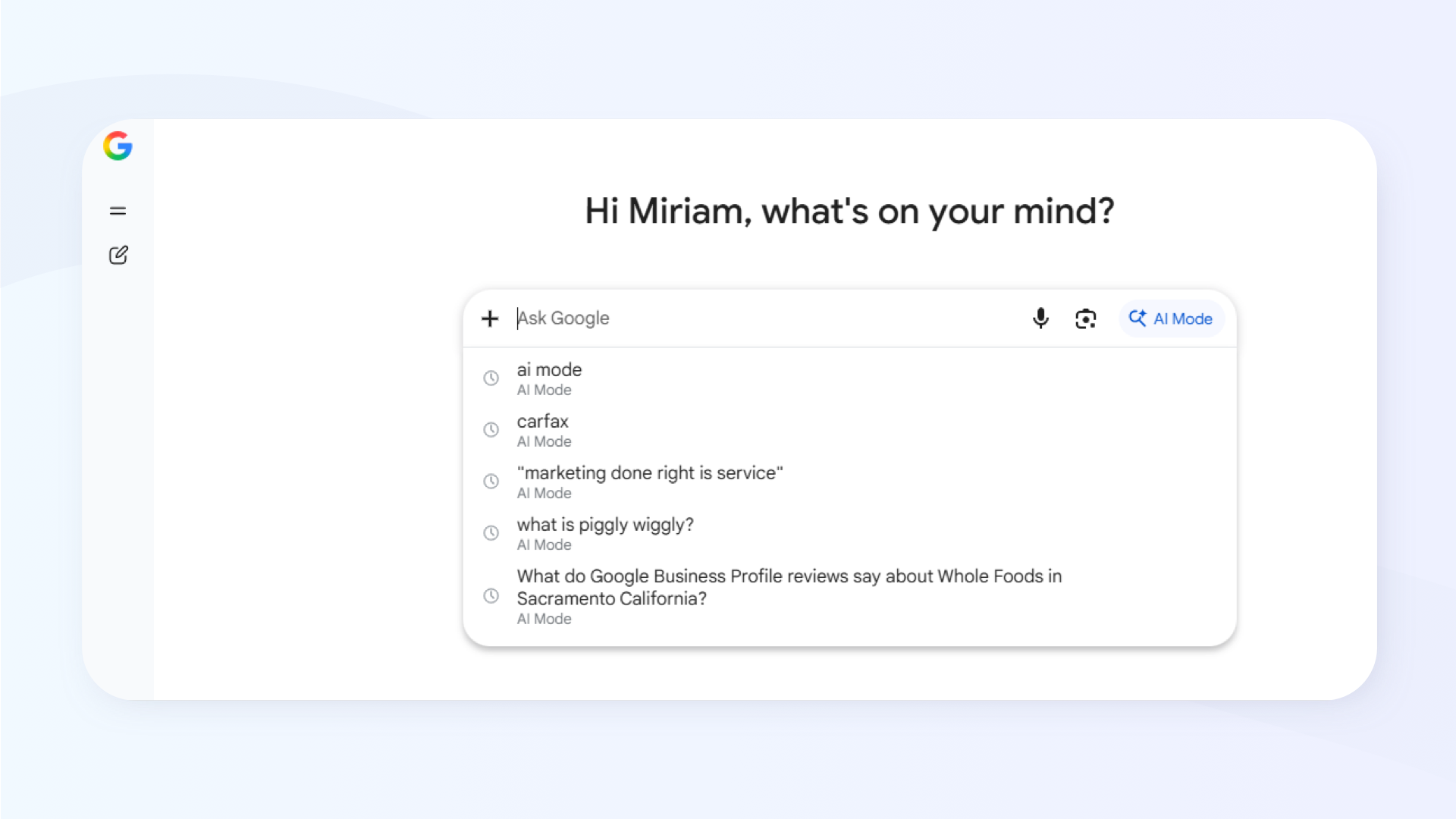
The Google homepage says it all about what consumers are experiencing in search today. Instead of an empty searchbox, not-so-subtle text urges the user to “Ask Google”, accompanied by a button to skip organic search altogether and go straight into Google AI Mode.
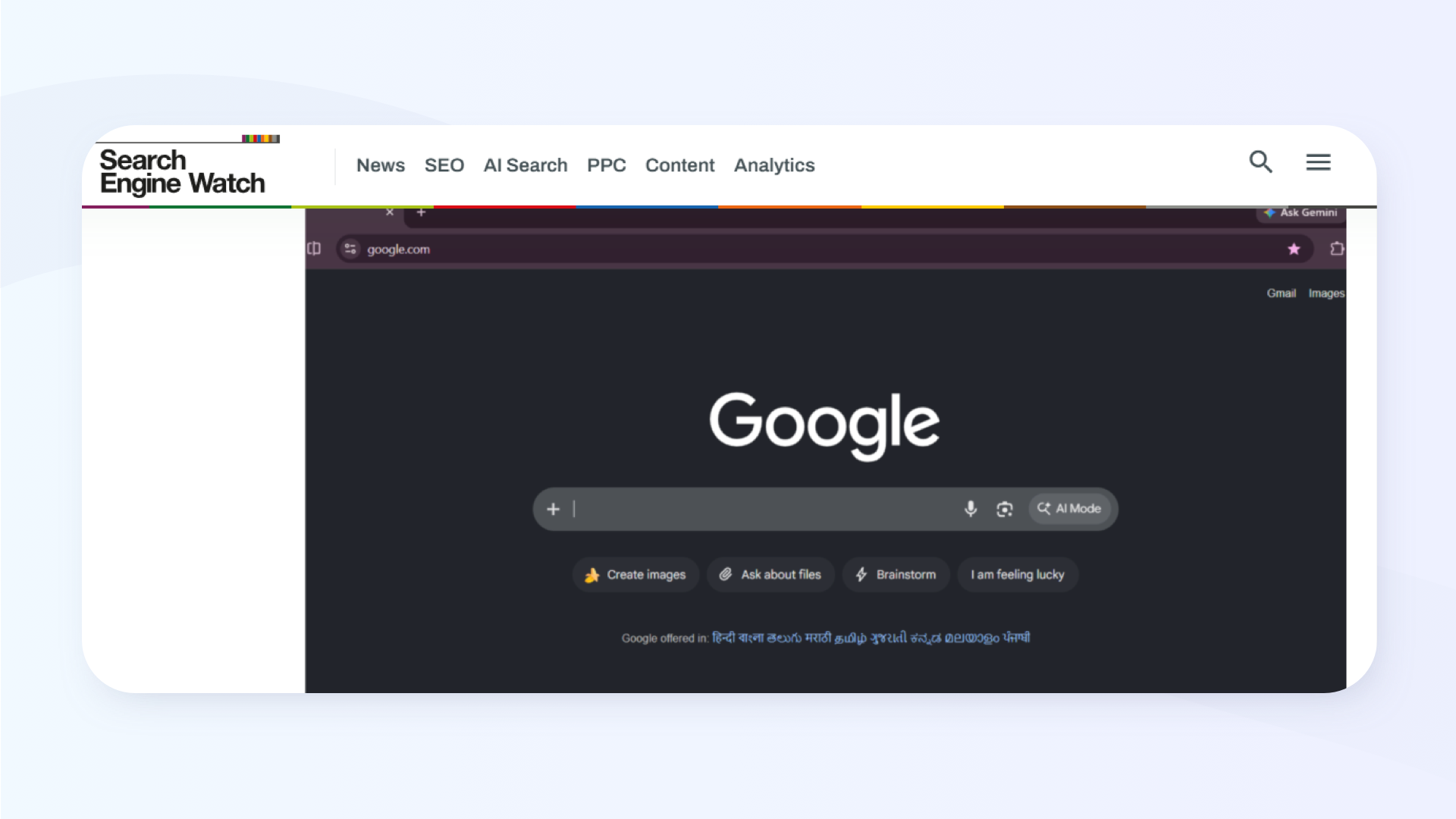
Some signed-out users may even be seeing this test Google homepage captured by Search Engine Watch in which multiple prompts urge the use of a variety of AI-driven functions:
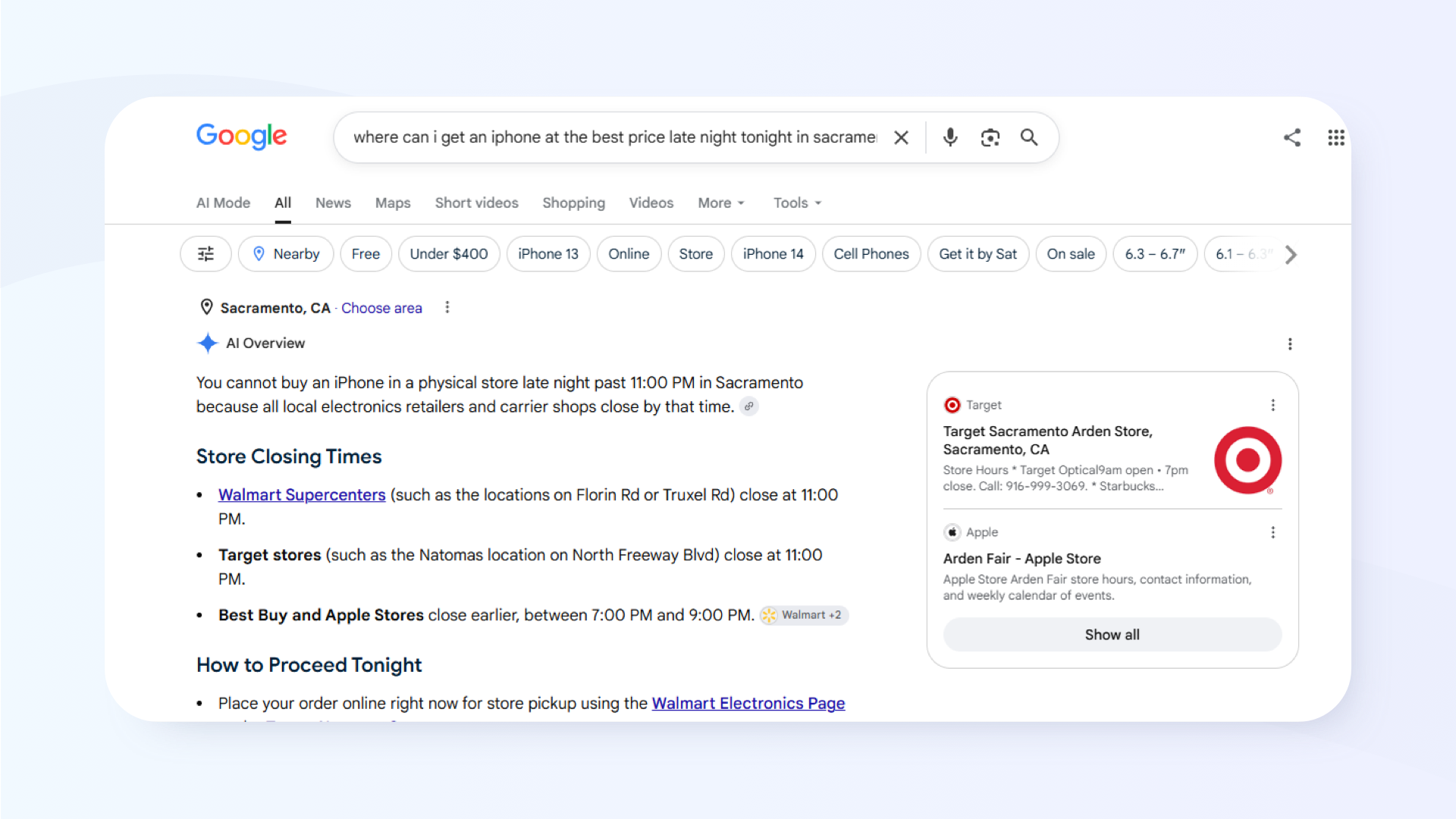
Customers who have made the shift from older simple, keyword-driven searches to newer complex AI prompts are querying Google’s AI right from the search bar and commonly landing in an AI overview that is so long, the traditional search results below it may as well not exist.
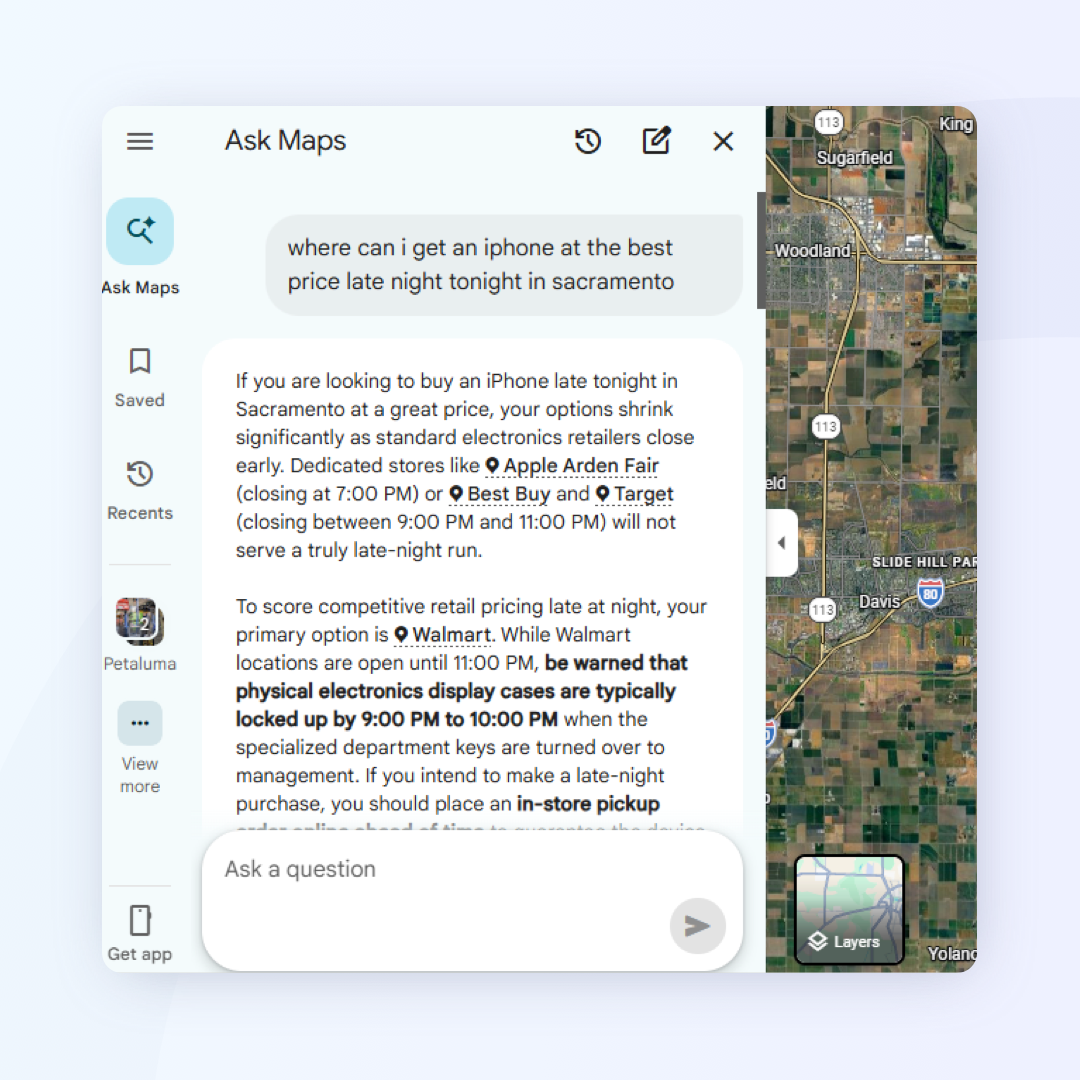
Consumers are no longer browsing Google Maps, but being pushed to “Ask Maps” whether they’re using the desktop or mobile version of the tool:
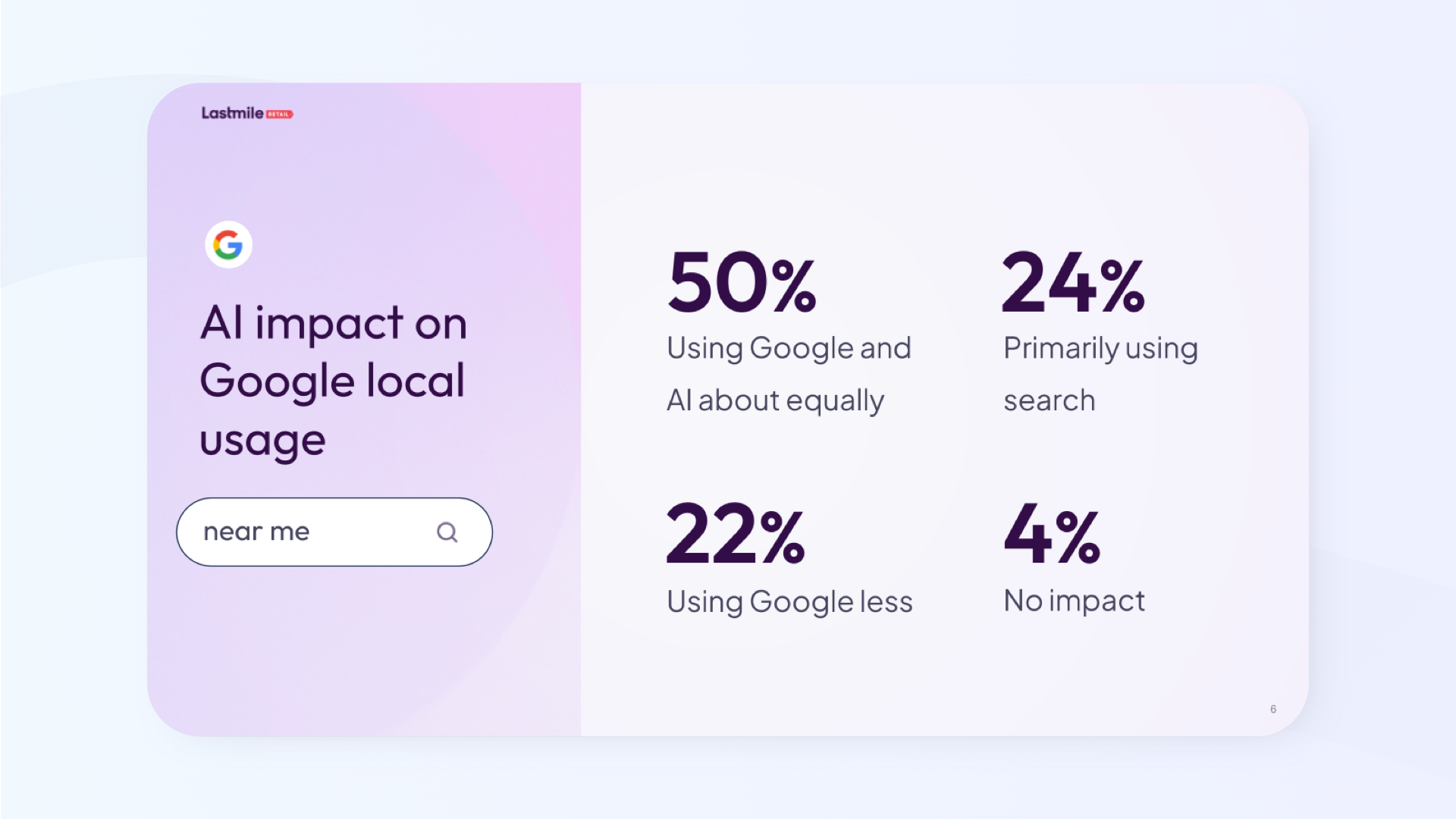
Lastmile finds that about 50% of consumers are using Google Search and AI equally at this point:
But even if consumers actively dislike AI, it’s hard to avoid using it because it is now embedded across so many digital surfaces.
Lastmile’s internal research doesn’t suggest that customers’ needs have changed. The following signals are still the ones they value for helping them make decisions about which nearby businesses to patronize:
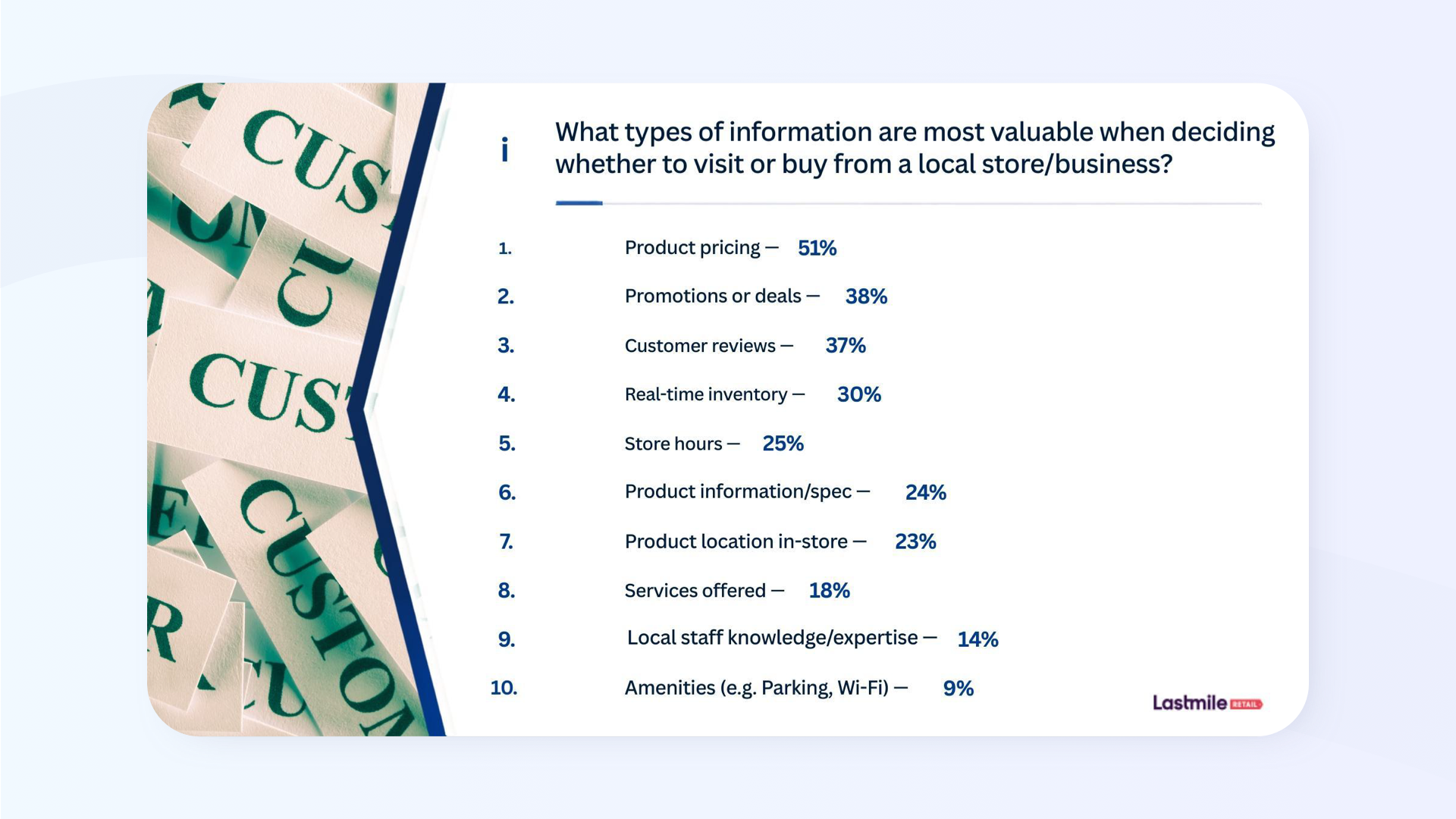
What is changing is consumer behavior. Fact check what Lastmile is seeing with their enterprise clients against what you are seeing with your own.
Trend 1: A 50% decline in branded searches over the past 5 years
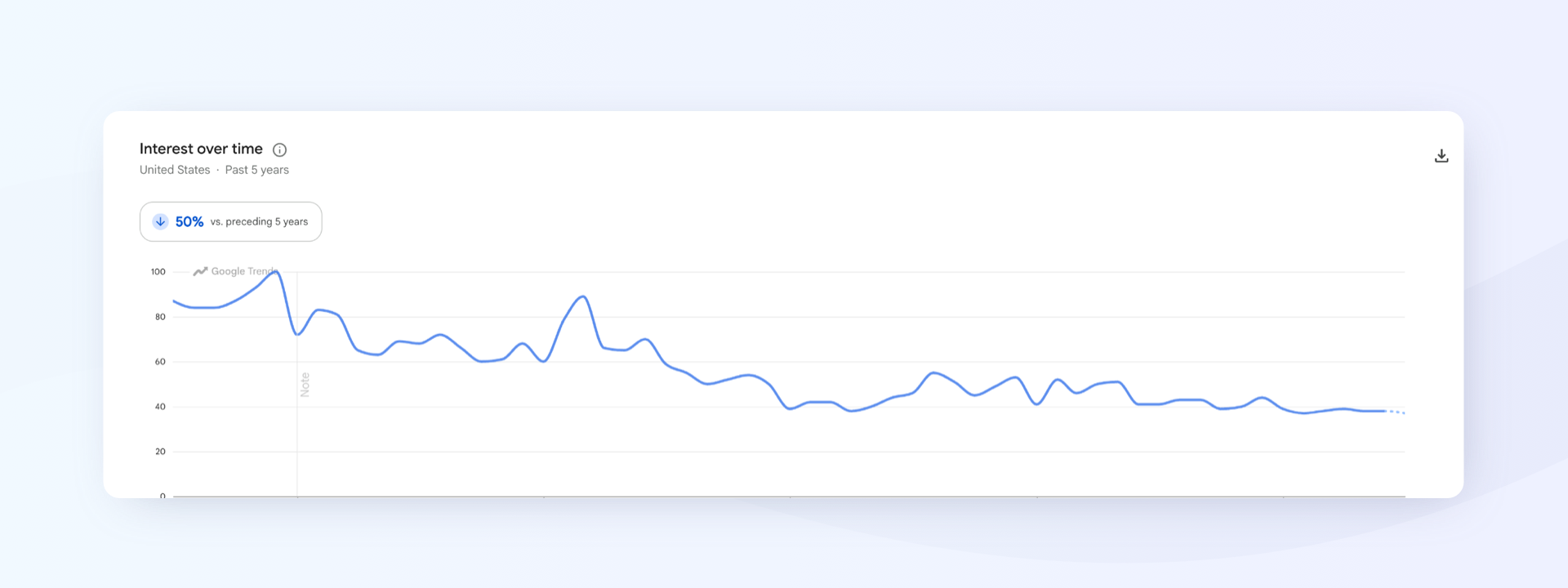
Major multi-location brands have experienced a 50% drop in branded searches over the past half-decade. A growing share of impressions, traffic, and engagement is stemming from non-branded queries, reinforcing the need to improve visibility for broader category and intent-based searches.
Solutions to this scenario:
- Surface customer pain points/competitor gaps – Audit the websites, social media profiles, social media discussions, and reviews of your nearby competitors to identify what they are doing worst. Every complaint creates a road map of how your brand can go one better, solving local pain points.
- Create more attractive solutions – One of AI’s chief benefits is its use by consumers as a comparison shopping tool. Outdo the local competition by offering better solutions to pain points and more appealing versions of each of the types of information consumers use to decide which brands to patronize.
- Accelerate focus on your comparative content strategy – Don’t be shy about directly comparing your product pricing, promotions and deals, customer reviews, inventory, staff expertise, and amenities to those of nearby competitors; this is exactly the type of information consumers are seeking in AI-driven conversations.
- Coordinate omni-channel content – From website location landing pages/microsites, to local business profiles, to email campaigns, to social media content and advertising, harmonize your comparative content messaging. Bring branch managers and franchisees aboard to coordinate promotions that prove that your brand is the best local choice.
Whereas in the past, well-known brands got lots of mileage out of being recognized by consumers in traditional organic and local search engine results, AI levels the playing field, rewarding enterprises with deep, rich content-based solutions to common customer needs. Expect consumers to choose the nearby business with the best pricing, sweetest deals, highest ratings, most expert staff, and most appealing amenities over those which have simply earned brand recognition.
Trend 2: Only 15% of consumers trust big businesses anymore
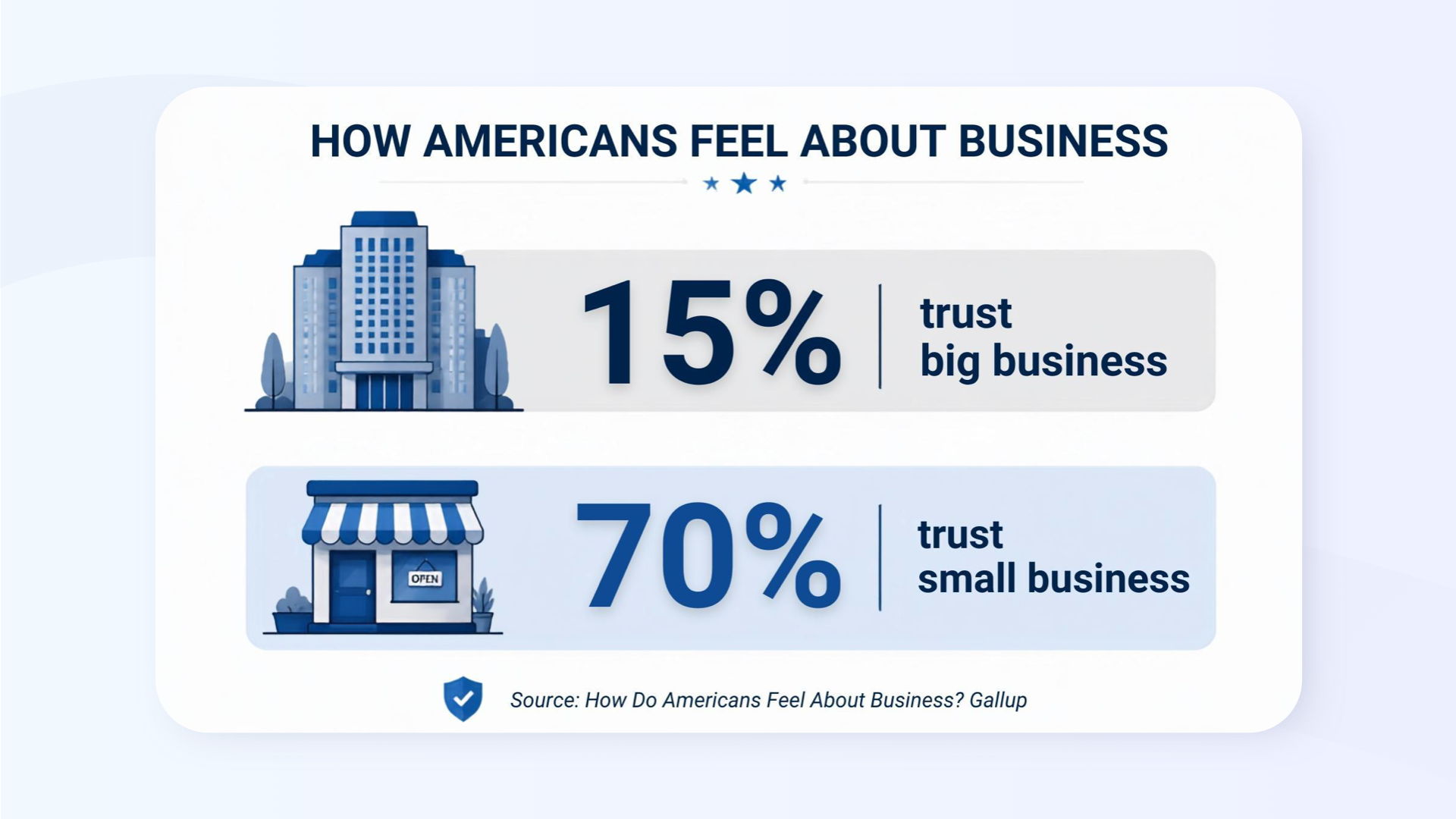
According to a 2025 Gallup poll, just 15% of Americans describe themselves as placing “a great deal” or “quite a lot” of trust in big business. This figure stands in extreme contrast to the trust that 70% place in small businesses. Large multi-location brands have a steep mountain to climb to earn back the confidence of the public. A core function of conversational AI tools is the summarization of local business reputation. A single prompt can generate a comparison chart highlighting the customer service wins and failures of multiple nearby brands so that consumers can choose the most trustworthy providers.
Solutions to this scenario:
- Create the most consumer-centric policies across all markets – From transparent pricing, to satisfaction guarantees, to returns policies, attractive and fair treatment of your consumer base creates the best competitive advantage, fueling a reputation that drives discovery, transactions, and repeat sales.
- Invest like never before in staff training – Every forward-facing staff member at every location must receive abundant and ongoing training in carrying out brand policies, with a strong emphasis on complaint resolution and escalation.
- Avoid customer service shortcuts that anger your consumer base – Regardless of promises of cost savings or efficiencies, watchdog any technology that imposes a barrier between human customers and human staff. If AI chatbots, AI answering services, virtual receptionists, or other novel stand-ins for human staff cause customers to experience stress or anger, think very carefully before risking your brand’s irreplaceable reputation to these technologies.
- Acquire and manage the strongest possible online and offline reputation – This means active, legally-compliant, and platform-compliant, always-on review acquisition campaigns across all branches of the enterprise. It means responding to all reviews with thanks for positive sentiment and offers to make things right when negative reviews emerge.
- Analyze sentiment trends – Audit both positive and negative sentiment MOM and YOY for both your own locations and those of nearby competitors to discover which topics inspire positive reviews and which failings lead to negative reviews. This is invaluable business intelligence you can use to provide more customer satisfaction than any local competitor.
- Safeguard against spam – The multi-billion dollar review fraud industry artificially promotes dishonest businesses while attacking the reputations of legitimate brands. Don’t leave it up to Google to catch bad actors. All your geographic markets and local business listings must be continuously monitored for signs of manipulation so that suspicious review content can be reported to review platforms.
- Embed consumer sentiment across all digital assets – Once you are confident that brand operations are truly consumer-centric, showcase earned sentiment across location landing pages/microsites, social media platforms, and advertising. Capture customer testimonials in the form of handwritten content, video content, images, and other media. Don’t overlook multi-lingual consumer sentiment in markets with bilingual or trilingual consumer bases.
Gartner predicts that brands that formally integrate human experience into their marketing strategy will see a 20% increase in customer lifetime-value vs. competitors that disregard human touchpoints. There may well be automations and AI-driven solutions your customer base will welcome because they enhance the personalization of consumer journeys, but be wary of any technology that distances human staff from the people you want to serve. Even a few complaints can severely damage online star ratings and overall reputation.
Small businesses benefit from the ways in which they humanize consumer experiences. Enterprises have a lot of catching up to do to overcome trust scarcity. In the AI era, large brands must earn consumer trust one transaction at a time.
Trend 3: AI can help you win back lost customers
Outlook is everything. On the one hand, the idea that competitors and small businesses are enjoying a more level playing field as a result of conversational AI tools can feel like a threat to your enterprise. That’s understandable. But you can also learn to look at this scenario differently.
If AI is “agnostic” about which brands it’s matching to consumer intents, and consumers care less about brands and more about finding the best solution to personal criteria, you’ve just been granted the ability to win lost customers back with the right offer. Unless a particular individual is boycotting your brand for some reason, special promotions designed to re-engage former patrons can take center stage in both direct outreach campaigns and AI environments.
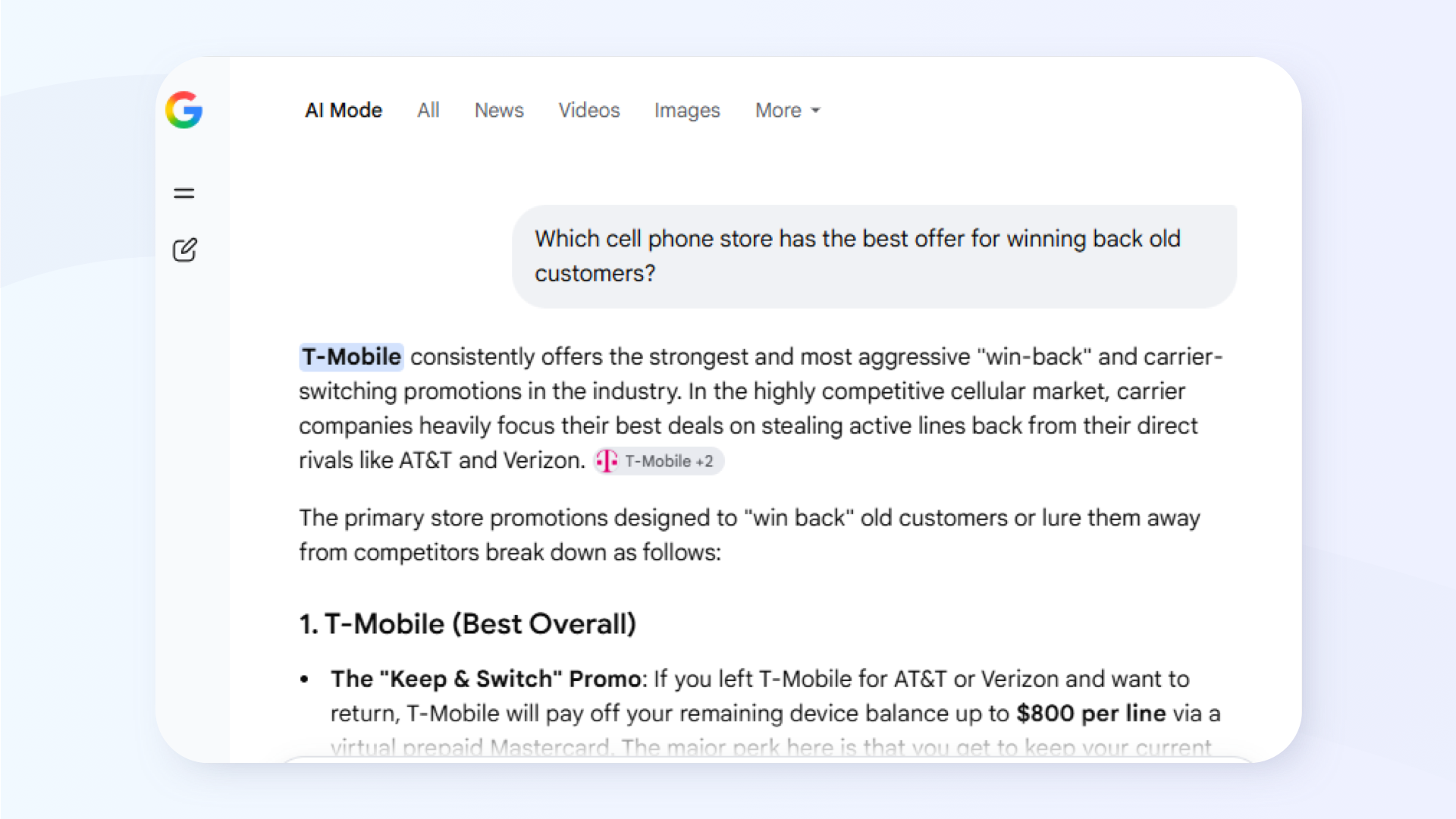
It’s always been a marketing adage that it’s more cost-effective to keep existing customers happy than to have to replace them, but past circumstances may have caused your brand to shed significant numbers of consumers.
Solutions to this scenario:
- Acknowledge store closure – Whether or not you agree with the term “retail collapse”, if physical footprint shrinkage has contributed to lost customers and decreased profits, honesty is the best policy about this across your brand’s internal messaging.
- Meet the changing digital legislative landscape – In areas in which a decline in location counts is coupled with more stringent legislation regarding the use of precise geolocation data for commercial purposes, solutions can still be employed for attracting lost customers, including:
- Approximate geolocation which allows advertisers to reach audiences within tightly defined local areas, often smaller than a ZIP code, without relying on precise device coordinates.
- Audience-assisted targeting which leverages first-, second-, and third-party audience data to reach users who have previously frequented specific locations, rather than relying solely on precise geolocation signals.
- Expand fulfillment options – Where a neighborhood has lost a local store, some scenarios enable brands to retain or regain customers by expanding service areas, home delivery, and remote shipping offers.
- Engage the public – Capture detailed sentiment as customers exit your brand to create a track record of the leading causes of loss. Poll geographic markets with simplified surveys designed to discover whether any deal or offer would be attractive enough to win consumers back from competitors.
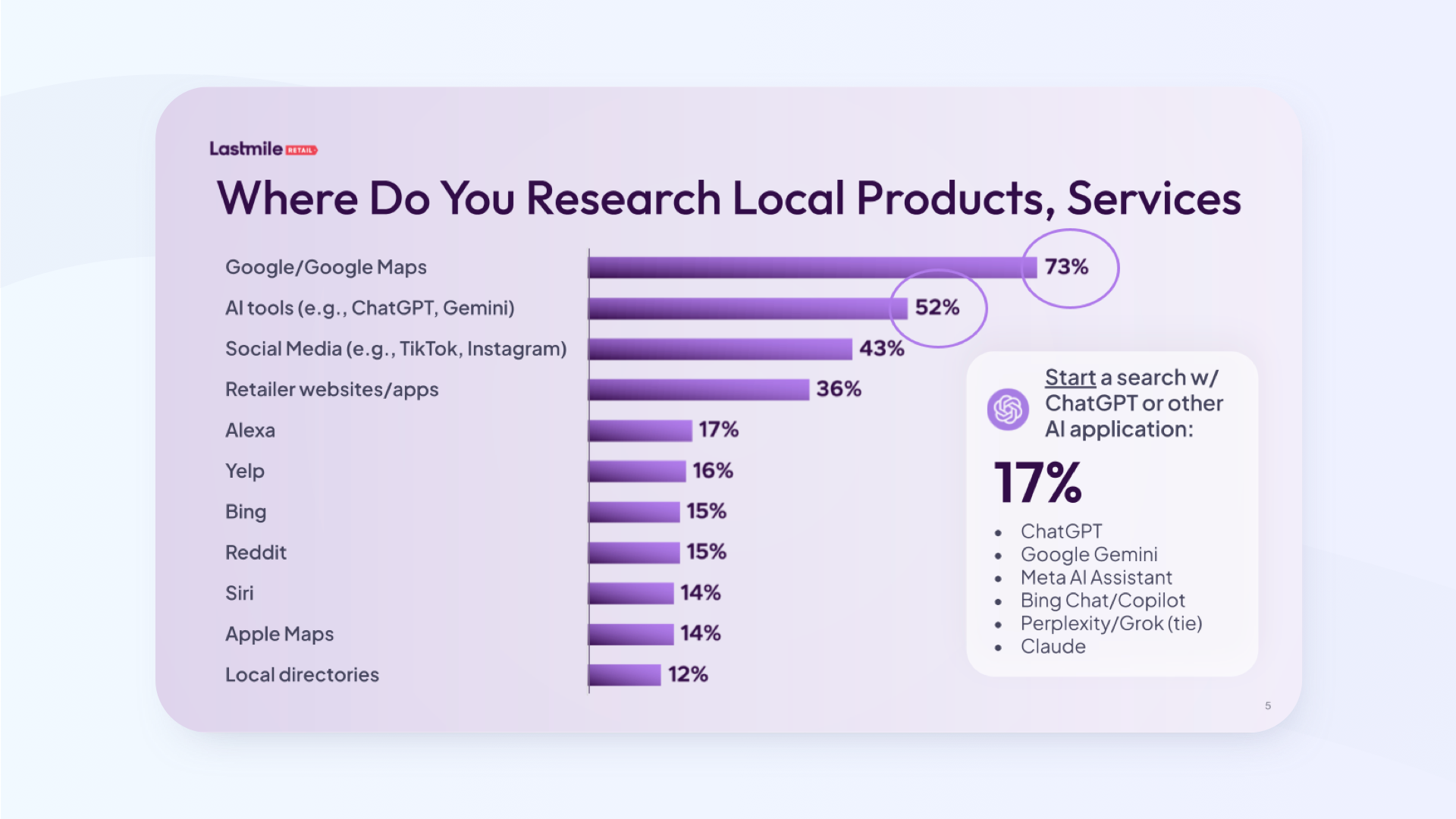
Keep circling back to what customers say they want. Build it and market it so that your offerings are highly visible across these environments, including increasingly prominent conversational AI tools:
Becoming truly trusted: A practical goal
How did your fact-checking go? Does Lastmile’s data and the third-party stats we’ve cited match with your current experience of marketing multi-location brands? Are you marketing a brand that is recognizing how AI is reshaping the whole dynamic of trust signals and consumer choice?
Becoming a truly trusted brand is a practical goal, but it’s one that many enterprises will fail to achieve due to internal politics. Competing agendas and priorities will get in the way of succeeding by giving the customer what they want. Not sure how to overcome this very common reality of the big business world? Get in touch with Lastmile for a meaningful conversation about the benefits of an early response to consumer behavioral shifts in the AI era. It could be just what decision-makers at your brand have been waiting to hear.
Request a Demo
Drive more local sales by pairing shoppers with real-time inventory and promotions through seamless online-to-offline capabilities that help clients transact now.