Goal: Adding new enterprise clients to your agency’s roster by speaking at prestigious SEO and marketing conferences.
Frustration: Despite having amazing data and stories to share, your speaker pitch is relegating you to the small stage, where few major brands will see you.
You know the positive effect signing even one new multi-location client could have on your agency’s reputation and profitability. If you’re tired of feeling like you’ve been given a permanent seat at the kids’ table, take a minute today to understand why this is happening. It could earn you better placement at your next event.
SEO industry bias: groundless or well-founded?
For the 20+ years I’ve been working in the SEO industry, something that hasn’t changed is the way in which local search is treated like an add-on to traditional, organic search. You might think that AI would shake up this entrenched dynamic, as SEOs struggle to determine where their own place at the table is now, even wondering if they need to re-brand themselves as AIOs or GEOs. Yet, so far, the fracture appears to continue with local AI sitting across a long divide from general AI.
Why SEO conference bias against local search doesn’t make sense
The data is on your side of this dilemma. Studies estimate that consumers spend over 90% of their income locally and that more than ½ are using AI tools to navigate nearby shopping options (a figure that outpaces social media usage for this purpose). It seems like all this commercial activity should actually be center stage at premiere conferences, right?
Why SEO conference bias against local search actually make some sense
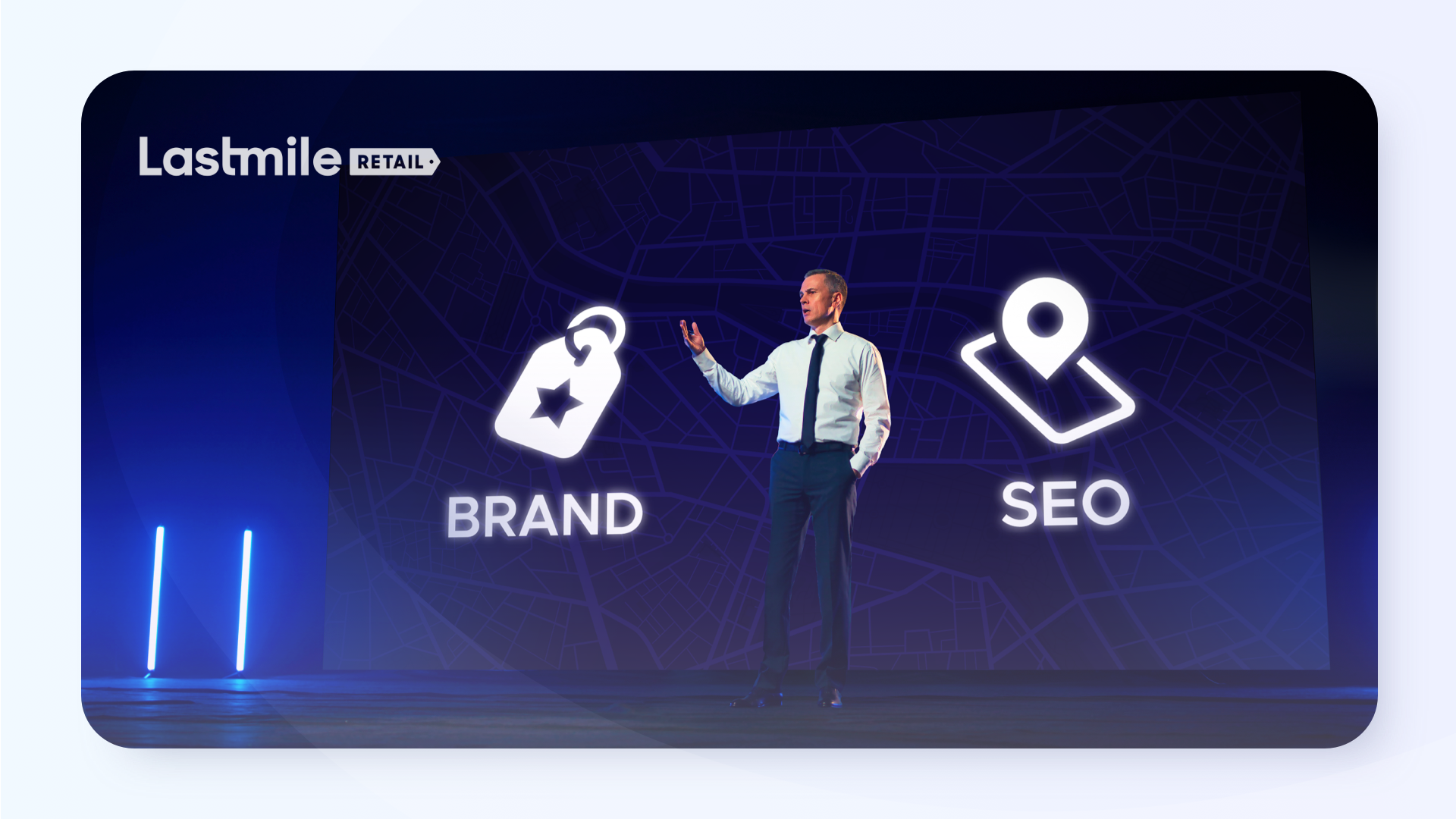
If you want to hobnob with major enterprises, here’s something your traditional SEO counterparts know about them that you may not know about if you’ve typically served small businesses in the past: people working at the largest brands typically know/care very little about local search. They don’t think of what they do as local SEO (even if that’s what they’re doing). They think of it in terms of brand marketing.
Let me say that again in a different way.
If you’re talking about local SEO during conference or client pitches, you are almost certainly not speaking the language your audience understands.
And speaking your prospective customers’ language is basically rule #1 in marketing.
You’ve probably told your SMB clients to do so. Now, here’s a chance to practice what you’ve preached.
How enterprises think about what they do
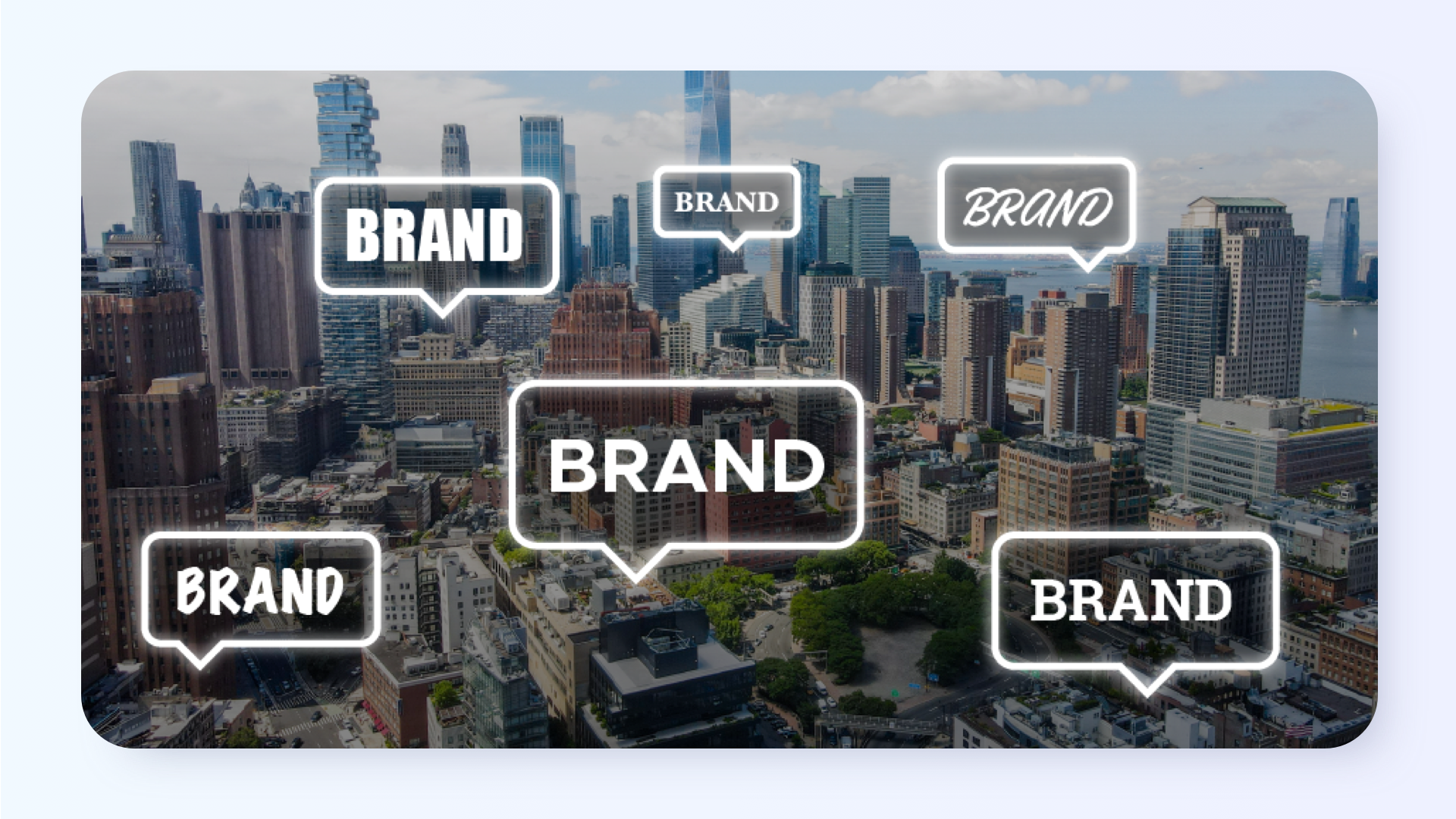
Here’s a phrase I recommend you commit to memory:
“Precision Brand Advertising”
This is the kind of language used by people who are working inside of brands with hundreds or thousands of locations. These could be huge restaurant franchises, global hotel chains, or famous financial institutions.
Now, you may know that these organizations could see substantial lifts in visibility, conversions, and sales by investing more in:
- Localized content development
- Local optimization across all digital assets
- Local business listings management
- Reputation management
- Unstructured citation development
- Localized advertising
- Localized social media marketing
- Local competitive audits
- Local spam fighting
- Full local consumer journey tracking
- Etc.
And people within these big organizations may already be doing many of these things, or at least have a sense that they should be, but very few of them think of themselves as engaging in local SEO. Instead, they will typically have a different phrase (like “precision brand advertising”) for what is going on across multiple internal departments in an effort to market the brand.
The dynamic of American vs. British English is filled with examples of how two people can be using different words to talk about the same thing. One says “apartment” and the other says “flat”. One says “elevator” and the other says “lift”. An American car has a trunk and a hood vs. a British boot and bonnet. Smart travelers familiarize themselves with regional linguistic variants for a better trip and an easier life.
You should do the same in the business world, if you’re hoping to speak the language of major marketing conference organizers and attendees. You can learn to stop leading with “local SEO” in your pitches and lead with “brand” instead.
Hitting Silos

If your dreams of big conference stage placement have yet to be realized, then you already have first-hand experience of the strange silos that exist within our industry. It’s so common for SEO, PPC, Content, UX, Dev, Sales, Support and other teams to exist in separate worlds, pigeon-holed into neat departments that seldom meet.
Someone pitching an AI Branding topic right now may win a keynote speaker spot at a digital marketing conference, while your amazing and practical findings about Ask Maps are treated as something of an afterthought, even though your work in that environment builds brands.
This identical problem with siloing happens in the orgs of major enterprises. Approach the head of Content at an insurance brand with hundreds of offices to explain why they need to start adding video content to their Google Business Profiles and you’re likely to hear some variant of:
- “That’s not my role.”
- “That’s someone else’s problem.”
- “I don’t care about that.”
- “I don’t get paid for that.”
Why are these swim lanes so concrete and frustrating? They always get in the way of the bigger picture of what the brand is supposed to be doing.
And what is the brand supposed to be doing? Serving the customer. Yes, this seems obvious, but it’s amazing how often this unifying raison d'être simply gets lost amid the silos.
A friend recently mentioned a good but unattributed adage to me:
“Marketing done right is service.”
You’ve probably heard many different iterations of this over the years. Nevertheless, when departments don’t speak to one another, a holistic vision of service is absent. There is no gainsaying that both marketing agencies and enterprises are foregoing profits because of this long-standing communication gap.
Breaking Through Silos
Friends and family have devoted enough hours to Duolingo studying Spanish, French, Korean, and other languages to make that little green owl ecstatic. My loved ones do this just for fun and interest.
Your task as a local SEO is to learn to speak a second language for growth and profit.
At the next marketing conference you attend, I challenge you to record pages of notes, not on SEO takeaways, but on the language the big stage speakers are using to describe what they do. Do the same at booths you visit. Look at the words on swag. If you get the opportunity to socialize with prospective clients, let them do 80% of the speaking and prick up your ears every time they use a phrase to describe what they do. You may hear familiar lingo like “omni-channel” or even some nomenclature that feels a bit cringe-worthy to you, like “phygital marketing”. Judgements about hipness have no place in these conversations. You are here to become fluent in enterprise linguistics.
And this is the active listening you need to bring into the meetings you win with large brands. In nearly all cases, their reps’ eyes will glaze over if you start talking about “GBP Attributes” or “Offer Posts” or “Local Justifications”. Instead, let them do as much talking as possible about how their departments are silo’d and how they speak about marketing.
Then, reframe your presentations, pitches, decks, proposals, and other assets to use the internal language of the client. And while you’re at it, rejig your speaker pitches to focus on brand marketing instead of local search, even if everything you do for your clients falls under the latter heading, in your own estimation.
Why make this adjustment? Because marketing done right is service, and you are here to serve both client and audience needs. Don’t let your talents, gifts, brilliancy, and value get lost in translation.
A Further Linguistic Leap?
Everyone is talking about the new horizons (potentially) being opened up by the advent of AI. Could one aspect of this be clearer sightlines pointing towards how our entire industry brands itself?
I love languages. I’ve taught three and studied well over a dozen as a hobby. I’ve brought my interest in linguistics to how marketers have referred to what we do over the past few decades. Are we local SEOs or local search marketers? Are we doing SEO, SEM, zero-click marketing, PPC, inbound marketing, or 10x marketing? Remember linkbait and viral marketing? Are we looking for Subject Matter Experts or Social Media Influencers? Did you just teach a franchise to become the GOAT by doing an AMA on Reddit? What are we doing right now? Is it AIO, GEO, or evidence-based optimization?
For a long time, “digital marketing” seems to have been the most useful catch-all phrase. It felt reasonably inclusive.
But I think it’s one of those phrases that carries the risk of missing the point. If your audience or client base is serving real-world people, then what you are actually doing is just “marketing”. It doesn’t matter whether it’s online or offline. Marketing is a career that’s existed for centuries, and even the internet isn’t really “new” anymore. You are doing what promoters have done throughout history: helping customers choose brands for their needs.
Is it time to rebrand all the varied forms of promotion as just “marketing?”
Maybe so. Recently, I was speaking with a marketer who specializes in serving the smallest local brands and is a strong proponent of them investing in very basic visibility tactics like posting yarn signage around town. Also recently, I was speaking with a seasoned enterprise marketer who got moved up from the small stage to the big one at a conference you know about by repositioning their pitch to focus on branding, even though what they were talking about was local search marketing.
Words like “digital marketing” and “SEO” and “local SEO” can create bias and divide us from one another and the reality of what we’re all trying to do, which is serve clients so that they become more profitable by offering better customer experiences and service. It doesn’t matter if that consists of mailing postal flyers or mastering query fan-out. Not when what you care about is the customer.
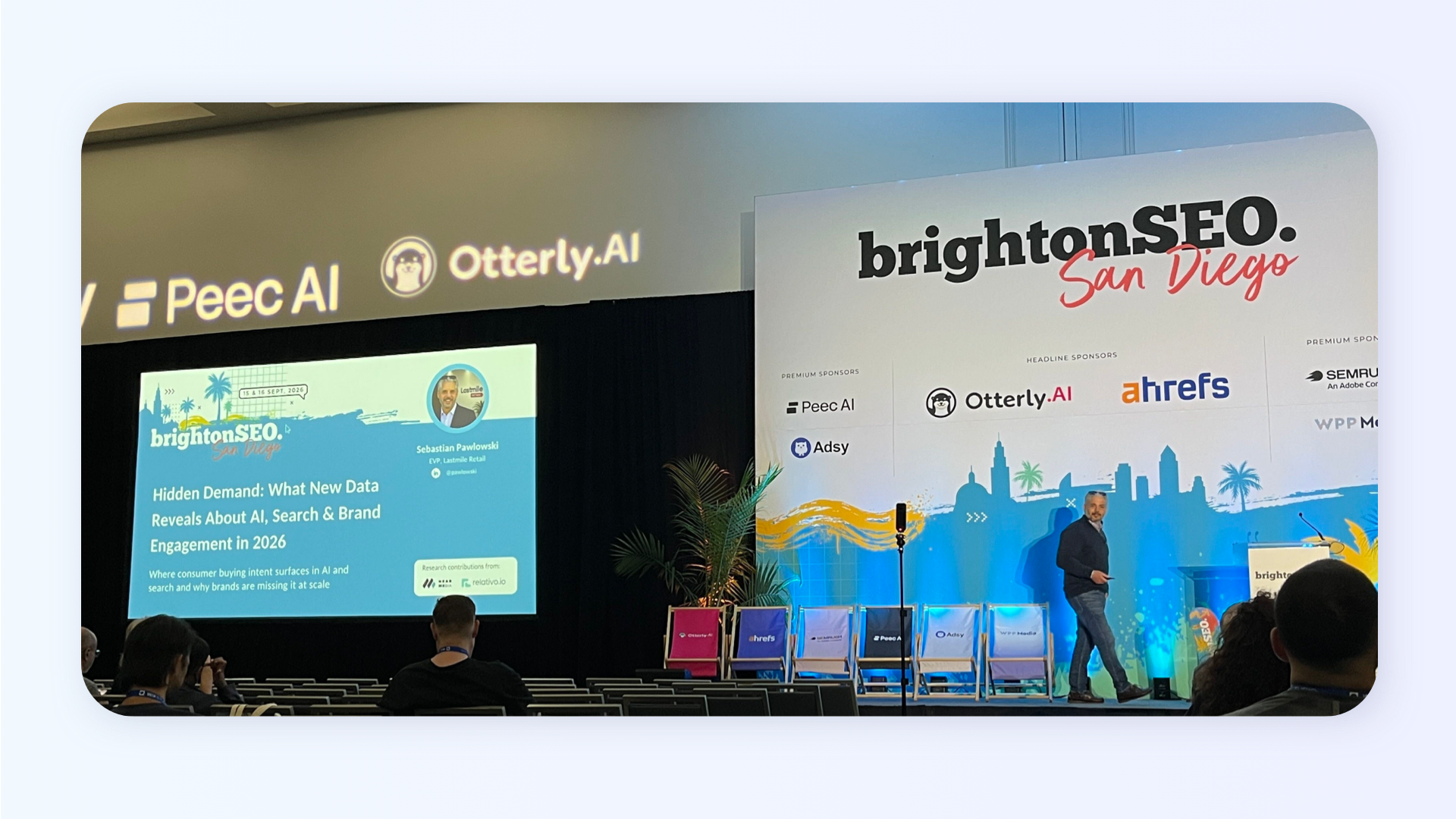
Something I’m really enjoying about working with Lastmile is how little they seem to care about buzzwords. The word that excites them most is “customer” and everything they do as marketing partners to their enterprise brands is practical and consumer-centric. If you’ve been tasked with improving some aspect of a company with hundreds or thousands of locations, I recommend reaching out to Lastmile’s team.
Request a Demo
Drive more local sales by pairing shoppers with real-time inventory and promotions through seamless online-to-offline capabilities that help clients transact now.