
When you buy a house, the deal isn’t done until the real estate closer comes in to make sure funds have been transferred and all documents are signed on the dotted line. It’s an organized, standardized, straightforward process.
If conversational AI tools were like these settlement agents, they would quickly close deals between consumers and brands. Instead, no matter how close a prospective customer may be to choosing your business, AI just keeps trying to prolong the conversation with further suggestions and options, like this:
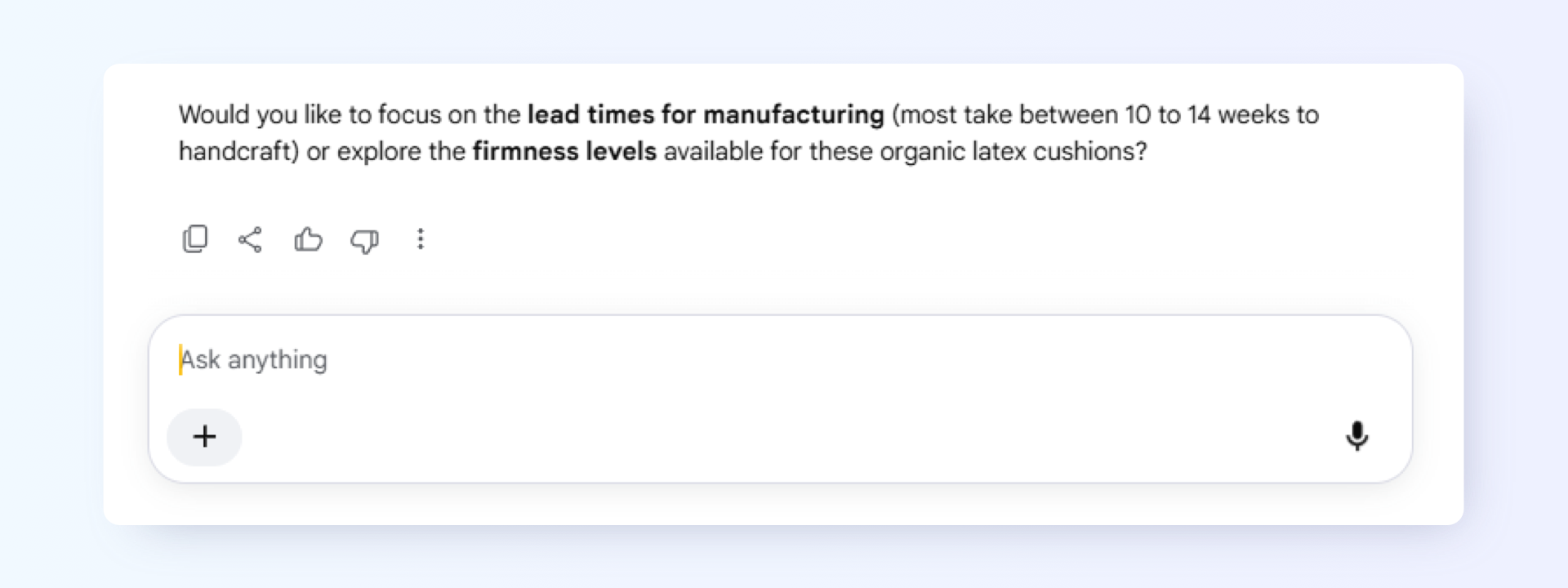
It’s as if at the moment home buyers are being handed the keys to their new house, a busybody rogue agent shows up to ask if they wouldn’t rather look at a lot of other houses in a lot of other cities represented by a lot of other realtors.
The run-on conversation that is conversational AI is posing a major challenge to brands: how to close deals amid so much generated clutter.
Why are ChatGPT, Google AI Mode, and other tools so chatty?

If you’re old enough to remember life before the 24-hour news cycle, you will recall that experienced newscasters had one hour per evening to succinctly sum up the events of the day. That was it. People had gotten “the news”, felt informed, and then went about their business until the following evening.
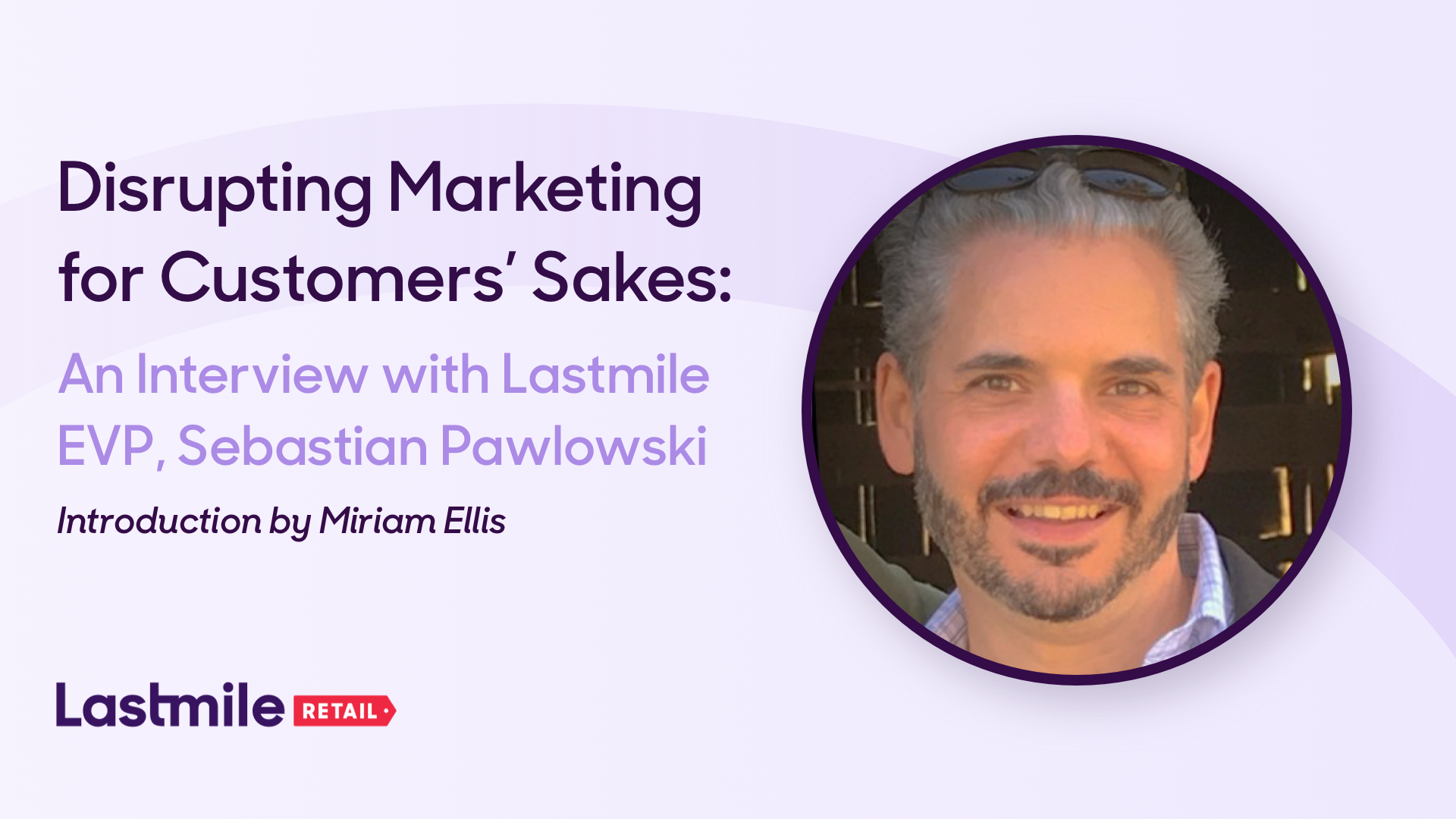
Lastmile Executive VP, Sebastian Pawlowski, contrasts this with today,
“The point of the 24-hour news cycle is to keep you watching. The talking heads, who are often just two years out of college and not experts of the kind we used to have in newscasting, are there to keep the news going on all sides. They have a certain professional appearance and they’re good talkers, but they aren’t experts. Often, they’re just there to create hockey ice for people to get into fights on so that you stay glued to the screen.”
It’s an apt analogy for how tools like ChatGPT, Google AI Mode, and Google Ask Maps have been designed. These tools need a captive audience to succeed, and so every answer they give is followed up by another series of questions to keep the user engaged a little bit (or a lot) longer.
It’s a dynamic that’s being overlooked in much coverage of the marketing opportunities presented by AI: your enterprise’s goals and AI tools’ goals are not the same thing.
False Equivalency: How AI mashes up your brand with non-experts and fraudsters
Like the talking heads of 24-hour news, conversational AI is not an expert in your industry. It’s scraping content from all over the place, and reassembling it in a way that looks sort of professional. In fact, it looks so authoritative to many consumers that they are trusting AI chat to diagnose their medical conditions and manage their finances with drastic consequences.
One of the niftiest use cases for AI is its ability to create quick comparisons for consumers, like this table lining up the features of brands selling high-end organic sofas for me:
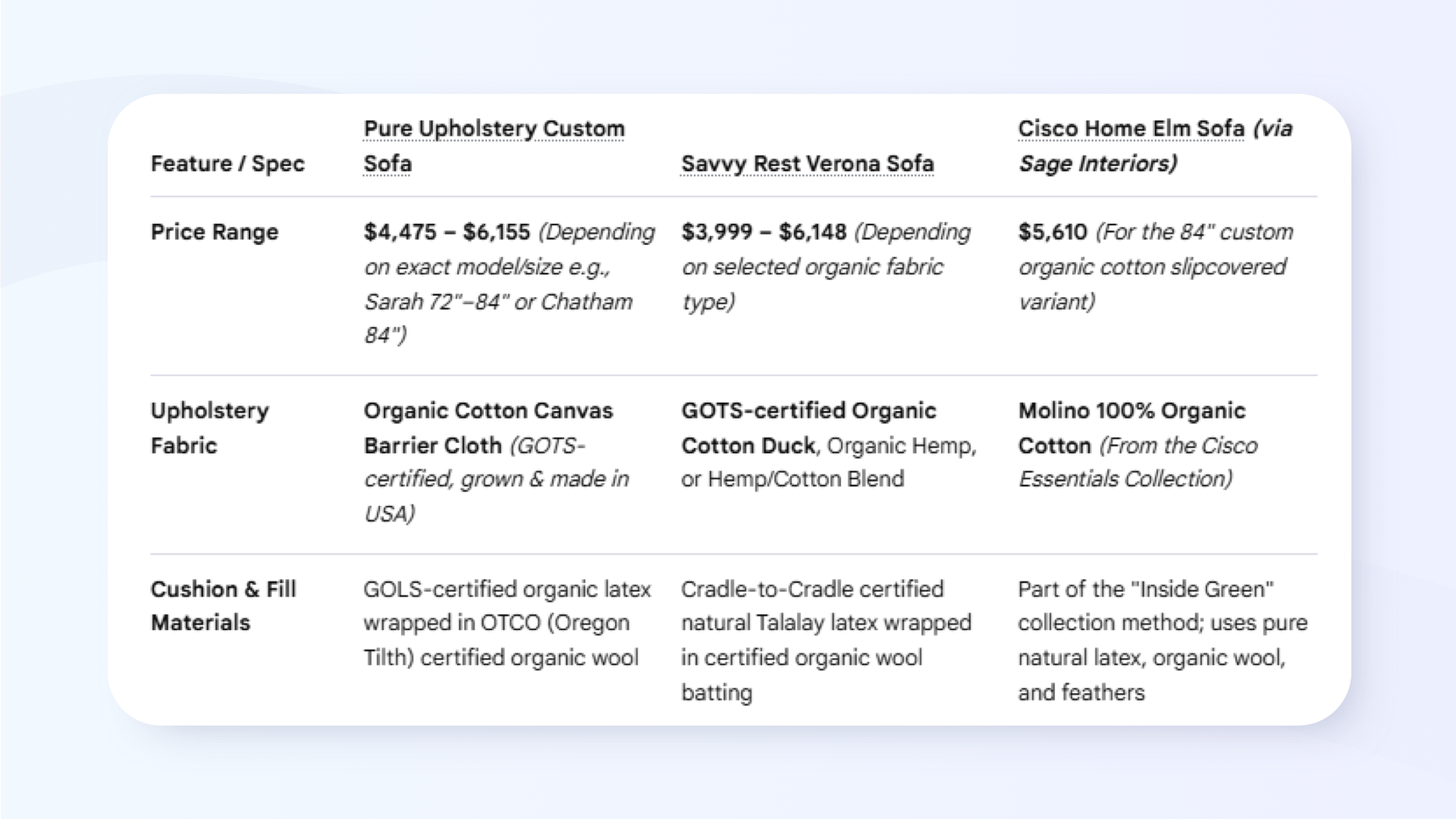
Looks pretty useful, right? So nicely laid out and so much easier than me scrolling through pages of Google SERPs trying to contrast all these attributes for myself from the data on brand websites.
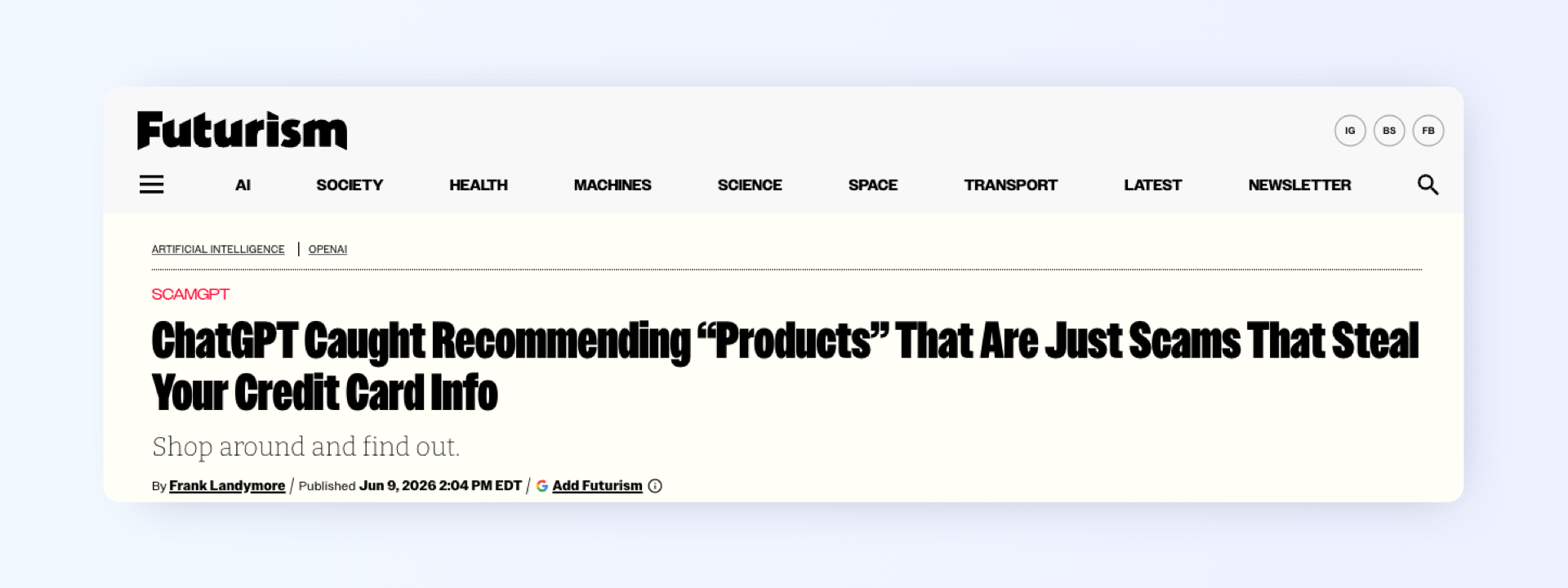
But what if one or more of the brands featured in this Google AI Mode result is, in fact, a scammer? AI keeps making headlines like this one due to outrageous outcomes like these:
“ChatGPT is getting duped by fraudulent storefronts run by scammers — which means you might be getting duped, too. According to the scam-checking service Ask Silver, the OpenAI chatbot is recommending cloned versions of defunct websites that capitalize on familiar brands to steal your money and bank details.”
I’ve picked my sofa shopping example at random and know nothing about the brands featured…and neither does conversational AI. It doesn’t know whether these are expert, authoritative furniture makers, or shady websites hijacking the brands of trustworthy home goods suppliers, or if these are even actual brands at all. The tool could be hallucinating utter nonsense. Just ask today’s librarians who keep getting requests for books that don’t exist because AI made them up.
Consumers have no idea whether the information the chatty bot is giving them has been cleaned, vetted, or fact-checked in any way. AI makes all entities falsely equivalent to all others. But if it looks like a duck and walks like a duck…
It’s train-wreck-fascinating that Google has just rolled out Tell Maps as a new Google Maps feature:
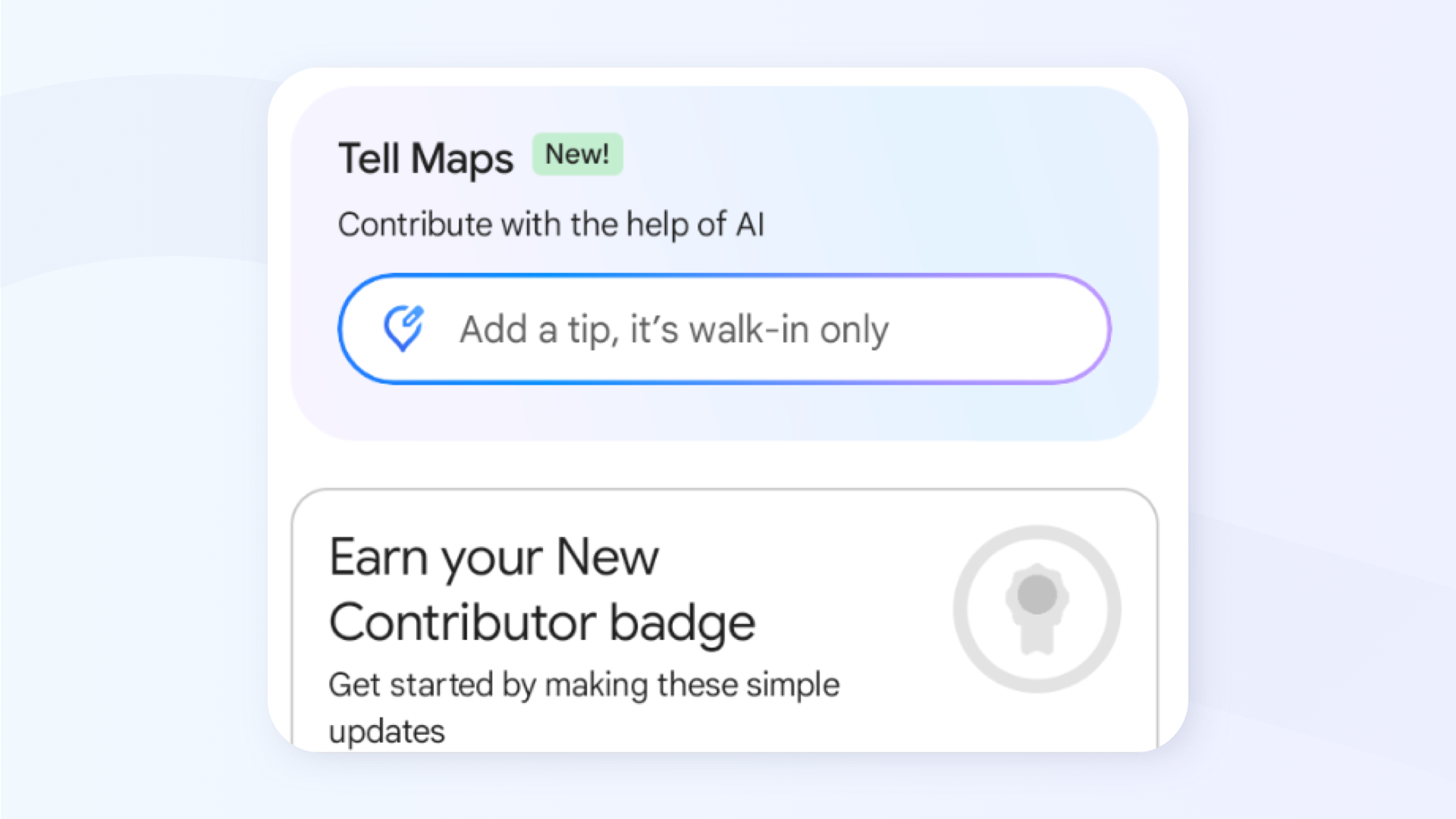
In keeping with their infamous open-source attitude about your brand’s basic local data that has historically allowed random members of the public and your less-than-scruplous competitors to suggest edits to your Google Business Profiles, Tell Maps is now urging the public to leave hot tips about your brand. And Google is gamifying this with badges, just as they did with their Local Guides Programs to incentive reviews and answers to Google Q&A, resulting in countless participants leaving non-answers to questions for the sake of points.
Q&A is now gone. It ended up being a dud. Who could have predicted it? And who can forecast the time window AI Mode and ChatGPT have for connecting consumers to fraudsters before people veer away from these products after being misguided and burned by false equivalents in fancy AI wrappings once too often? Given the deep entrenchment of AI across so many user interfaces, I think it could be a while.
The unifying factor across these examples is that Google thinks it's fine for non-experts to represent and speak for your brand, whether these are hot-tippers via Tell Maps, or AI chatbots designed to keep consumers engaged on a third-party platform as long as possible. You may not agree, but what’s imperative is to re-gear your marketing so that you become the closing agent as often as possible in conversational AI contexts.
Brand Goal: Getting customers out of AI and into owned media as quickly as possible
If you picked up the SEO advice that websites stopped mattering a decade ago because of the rise of zero-click search, it’s time to re-evaluate in the AI era. Begin thinking of your brand’s site as a double-sided asset, with these two powers:
- The power to feed AI deep content that answers as many prospective customer questions as possible, with the goal of bringing the user out of chat and into your owned media.
- The power to control owned media so that it provides a superior user experience, with the goal of giving prospective customers the help they need to choose your brand as the best match for their needs.
In essence, you are now operating in a two-part closing; you have to close in AI and close on your website to seal the deal.
Checklist: stopping the AI chatter
AI wants to keep your prospective customers asking questions indefinitely. Your local enterprise can cut through this process if answers involving your brand are complete and compelling enough to win calls, clicks to your site, and real-world foot traffic. Use the following checklist of assets you need to be a closer:
- Provide transparent pricing – Don’t expect consumers to choose you if you are obscuring your pricing for any reason. Physical products must be clearly and accurately priced on your website. If you do custom quotes, provide a realistic price range for projects.
- Publish complete product specs - Your product pages should include every possible detail about merchandise including its real-time availability, next-nearest-location availability, fulfillment options including BOPIS and shipping, its ingredients, components, origins, measurements, weights, use cases, warnings, and guarantees. Photos should show the product in clear detail from multiple angles and, where appropriate, show it in the context of familiar household items or people so that consumers can gauge size relatably. Video content should show the product being used, if relevant. Comparison tables should compare the product to similar merchandise to assist buyer choice. Include answers to documented FAQs and contact information that connects website visitors to expert human assistants for further help.
- Emphasize transparent phone information – The fad of hiding phone numbers must end. Company leadership needs to prioritize staffing phones with trained employees who win the race to answer calls as quickly as possible and provide expert assistance. After-hours support options including text hotlines and internal chatbots should be easy to find and use.
- Distribute accurate and abundant contact data – Audit all pages of your website including location and practitioner landing pages and microsites to ensure that name, address, phone number, text line, email, and hours of operation are 100% accurate for all branches and partners. Audit your local business listings across the directories AI is citing to establish this same data cleanliness. Missing fields are missed opportunities and misinformation engenders negative reviews that drive AI users away when this sentiment is shown and summarized.
- Show proofs of accessibility – Build a body of evidence of your brand’s accountability to consumers by responding to all reviews on every platform that is being cited by AI in your geography and industry. Respond with thanks for positive sentiment and offers to make things right for the customer when complaints occur. Surpass industry norms and customer expectations for the speed of your responses. Respond on social media to brand mentions whenever practicable, and with the goal of demonstrating engagement rather than self-promotion.
- Make YouTube your long game – The video platform is one of the most-cited conversational AI sources, but don’t expect quick wins from it. Invest consistently in your YouTube channel for long-term wins due to gradually covering everything prospective customers could want to know about your brand, your products/services, your community involvement, your customers, your expertise, your attributes and amenities.
- Earn third-party validation – Identify all opportunities for involvement in the communities your enterprise serves. This could include sponsorships and other forms of philanthropy, event hosting and participation, career counseling and employment opportunities, contests, cross-promotion with adjacent businesses, industry accreditations and memberships, offering stories to local news, being a guest on radio, podcasts, video channels, and more. Conversational AI is hungry to cite evidence of your brand as an entity in its geography and vertical. Continuously build unstructured citations for validation purposes.
- Foster brand demand – While links dominated the last 20 years of digital marketing and still matter today, diversify promotions so that at least some of them are influencing consumers to search for your brand and ask AI about it. For example, a billboard can invite the public to “Google” you instead of featuring a website URL. Early days’ studies suggest that brand prominence is playing a role in the entities being serviced in conversational AI, just as in traditional search. While this last checklist item may seem antithetical to the concept of getting people to your website as quickly as possible, remember that you now have to close on two fronts: in AI and on your domain. Don’t rely on a single methodology or marketing channel.
Why we’re never going back to a pre-conversational AI era

“The promise of conversational AI is that it’s supposed to cut through the clutter for users who are finding Google SERPs impossible to navigate. The problem is, there’s more clutter than ever in AI contexts.” – Sebastian Pawlowski
When confronted with technology, most humans need help. Some readers will remember phoning the “time lady”, the “weather man”, and the operator for assistance. Don’t take away the wrong lesson from the proliferation of conversational AI. It isn’t that people have always longed to dialogue with machines. It’s that people want to have conversations. Because they need help.
The stepping stone of keyword-oriented search was a little like the era of the electric telegraph, which used Morse code to simulate human communication. It was novel and useful, but it was not a complete substitute for speaking to another human being one-on-one. It took the telephone to make that leap.
AI stakeholders have a vested interest in positioning their technology as a leap of this significance. Perhaps they will succeed. We don’t know yet, but smart brands should keep a sharp eye on the accuracy of this narrative. There’s no gainsaying that the mess of Google’s traditional SERPs has become harder and harder to navigate via keyword-driven search. Marketers who enjoy speculating in conspiracy theories think this is intentional. But it doesn’t really matter.
What does matter is that brands are feeling a profound loss of control right now due to AI putting them into a kind of blender with all of their competitors, including fraudsters. In a whirl like that, you’ve got to look for fixity. What has been firm ground since the beginnings of commerce?
It’s that:
- Many humans enjoy conversing
- Many humans find technology overwhelming
- Many humans appreciate help from other humans when they feel overwhelmed
Being “overwhelmed” runs the situational gamut from buying a new sofa, to buying a house, to getting medical or financial advice. Anything that is new to the customer is an opportunity for your brand to show up with the best help just when it’s needed most. If you have to feed the AI beast, so be it.
Do it with the mindset that your answers are complete enough to be the closer, guiding the customer away from the dehumanizing experience of talking to a machine to talking to a genuine, vetted, trained, authoritative expert at your brand. That’s the new switchboard you need to create, the new set of wires you need to string across the communities you serve. It’s not going to be easy, but you can do this. AI is giving people a taste for chatting, and we’re not going back from that to a proxy existence limited to keywords, but only you can provide a human conversation.
Want to have real conversations about AI and your local enterprise brand? Reach out to Lastmile for a one-on-one consultation.
Request a Demo
Drive more local sales by pairing shoppers with real-time inventory and promotions through seamless online-to-offline capabilities that help clients transact now.