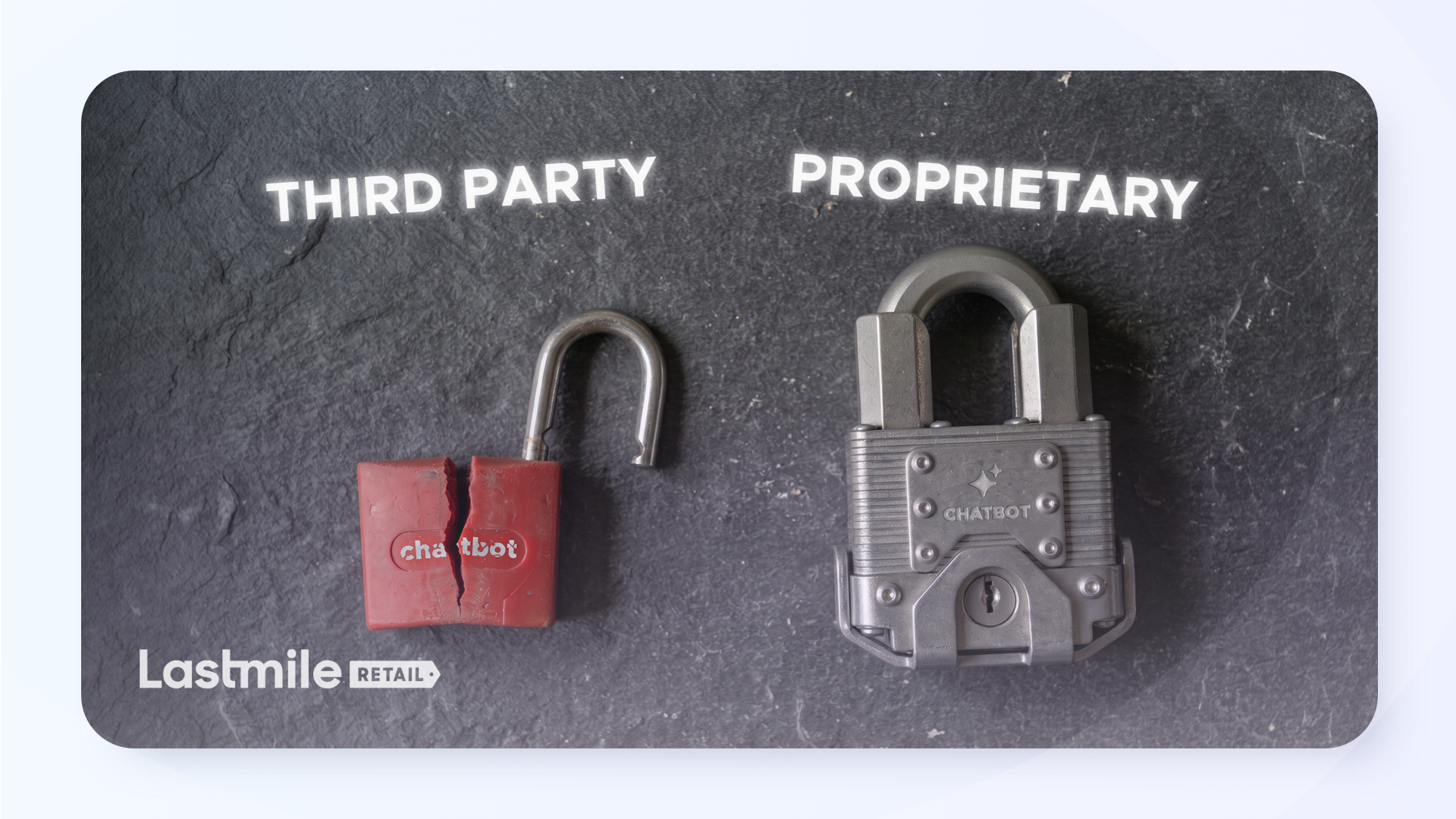
So your enterprise brand has decided you need a chatbot to scale support, but should you go for a third-party solution like ChatGPT or build a proprietary system? The simple answer is: you should choose the path that is going to be best for your customers, but the nuances of both routes deserve careful consideration before you make this important decision. In fact, decision-makers at your enterprise should spend a few minutes reading this article prior to implementing any type of AI-powered chat.
Understanding the risks/benefits of third-party vs. proprietary chatbots
The more sensitive your business category and the more legal requirements are associated with your industry, the more important it is to be aware of serious risks posed by chatbots. The following table summarizes major risks in choosing an off-the-shelf chat product vs. developing one in-house:
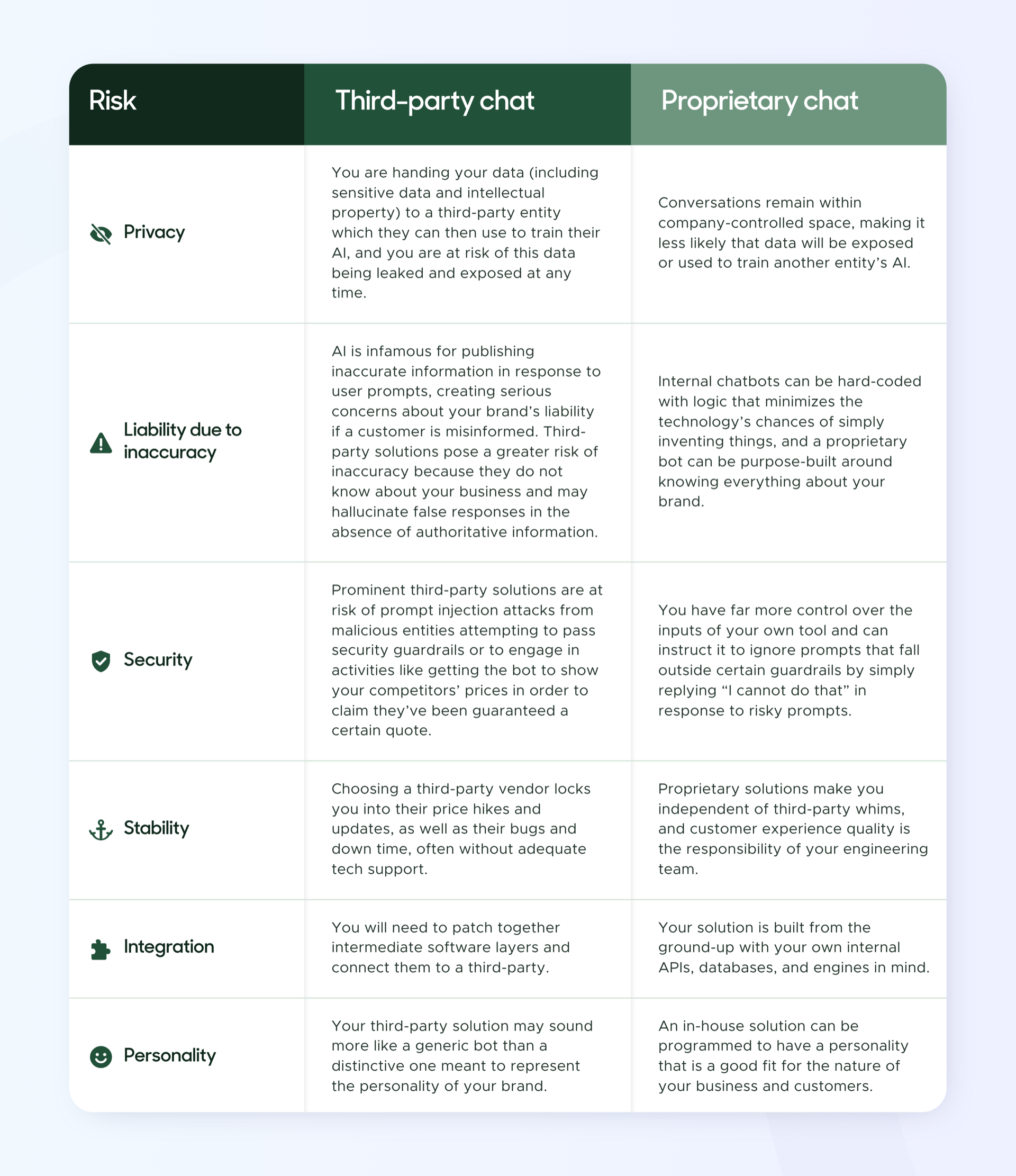
The above table makes it clear that third-party chat solutions pose greater risks than proprietary ones. So why would any brand opt to farm out their chatbot? The following table features some of the obvious benefits:
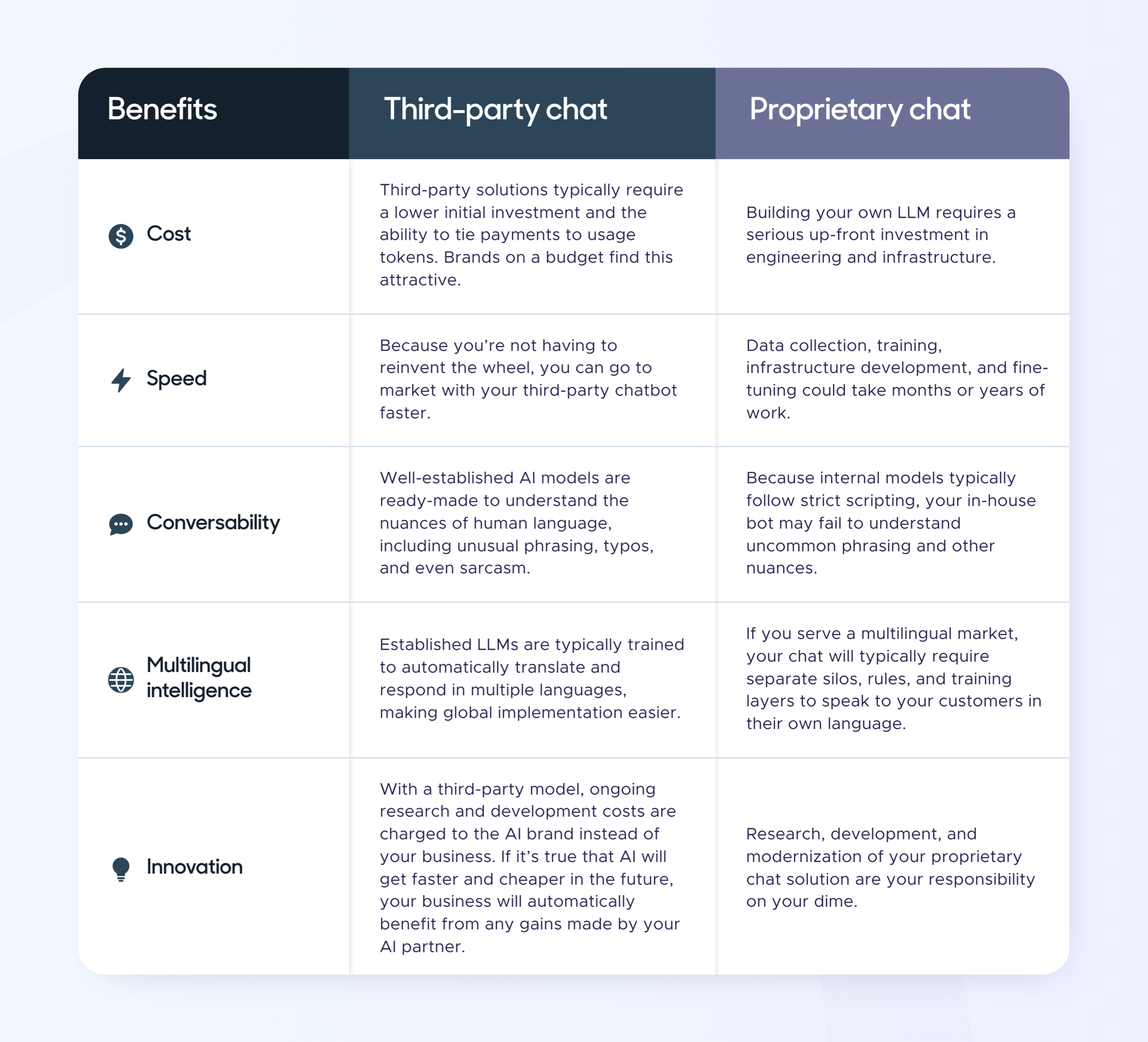
With lower financial barriers to entry, quicker go-to-market timetables, and built-in capabilities, it makes sense for brands to consider whether the benefits of third-party chat solutions outweigh the risks.
How risky are the risks?
Whether outsourced or in-house, chatbots bring a new level of risk to all participating businesses. Review the following stories and put yourself in the brand’s shoes. Ask yourself what you would do in the face of problems like these:
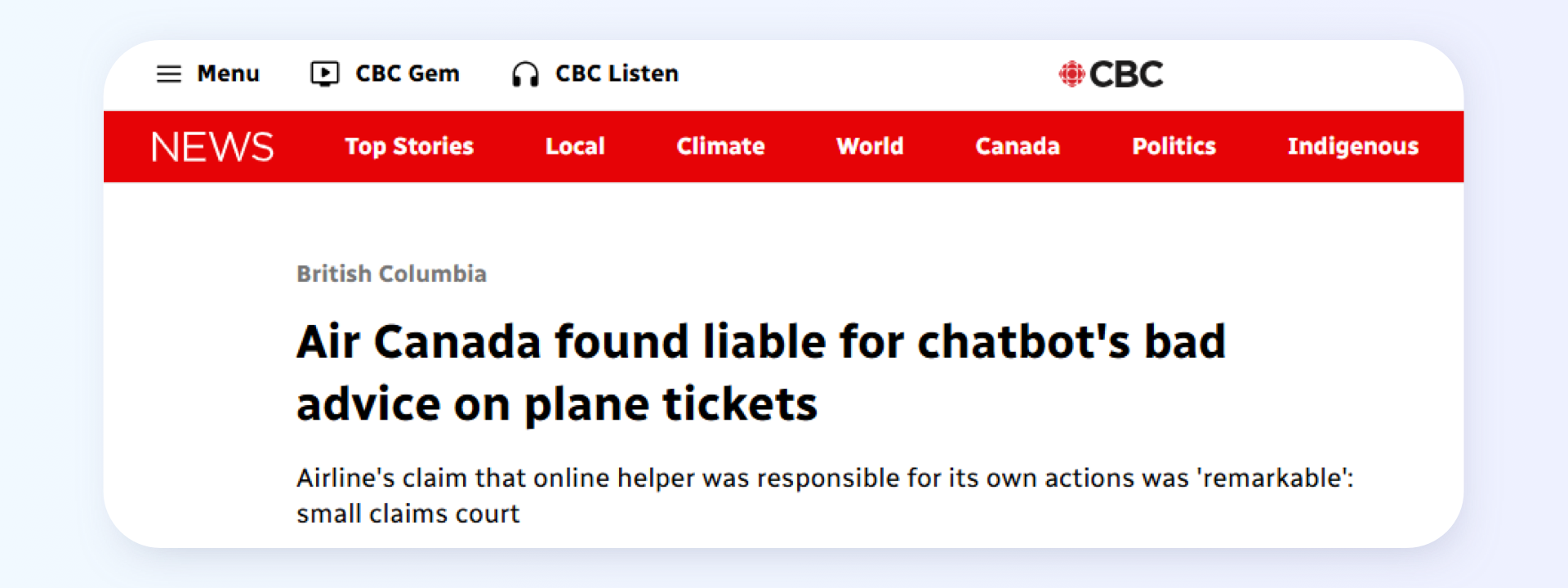
- Air Canada’s chatbot misquotes a bereaved customer
The airline was ordered to pay compensation to a passenger when the company’s chatbot misquoted pricing and policy regarding bereavement rates on tickets. The outcome was unnecessary distress caused to a grieving customer and negative press for the brand.
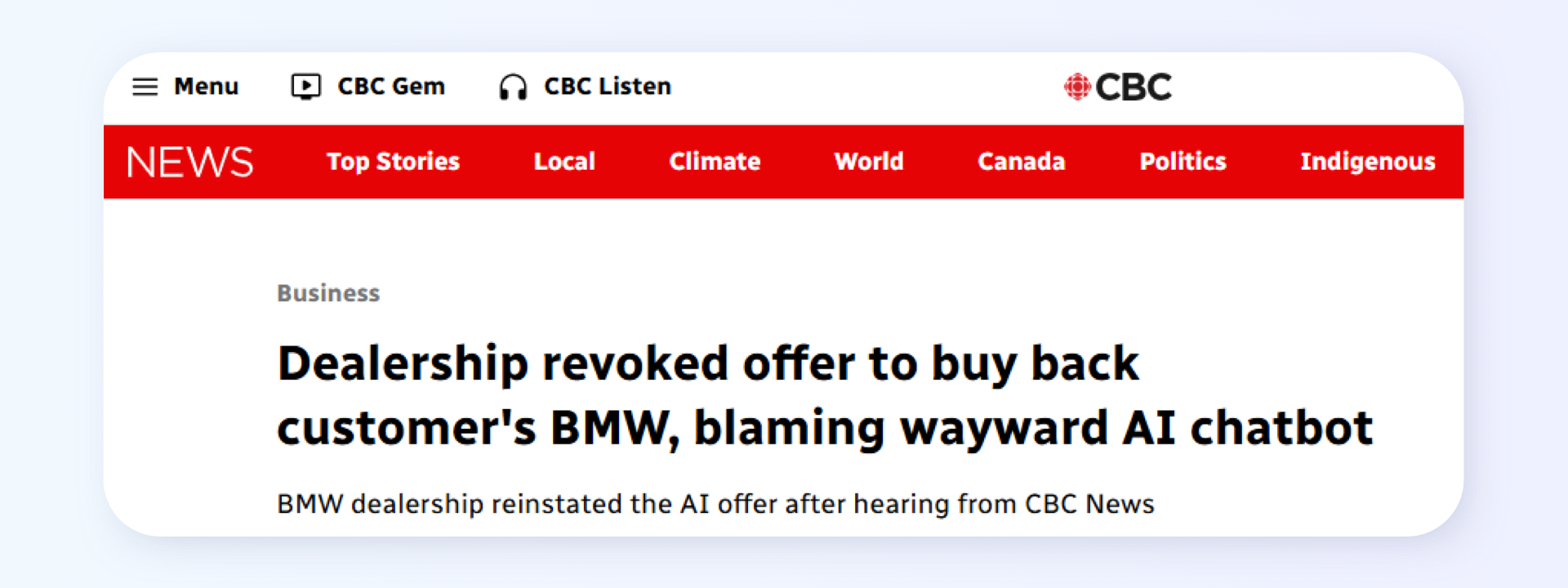
- BMW dealership chatbot misquotes vehicle buy-back offer to customer
A Toronto BMW dealership uses a chatbot called “Quinn” that offered a customer $27,162.79 CAD for his car. Human staff at the business then revoked the offer until media inquiries appeared to prompt the company to stand by the AI-generated misquote and reinstate the offer.
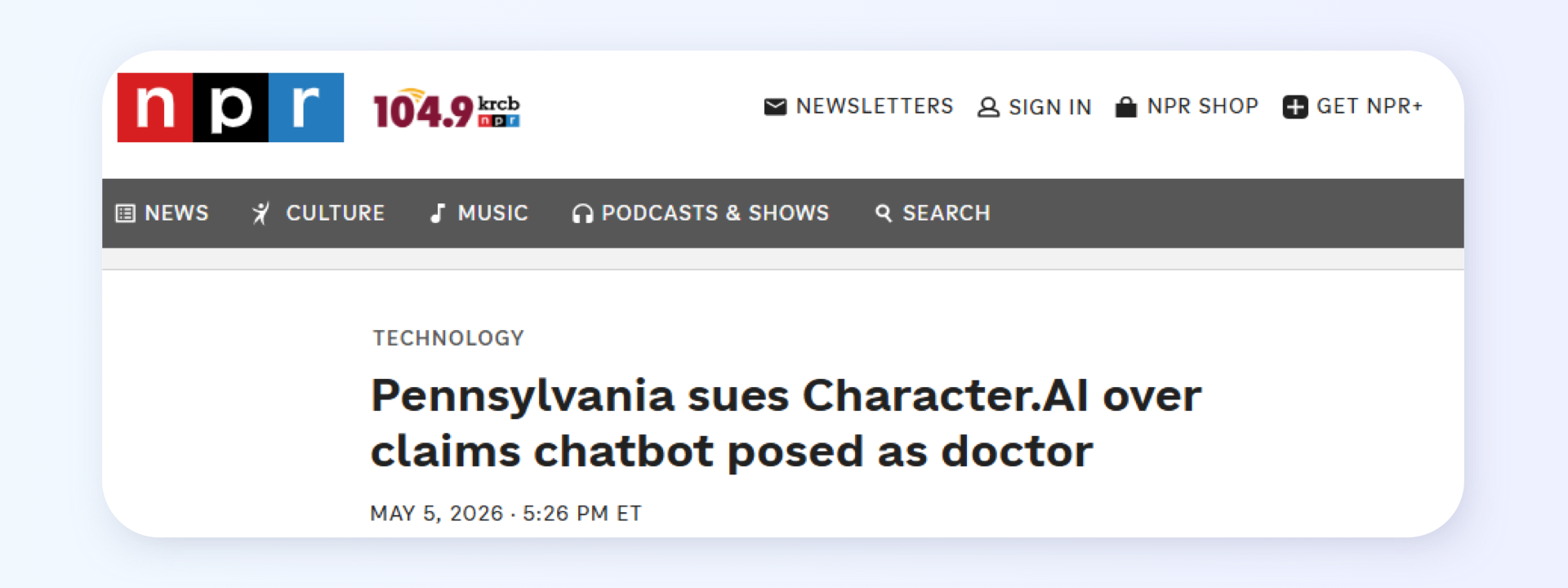
- Chatbot impersonates a doctor in Pennsylvania
Character.AI has now filed for chapter 11 bankruptcy after being sued when its chatbot impersonated a psychiatrist, even to providing fake educational credentials and a made-up medical license number.
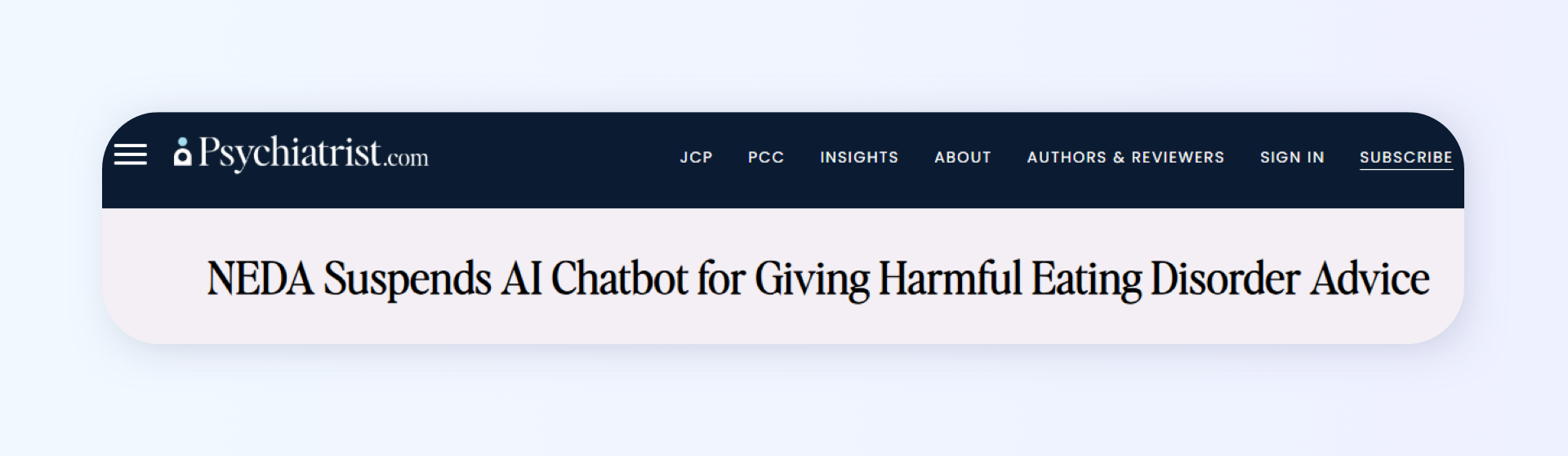
- Eating disorder hotline bot gives dangerous advice to callers
The National Eating Disorder Association (NEDA) replaced its human hotline staff with an AI bot called “Tessa”, which then had to be suspended after giving harmful medical advice to callers.
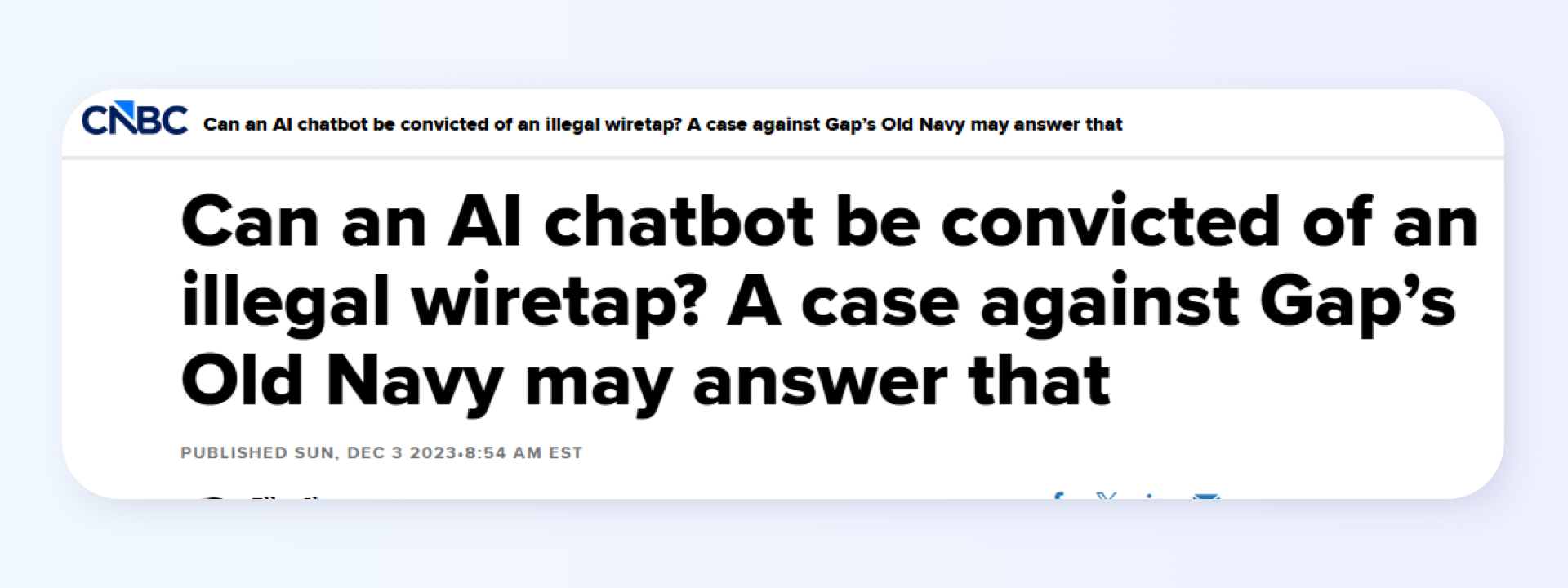
- A class-action lawsuit targets Old Navy, alleging illegal wiretapping
It’s my understanding that a private settlement was agreed upon when Old Navy became the subject of a lawsuit in the central district of California, alleging that its chatbot was illegally wiretapping customers by logging, recording, and storing conversations. It appears the 2023 case was ultimately dismissed, but it is certainly not the kind of press any brand would welcome.
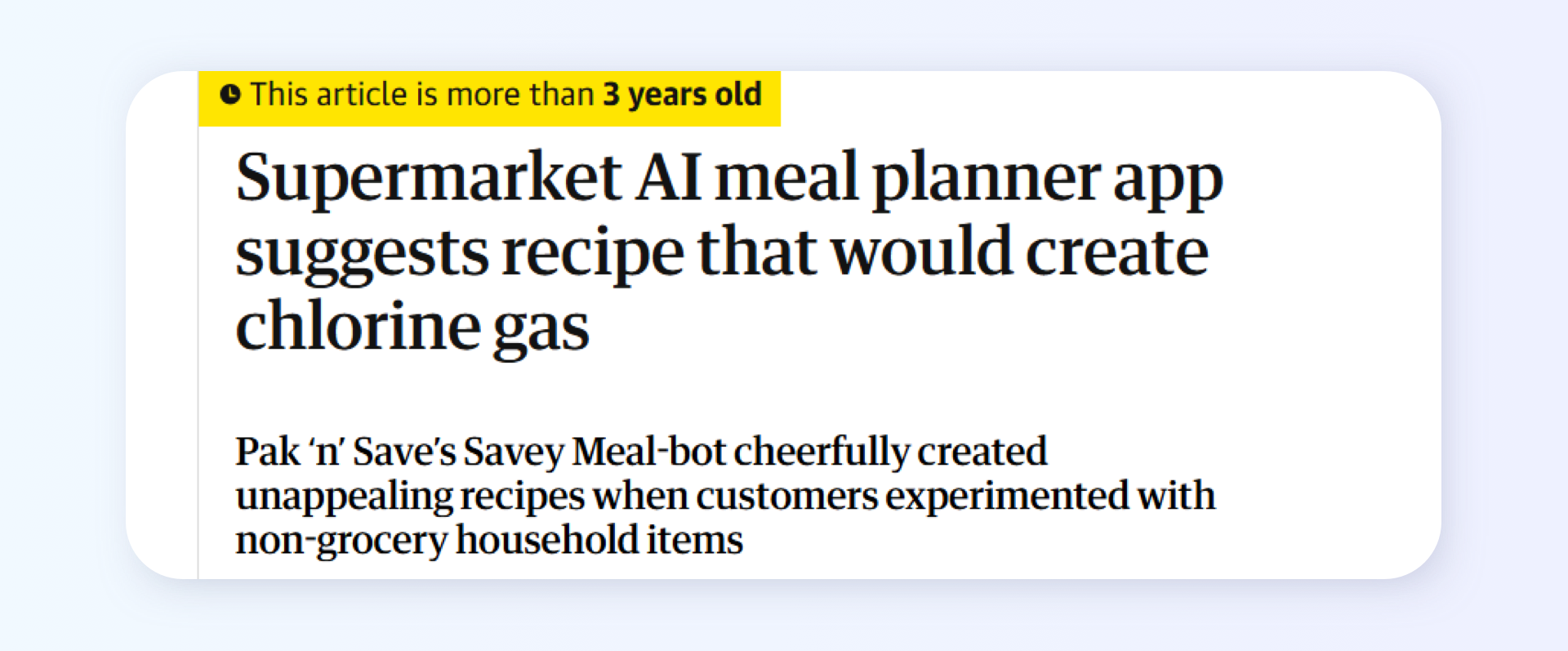
- Grocery brand chatbot endangers customers’ lives
A supermarket bot recommended combining items on a household shopping list in a recipe it called “aromatic water mix” that would create chlorine gas, which can result in lung damage and fatality. Following negative press, the chain responded with statements about adding stronger guardrails and disclaimers.
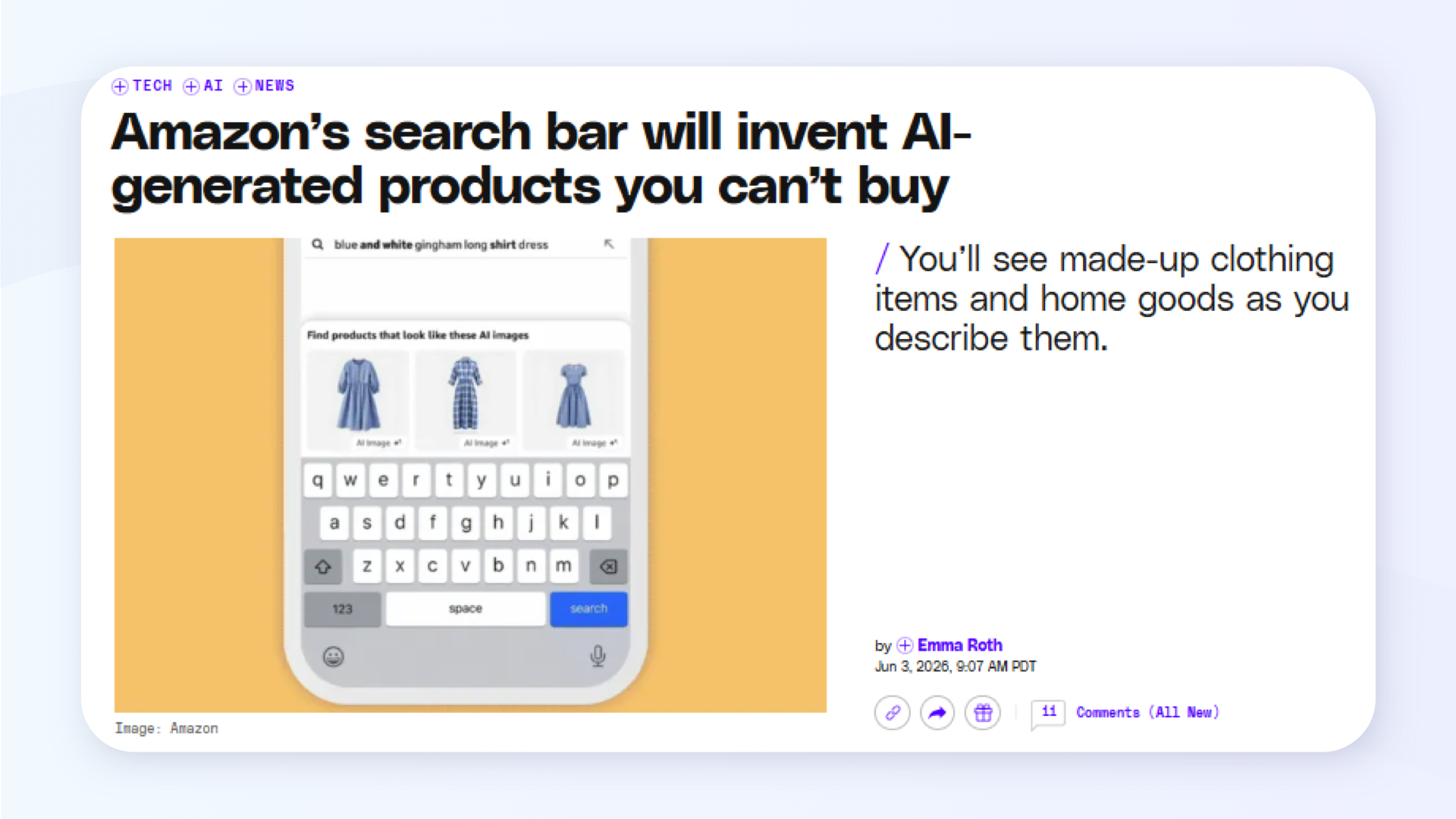
- Marketing products that don’t exist to customers
Amazon may think it’s a good idea to use AI to generate images and descriptions of non-existent products, with the goal of redirecting shoppers to similar merchandise, but imagine your AI chatbot going rogue like this. Customers would be right to feel deceived and frustrated by your brand.
Unfortunately, potential harms to both brands and consumers are an extreme risk, whether chatbots are based in third-party or proprietary technology. Lawsuits, bad press, and even bankruptcy may result, and though brand-owned bots may feature more sovereign control over what customers experience, no enterprise should implement a chatbot without understanding potential consequences.
2 hidden risks of chatbots
Hidden Risk 1: Undertraining
Americans of a certain age remember going to one of Kmart’s 2,500 stores for the experience of getting bargain goods in a clean store with decent customer service. Then, economic pressures and competition contributed to the brand massively cutting its in-store staff. The premises became ghostly and dishevelled. There was no one to help customers locate merchandise or get answers to questions. If you called on the phone and managed to get an employee to pick up, they wouldn’t know anything about the store’s inventory; they’d put you on hold and leave you there until you gave up. Staff burnout was evident, and bankruptcy resulted in 2002.
This tale of failure has an eerie resonance in the context of AI chatbots: I am not confident that brands are adequately training these assets any more than the average big box store trains its human staff these days.
My typical experience with brand chatbots is that:
- They cannot answer most complex questions
- They often cannot answer basic questions
- They annoy me by directing me to useless help docs that don’t contain answers to my questions
- They waste my time
The situation feels worrisomely analogous to those final years of Kmart, watching a useful community resource become a wasteland. A failure to fully train-up AI chat models means your prospective customers are not being helped, and that’s pretty much the quickest path you can take to business closure.
Hidden Risk 2: Inaccessibility
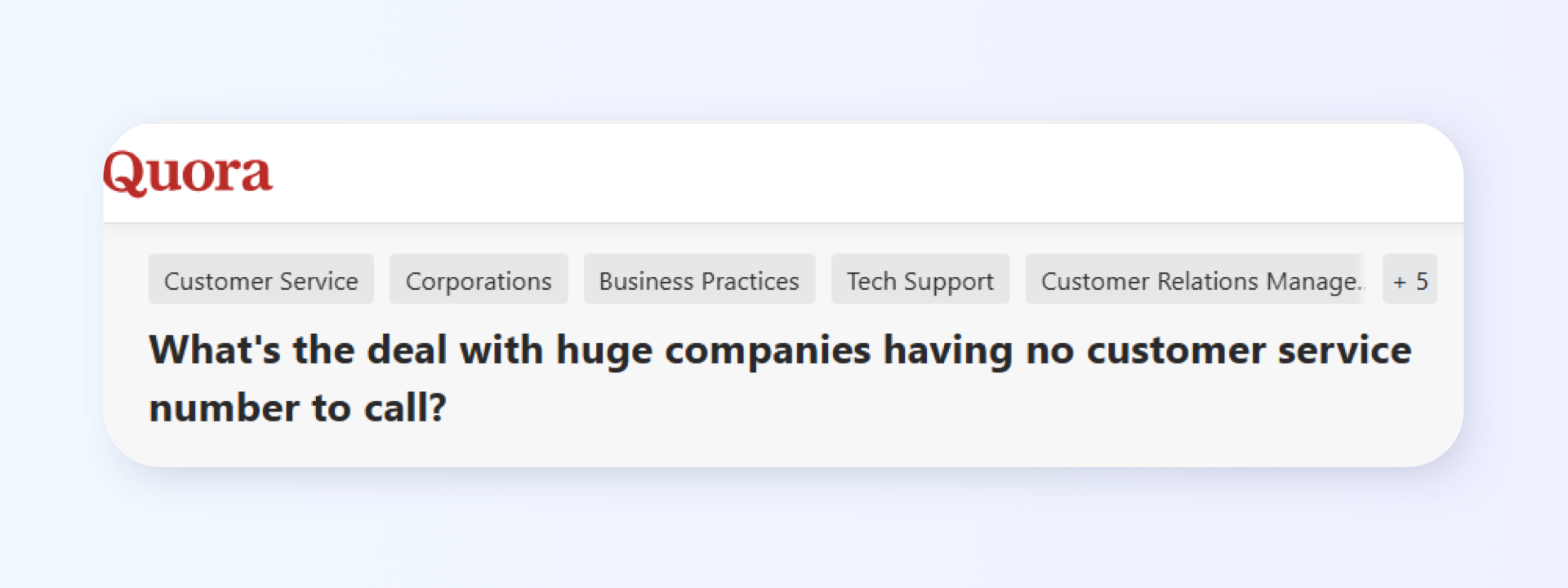
Whether brands are investing significantly in proprietary chatbots or going with the lower initial cost of third-party solutions, mistaking this technology as a replacement for human customer service feels inevitable in today’s market. It has become so common for enterprises to hide their phone numbers that it’s easy to see the temptation of assuming you’ve got customer service covered so long as your bot is chatting away.
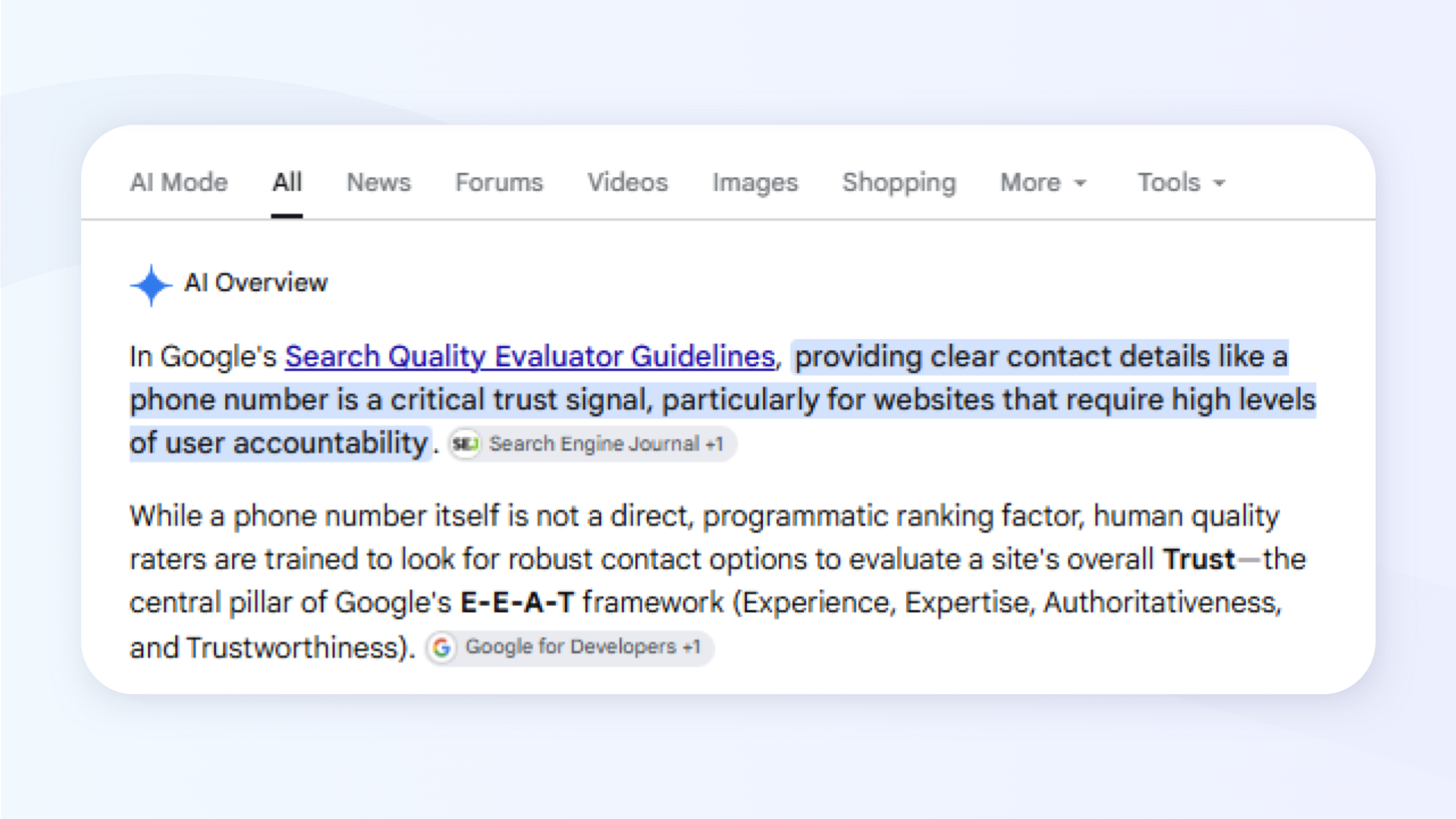
I honestly don’t know what’s going on inside of Google leadership these days in regards to fidelity to their pre-AI principles, but I’ve been in SEO long enough to remember that businesses having a clear, accessible phone number was a core trust signal that Google trained its quality raters on. Brands obscuring this core contact information were judged to be unreliable.
Who knows if Google now considers a chatbot to be an adequate substitute for a phone number staffed by a team of trained human employees, but I am more concerned if your enterprise’s C-suites consider AI support a substitute for human support of human customers. Why? Keep reading.
Current consumer attitudes towards chatbots
Here are some stats your brand leadership needs to see before concluding that AI-driven customer support obviates the need for human support:
- Pew reports that about half of US consumers are now using chatbots (up from about ⅓ in 2024), but 40% have negative feelings about AI technology and its impact on society. The latter number increases to 48% when youngest consumers are surveyed – this is about half of your brand’s up-and-coming customers disliking AI technology.
- Gartner reports that 64% of consumers don’t want companies to use AI for customer service. Top negative sentiments include the fear that brands will allow AI to make it more difficult for customers to reach human staff, that AI will displace people’s jobs, that AI will provide wrong answers, that personal data will be less secure, and that AI biases will not treat customers equally.
- Statista reports that a leading cause of consumers being open to using business chatbots is the failure of brands to provide fast and helpful human phone assistance. In other words, it isn’t that customers love talking to bots, but that they hate the long hold times companies have subjected them to.
That last point is particularly poignant, because it stands in such sharp contrast to this advice from AttorneySync’s Gyi Tsakalakis in a NearMedia interview titled ‘You Can’t Outspend a Bad Intake Experience’:
“It’s a race to the phone. Race-to-the-phone is table stakes in PI (personal injury law). It’s really a race to the phone with amazing service experience…Do not waste time amplifying your reputation for bad service experiences.”
Note, this is not a race-to-the-chatbot, because your chatbot is going to be about equivalent in speed to that of all your competitors. Prospective customers and clients are absolutely judging your brand on how it handles phone support, and the decision to view a chatbot as a replacement for human service does away with one of your most critical competitive-difference-makers.
There will be enterprises that take the path of seeing how much bad service their customers can endure, including how many will tolerate a chatbot when no other help if offered, but this can’t be described as a prescription for winning the maximum amount of sales, loyalty, referrals, or the best reputation in the towns and cities your brand serves.
Least-risk chatbot scenarios
Most large brands are going to deploy a chatbot. The safest way to do so is:
- As additive to your customer support option, instead of as a replacement for well-trained human service
- In non-YMYL scenarios where there is little risk to the brand or consumer of miscommunications resulting in harm, disputes, legal action, and bad press
- Delaying release until the bot has been trained to the highest possible standard in all aspects of the business
- As an after-hours support option that is limited to a rigid set of tasks, such as booking appointments for the next day, or describing company policies
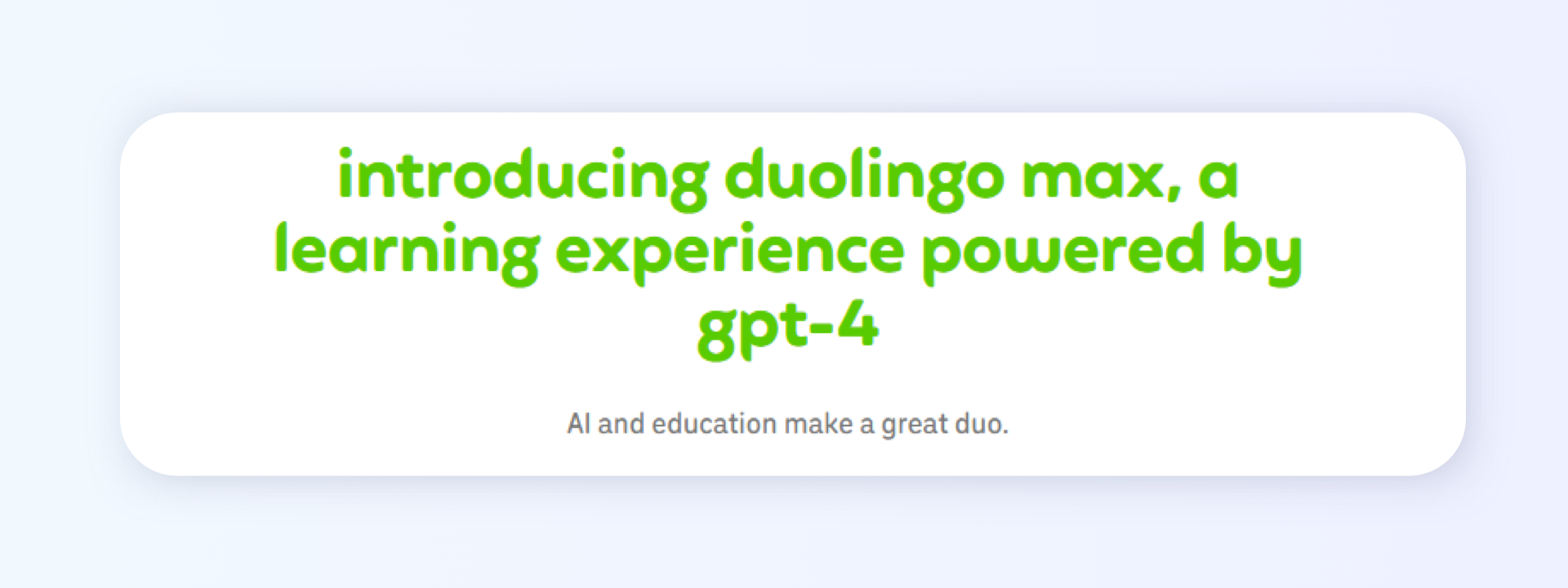
A good example of a low-risk scenario is the language app Duolingo’s deployment of a gpt-4 chatbot with which customers can practice the language they are learning. It’s not no-risk. The bot could teach students wrong words. It could teach them to speak with a robotic accent, instead of a human one. It could be hacked and expose consumers’ personal data. But, at least on the face of things, there probably isn't an obvious danger in this use case, beyond shedding customers who don’t like AI.
There is also a decent case to be made for offering a chatbot to serve consumers suffering from telephobia. There has been considerable reportage in recent years concerning Generation Z’s anxieties about making and receiving phone calls, and having to seek counseling for this phobia. I’ve seen a variety of surveys conclude that some percentage of the public would rather talk to a bot than a human, and it may be that telephobia contributes to such statistics. This is a good example of implementing a chatbot as additive to your brand’s full menu of customer service options, for the sake of inclusivity.
In conclusion: renting vs. owning the chatbot experience
Digital marketing has experienced a stunning ebb and flow over the past two decades regarding whether it’s better to rent your space on the web or own it. At the moment, it’s looking like brands need to own the incredible clutter that makes up the citations featured in third-party AI environments like ChatGPT and Google AI Mode. That ownership depends on being present across a variety of rented spaces like Reddit, Facebook, and Quora. The more time and money an enterprise has to devote to such activities necessarily decreases budget for focusing on the brand’s own website.
Whether to go with a proprietary business chatbot you homeschool or farm it out to OpenAI or another tech giant poses a similar challenge. There are risks and benefits to both options that need to be carefully weighed by your org. But my advice is to go one further: in the race to adapt to this new technology, don’t overlook actual consumer attitudes towards AI as a customer service module. Don’t overlook the seriousness of the problem if your brand’s leadership is mistaking this technology for permission to continue ignoring customer service failures on phones and on your premises.
Best case scenario: you see this as an opportunity to level up consumer experience across all support channels, including the inevitability of your AI chatbot.
Request a Demo
Drive more local sales by pairing shoppers with real-time inventory and promotions through seamless online-to-offline capabilities that help clients transact now.