It’s switching season in Telco. It’s that time of year in which customers will take to Reddit to vent frustration at their cell phone provider’s terrible service while employees will head to Glassdoor to blast the experience of working for these same brands. It’s a scenario devoid of loyalty but filled with dissatisfaction over failed fulfillment and toxic workplace practices.
What a waste of everyone’s energy.
Loyalty is something a business has to earn. Earning things takes effort. We’re just not building businesses around this kind of investment like we used to in America. There’s a heavy sense of sluggishness surrounding the task of actually taking good care of staff so that they take good care of customers.
Fabled loyalty of yore
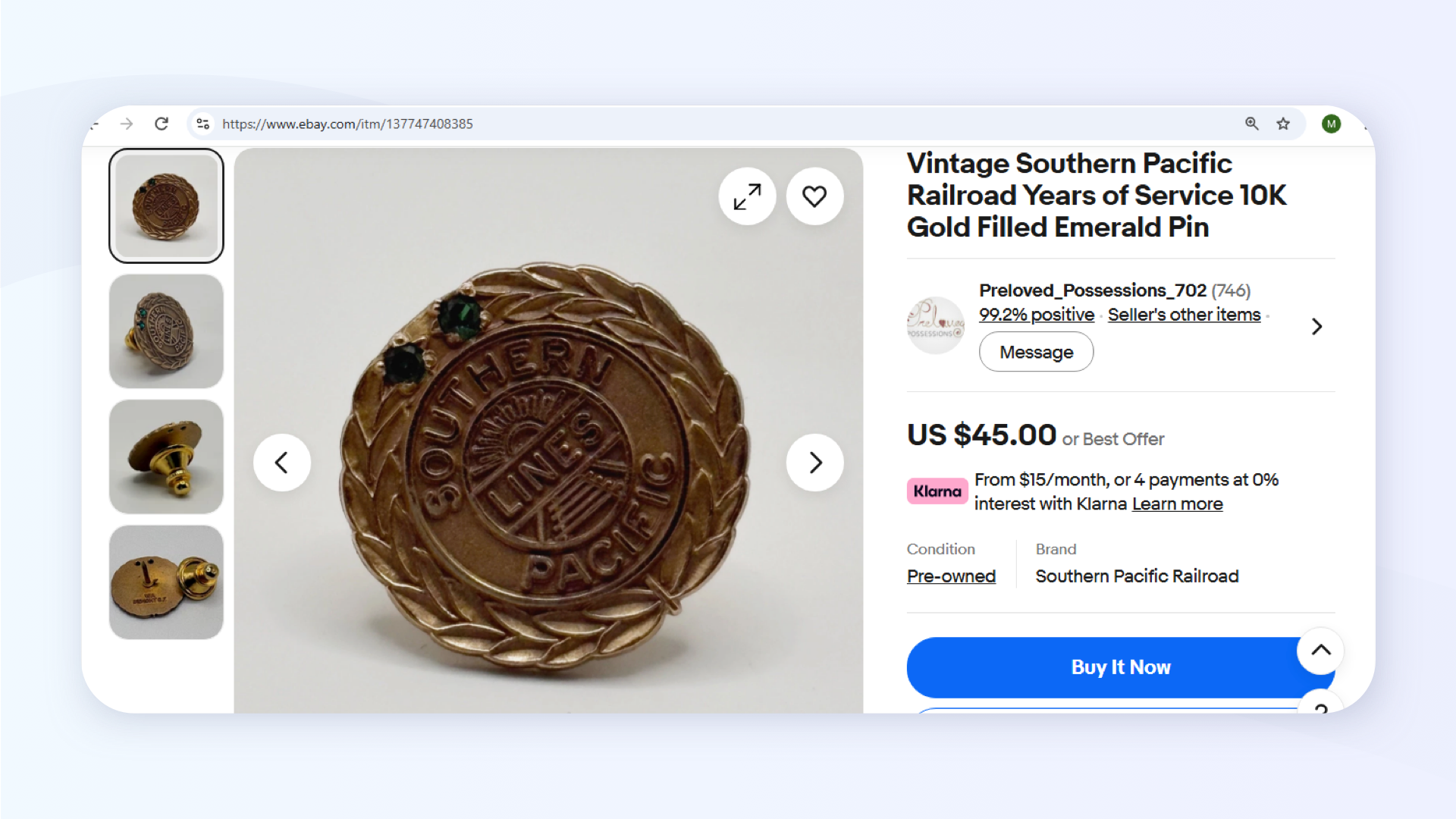
This may sound like a fairytale to younger readers, but when I was a kid, my father used to sometimes show me a little case filled with tie pins marking his years of service as a computer programmer for Southern Pacific Railroad. These pins had real gold and jewels in them and were proud proofs that he was slowly building up what was then known as “seniority” on his road to a comfortable “retirement”. He gave his best to his employer, executed brilliant work for them, and in return, they gave him a living wage on which he was able to support a wife and family, including owning a home, a car, having pets, and taking the occasional camping trip on his vacations.
Then IBM took over in 1993, and the loyalty of my father and all his co-workers was met with pink slips, outsourcing, offshoring, careers in ruins, and promised retirement packages in jeopardy. It was the crest of a wave of new business standards that swept away the security of American workers while simultaneously creating our current consumer scenario in which the people serving you at a business feel little or no personal stake in the brands that employ them.
We no longer live in a country in which dedicated staff receive gold and jewels as marks of achievement and a pocket watch when they retire at age 65 with enough benefits to live decently in their “golden years.” Instead:
- The average length of employment for tech workers is 2-3 years
- The median length of employment for the overall US workforce is 4.1 years
- Millions of American elders cannot stop working because they cannot afford to retire
- Though employees may have grumbled privately about employers in the past, they now publicly document how much they hate the brands they are working for, without apparent concern that this could negatively impact the employer writing their paychecks
- ¾ of US consumers experienced problems with service and merchandise quality in 2025
Who can take pride in stats like these? I’d love to write an inspirational piece about restoring the days of earned loyalty in the US workplace, but I doubt that we can hit that back button without massive societal change. Instead, I tell this tale of the railroad tie pins because of how it dovetails with the habits of digital laziness that are beginning to write the narrative of the AI era.
The data of Telco switching
Lastmile is partnering with NearMedia on a series of substantial consumer behavioral studies to understand how emergent AI is impacting customer journeys. One aspect of these studies was designed to discover why people had switched cell phone providers over the past 12 months. Some of the findings may seem obvious (like price), but there are others I want to spotlight because I think they are the most likely to be overlooked by Telco brands.
A tiny competitive pool
When switchers were asked how many providers they considered before making a decision:
- 35% considered just one brand
- 39% considered two brands
- 19% considered three brands
- 5% considered four or five brands
- 2% considered more than five brands
There are so few major players in an industry like cellular service that most consumers find themselves with limited choice. Brands, meanwhile, have few significant rivals, suggesting that a serious investment in earned loyalty could quickly distance them from lazier competitors.
Serious consideration
Most of the digital marketing industry is currently focused on AI prominence. Just as we raced to be first in search results, we are now studying dominating AI visibility. When switchers were asked how they chose their new provider:
- 64% purchased from the first merchant they saw
- 27% did not purchase from the first merchant they saw
- 9% couldn’t remember
Preoccupation with prominence definitely makes sense with the first consumer group, but more than ¼ of consumers did not base their decision on a brand merely topping the results. There are wins to be had here from a concerted effort.
Why they switched
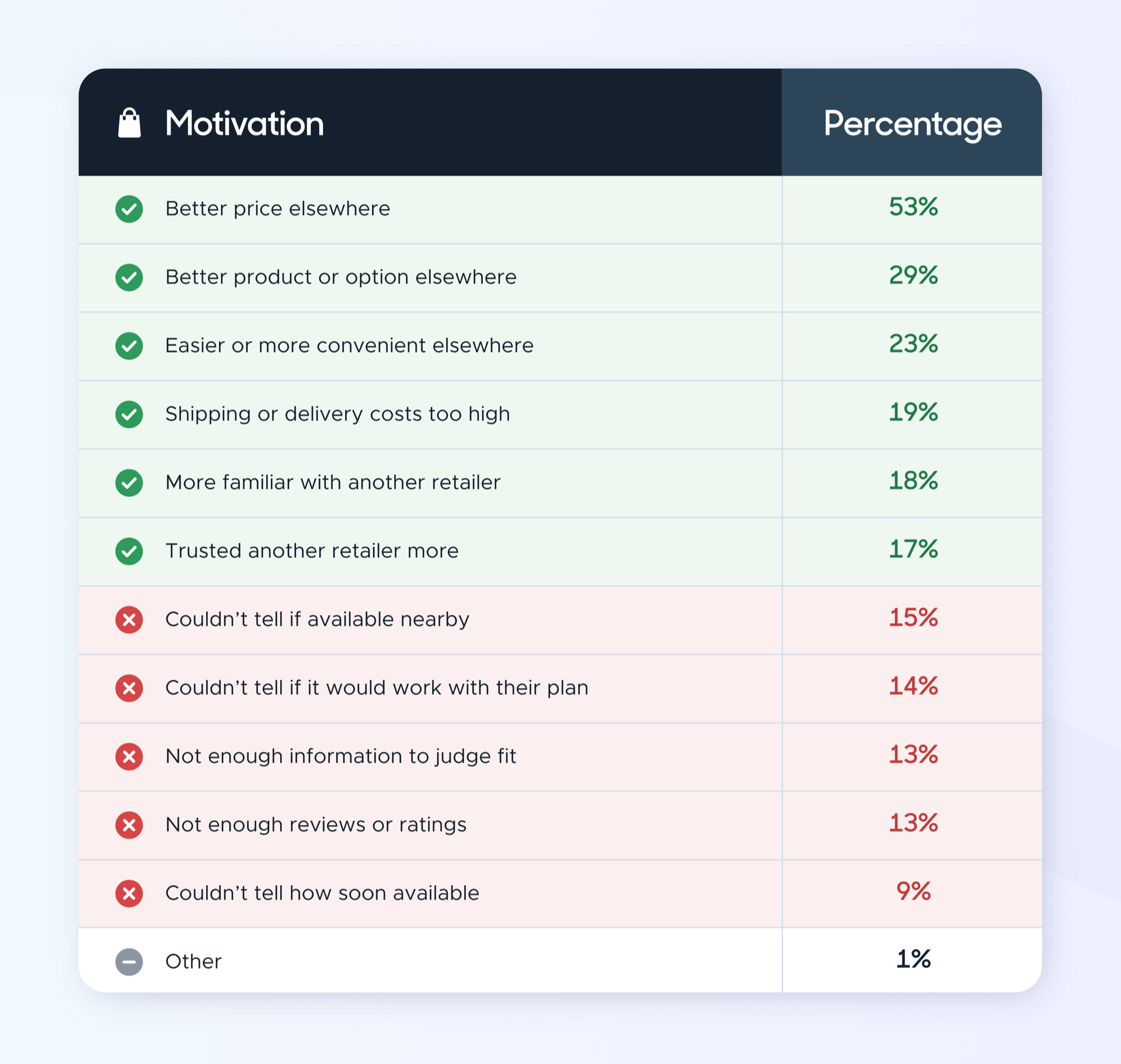
The loyalty deficit has created a scenario in which Telco consumers regularly switch to a different provider. Lastmile documented the following motivations for switching:
A glass half full of opportunity for motivated Telco brands
Unless you really mine the foregoing statistics for directional insight, it could be easy to sleep on what they’re saying. For example, it would be simple to take away that the fact that price is the key cause of switching holds no surprise. But take a minute to reverse engineer that data to see that something other than price motivated Telco switching for 47% of consumers. This is a huge segment of your prospective consumer base who might switch to your brand on the basis of something other than cheapness.
Good old UX and CX come to the fore with the third stat, revealing that nearly ¼ of consumers switched because someone else offered an experience that was easier or more convenient than their current provider. Traditional brand building is the key to 18% of switchers being more familiar with another retailer, and 17% feeling more trust in another retailer.
But it’s stats 7-11 that capture the opportunity for motivated Telco brands to identify structural laziness in their industry and invest the effort in earned loyalty. What’s happening here is that consumers are turning to the internet on the verge of switching, but a significant percentage of them cannot find sufficient evidence about:
- Whether a product or service is available near them
- Whether a product will work with their plan
- Whether an offering is a comparatively good fit for their needs
- Whether fellow consumers have had a good experience with the brand
- What availability looks like
This information is simply missing in conversational AI results because it is missing from the digital assets that power them. Telecommunications brands that pre-date the Internet have had 20+ years to build out deep data layers online, but too few have made the investment. Now, with AI making it so easy for consumers to compare and contrast available data in a single view, underinvested enterprises are subject to chronic switching.
An era of incredibly low consumer expectations

Did you know that CCMC conducts a periodic index of consumer rage as a follow-up to a study the White House first conducted in the 1970s? It’s worth understanding that:
- 64% of consumers who experience a problem with a brand feel rage
- 32% of consumers experience emotional stress attempting to seek resolution for a bad experience with a brand
- 55% of Americans feel that customers have become less civil in recent times
Meanwhile, a separate study from Watermark finds that:
- Fewer than one in five consumers believe that businesses routinely act in the best interests of their customers
- 48% are no longer surprised that it is difficult to reach a live person at a business to get assistance
- 54% are not surprised when they cannot find an employee to help them in a retail store
- 41% are not surprised when staff fail to return their calls
- Just 36% believe it will be easy to engage with a company they have chosen for a transaction
This is not a healthy picture of how customers feel about the brands they patronize. It suggests a worn-out populace that makes sense of independent findings from McCann that more than ⅔ of consumers abandon brands over broken trust. McCann urges enterprises to respond to this crisis of consumer confidence with business practices that “eradicate doubt”.
Chances are slim that we will return to an era in which brands treat their staff so well that employees feel they have a critical stake in treating customers well. That kind of mutual concern and pride appears to have disappeared in the national rear-view mirror, and everyone is looking for whatever is the least hassle. Years of this state of affairs have set a very low bar for bringing in new customers (even if brands won’t act to retain them).
In the AI context, winning customers by “eradicating doubt” begins with these tablestakes:
- Publishing more complete data than your competitors to answer as many broad questions as possible
- Publishing more detailed data than your competitors to answer as many complex questions as possible
- Ensuring your data can be scraped and summarized by AI
Telco brands have the budgets to meet this extremely basic criteria, but disloyal internal cultures may prevent different departments from having the necessary conversations to push the brand forward.
An epoch of enterprise silos

A staff member who can only expect to work for your brand for a couple of years simply does not have the necessary time to develop genuine feelings of loyalty. There is no motivation to bring their best creative ideas, their best work, or their best self to the job because they know they will be gone during the next round of layoffs, the next merger, the next acquisition. This brief video is a clinic on what work has become for so many employees in the the tech world:
TL/DR:
- A young woman is fired and told she didn’t “meet expectations” after just four months working for Cloudflare – in previous eras, a new employee might just have completed their training in this length of time and more time would be needed to fairly judge their performance
- The actual story is that the brand laid off some 40 employees for internal reasons but was not transparent about this with the new staff member
- The television program commentator quotes the business as saying these layoffs are “normal”
- Some media spokespersons feel no empathy for a young person trying to learn to support themselves, placing the blame on the worker as “whiny, weak, and woke” and as someone who doesn’t “understand how the world works”, rather than questioning whether it is acceptable for American employees to be fired so shortly after being hired, without adequate transparency
- The CEO of Cloudflare is quoted as stating, “The video is painful…the mistake was not being more kind and humane.” Obviously, this is bad press the brand felt they had to respond to, but their statement does not call new industry employment length norms into question
- The video went viral on social media, doubtless, in part, because the public did empathize with the young person and could relate to her experience
It is not a scenario that fosters employee loyalty to the brands they serve.
Moreover, large brands have engineered systems that actively discourage internal departments from communicating with one another. Phrases like “not my department”, “not in my wheelhouse”, and “not my problem” silo teams away from one another and move the company further and further away from the register.
To adequately meet the AI data demand, however, Telco brands will need to put their engineers and their marketers in the same rooms and get them to collaborate on answering consumer questions. The statistical information Lastmile has discovered about missing answers is almost certainly a direct result of conversations that needed to happen but which never occurred inside your brand due to a combination of low levels of loyalty and a refusal to cross departmental aisles.
First steps away from the loyalty double-whammy

That motivational piece I’d like to write about turning back the clock will have to wait, but if your Telco brand wants to win the AI game, there are first steps you can take right now that could begin to place more emphasis on earning customer loyalty through improved data-based assistance. To capture the sales that are being lost to information gaps, Lastmile’s research suggests that these areas are the first to focus on:
- Developing content that provides cross-referenceable proofs about where your locations are and what merchandise and plans they stock
- Developing content around how your products interface with other products and plans
- Developing content that compares and contrasts your offerings to competitors’ offerings
- Acquiring a competitive level of positive reviews and ratings via active requests that comply with federal rulings and platform guidelines
- Publishing real-time information on product availability and fulfillment timeframes
This is the beginning of a conversation about re-envisioning customer service. It’s also the tip of the data iceberg Lastmile puts at the disposal and service of its partners. For access to further findings that could significantly impact your prospective consumers’ choices, contact us.
Request a Demo
Drive more local sales by pairing shoppers with real-time inventory and promotions through seamless online-to-offline capabilities that help clients transact now.